SEO for SaaS: The DIY Playbook for Google and AI Search in 2026

How SaaS Companies Win Google, AI Answers, and Actual Signups
Picture your best-fit buyer. They've got a problem your product solves, a budget, and about fifteen minutes before their next meeting.
They don't read a 3,000-word thought-leadership essay on your "programming philosophy." They open a tab, type your category into Google, and then, increasingly, they open a second tab and ask ChatGPT to just tell them the best options.
Whether your product shows up in that moment, in the ten blue links and in the AI answer, decides whether you're on the shortlist or invisible. And here's the uncomfortable part: your competitors aren't necessarily better than you. They're just easier to find.
This is the complete DIY SaaS SEO playbook for fixing that, built for people who want organic signups, not a prettier traffic chart.
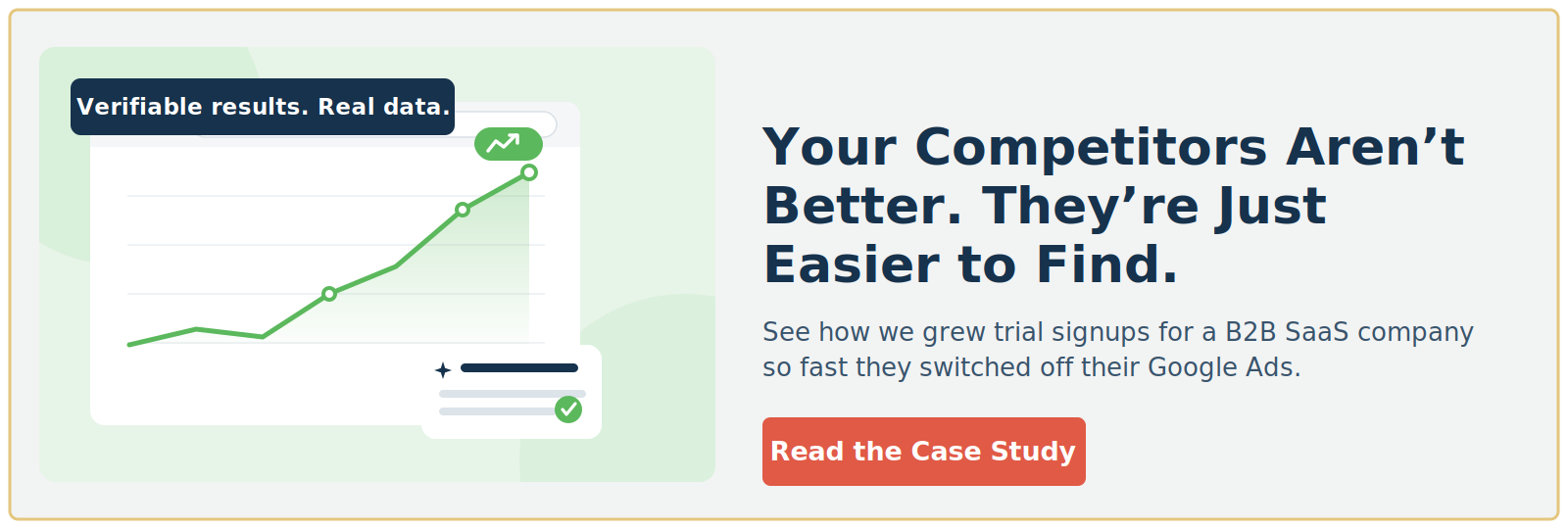
Talk is cheap in SaaS, so here's proof. We took a B2B SaaS company from paying for every signup to filling the funnel organically.
TL;DR for Founders and Marketers Reading This Between Standups

SaaS SEO pays. For B2B companies, organic search is the single largest revenue channel, generating roughly twice the revenue of any other channel per BrightEdge, and its cost per lead drops as rankings compound.
Your buyer now starts in an AI chatbot. Roughly half of B2B software buyers begin research in an AI tool more often than a search engine, per G2's 2026 Buyer Behavior Report.
SEO and AEO (Answer Engine Optimization) are one system. The same structured, credible content that ranks in Google is what gets you cited by ChatGPT, Perplexity, Gemini, Copilot, Claude, and Google AI Overviews.
Lead with bottom-of-funnel (BOFU) pages. Comparison, "vs," "alternatives," and pricing pages convert far better than top-of-funnel definitions.
Measure signups, trials, and pipeline, not sessions. If a page can't be tied to revenue, it's decoration.
Table of Contents Show
SaaS SEO Is a Different Game, and 2026 Rewrote the Rules
Let's be honest about most SaaS SEO advice: it optimizes for traffic that never signs up. Rankings become trophies, blog volume becomes a vanity metric, and nobody in the meeting can connect any of it to revenue.
That's a shame, because organic is one of the highest-leverage channels a software company has. BrightEdge's channel research found organic search is the single largest revenue channel for B2B, driving roughly twice the revenue of any other channel. Paid acquisition stops the second you stop paying. A well-built organic asset keeps compounding, and its cost per lead falls as your rankings and authority mature.
SaaS also plays by its own rules. Sales cycles are long, buying committees are large, competition is global, and one signup can be worth years of recurring revenue. That combination rewards patient, intent-focused SEO and punishes the "publish 30 keyword-stuffed posts and pray" approach the industry loves.
And in 2026, one more variable changed everything: a huge share of the research now happens inside an AI assistant before your website ever gets a visit.
SEO and AEO Are One System Now

For years, SaaS SEO meant ranking a page in Google, and that's still the core of it. But your buyer's research now runs through Google, Google AI Overviews, AI Mode, ChatGPT, Perplexity, Gemini, Microsoft Copilot, and Claude, often in the same afternoon.
This isn't a fringe behavior anymore. In G2's 2026 Buyer Behavior Report, about half of B2B software buyers said they now start research in an AI chatbot more often than in a search engine, up from roughly a quarter a year earlier. Even more striking: most said they'd think more highly of a vendor an AI recommends, and a majority ended up choosing a different vendor than they'd planned because of what the chatbot said. One in three bought from a company they'd never heard of before the conversation.
Read that last part again. Your next customer may be getting talked out of you, or into a competitor, before you know a deal exists.
Here's the good news, and it’s the reason we treat this as one discipline. AI assistants assemble those answers from the same signals that power your search rankings: clear, structured, credible content that a machine can extract and trust.
SEO gets you ranked. Answer Engine Optimization (AEO) gets you named when a machine makes the recommendation. Optimize your content once, correctly, and you show up in both places. We break down the mechanics of how brands get found in AI search.
It matters even more in the SaaS industry. BrightEdge's AI Overviews research shows B2B technology is one of the verticals with the highest AI Overview presence, climbing from around 40% to over 70% of tracked queries in a single year. Informational and comparison-style software queries are exactly what AI loves to answer directly. If you're not in the answer, you're not in the running.
Know Your Buyer Before You Touch a Keyword
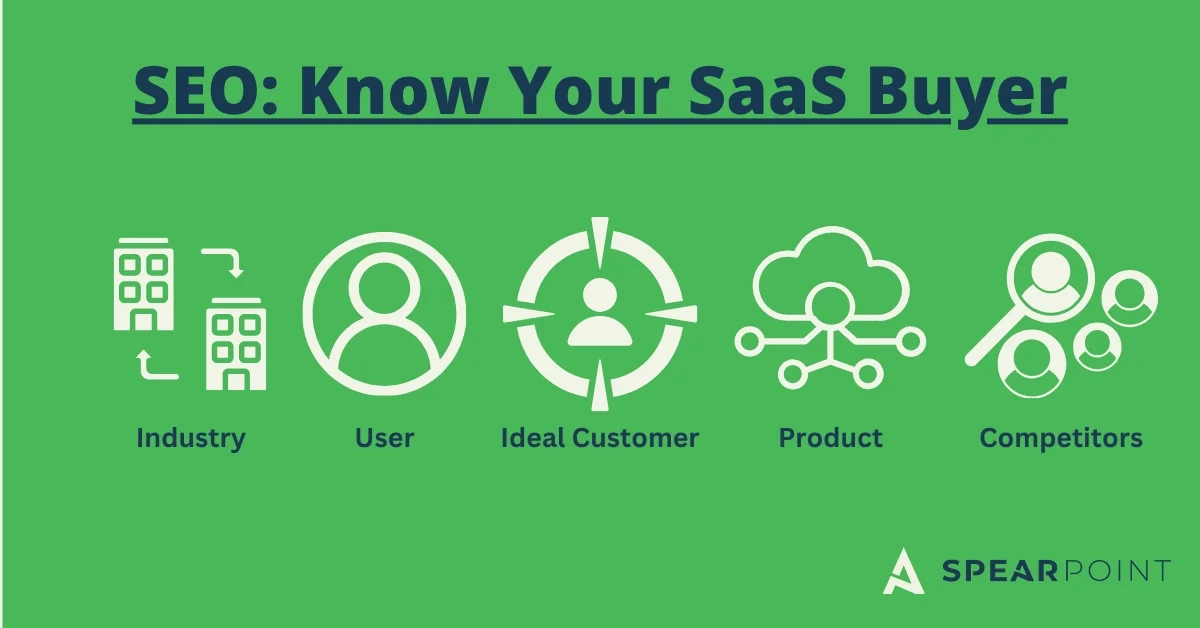
Every strong SaaS SEO strategy starts before you open the keyword tool. You need to know your average customer, what they're trying to accomplish, and how they describe the problem in their own words, because that's how they search and how they prompt an AI.
Work through four questions honestly:
Your user: Who actually logs in and uses the product day to day? What's their role, and what does "success" look like for them?
Your ideal customer: Who signs the contract and renews it? Their pain point is the one your best content should resolve.
Your product: What specific job does each feature do, and what would someone type when that job is on fire?
Your competitors: Where are they winning searches you should own, and which comparison and "alternatives" queries mention them but not you?
Nail those, and keyword research stops being a guessing game. As Tom Winter, founder of SEOwind, frames it:

“Value starts with your audience: their needs, their goals, and the questions they actually ask. Answer those first, and your SEO makes an impact.”
The DIY SaaS SEO Checklist
Here's the sequence we run for software companies, in order, because that matters. Work top to bottom and don't skip the unglamorous technical fields, because those are the ones your competitors skipped, too.
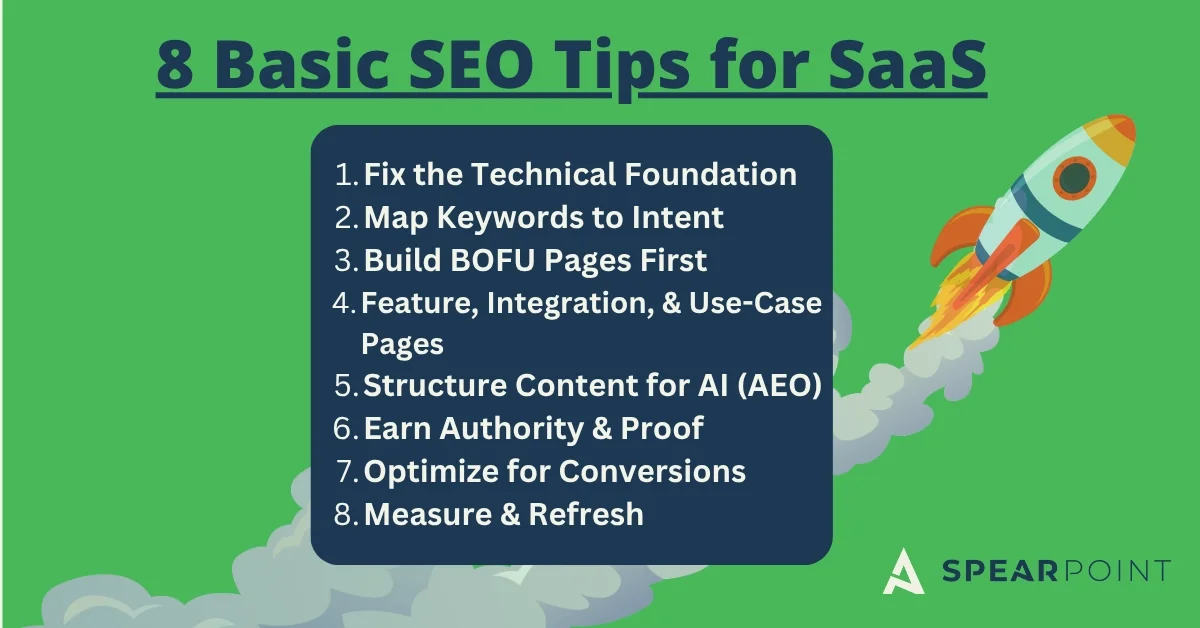
1. Fix Your Technical Foundation
If Google and AI crawlers can't render and index your pages, nothing else matters. SaaS sites break in predictable ways, so audit for them first.
Make sure important pages render without JavaScript blocking the content, and that your app subdomain isn't creating duplicate or thin indexable pages.
Pass Core Web Vitals and keep load times fast. Google uses them as a ranking signal, and a Deloitte study commissioned by Google found that a 0.1-second speed gain drove roughly 20% more visitors to lead-generation contact pages.
Keep a clean XML sitemap, sensible internal linking, HTTPS, and a mobile experience that works perfectly on a phone.
2. Do Keyword Research That Maps to Intent
Volume is a trap. A high-volume term you can't rank for, or that never converts, is worse than a low-volume term your exact buyer types before a demo.
Sort keywords by intent, not size: problem-aware, solution-aware, and ready-to-buy.
Prioritize the phrases people use when they're close to a decision, including feature, integration, and job-to-be-done language.
Map every target term to the page type that should win it before you write a word.
3. Build Bottom-of-Funnel Pages First
This is where most SaaS blogs get it backward. They pump out top-of-funnel "what is" posts and neglect the pages that actually close. It's a costly habit: pages targeting bottom-of-funnel keywords typically convert in the low single-digit percentages, versus a fraction of a percent for informational content. Flip the order.
Prioritize service and product pages, "best [category]" pages, "[you] vs [competitor]" pages, "[competitor] alternatives" pages, and pricing content.
Write comparison and alternatives pages for real, with honest tradeoffs. These are the exact queries AI assistants lean on to build a shortlist.
Give every high-intent page one obvious next step: start a trial, book a demo, or see pricing.
4. Create Feature, Integration, and Use-Case Pages
Buyers rarely search your brand name early on. They search the thing they need done or the tool they need you to work with.
Build a dedicated page for each meaningful feature, optimized around how people describe that capability.
Capture integration searches ("[your product] + [popular tool]") with pages that prove the connection works.
Add use-case and industry pages so you rank for the narrow, high-converting subcategories generalists ignore.
5. Structure Content So Machines Can Quote You
This is the AEO layer, and it's mostly free. AI assistants reward content they can extract cleanly and trust.
Answer the core question in the first paragraph, then support it. Buried answers don't get cited.
Use clear headings, concise definitions, and FAQ sections written in plain language.
Add relevant structured data (Organization, Product, FAQ, and Article schema) so engines understand what each page is.
6. Earn Authority and Third-Party Proof
Google and AI both ask the same question about you: does anyone credible vouch for this brand? Give them reasons to say yes.
Build links through digital PR and original data your industry wants to cite, not spammy directories.
Get listed and reviewed on the platforms software buyers trust, like G2 and Capterra, which also feed AI answers.
Earn brand mentions in the places your buyers and the models already read; consistent third-party references make you easier to recommend.
7. Optimize for Conversions, Not Just Clicks
Traffic that doesn't convert is a cost, not a win. Treat conversion rate optimization as part of SEO, not a separate project.
Streamline the path from page to signup: fewer form fields, clearer value, obvious CTAs.
Use gated content sparingly and only when the asset is genuinely worth an email.
Jesse's take: Gated content gets a bad rap, and usually deserves it. It only works when what's behind the gate is worth opting in for. Use it, but use it like you'd want to be treated.
A/B test the elements that actually move signups: headlines, CTA copy, and trial flows.
8. Measure What Matters and Refresh Relentlessly
You can't improve what you don't watch, and you can't defend a channel you can't tie to revenue.
Track which queries and pages drive trials, demos, and closed revenue, using Google Search Console (including its generative and AI reports) alongside your analytics.
Watch your presence in AI answers through manual prompt testing and AI-visibility tracking, not just blue-link rankings.
Refresh your best pages on a schedule. Stale content quietly loses rankings and citations to competitors who kept theirs current.
Weak SaaS SEO vs. Strong SaaS SEO
Same product, wildly different results. The only variable is whether someone finished the checklist. Here's what each approach "says" to a searcher, an AI assistant, and your revenue line:
| Weak SaaS SEO | Strong SaaS SEO | |
|---|---|---|
| Content focus | High-volume "what is" blog posts | BOFU comparison, alternatives, and pricing pages |
| Keyword logic | Chases search volume | Chases buyer intent and conversions |
| AI visibility | Invisible in AI answers | Cited by ChatGPT, Perplexity, and AI Overviews |
| Technical health | JS-blocked, slow, duplicate pages | Fast, crawlable, schema-marked |
| Authority | Thin backlinks, no review presence | Digital PR, G2/Capterra proof, brand mentions |
| Measurement | Reports sessions and rankings | Reports trials, signups, and pipeline |
| Result | Traffic that never signs up | Compounding, revenue-tied organic growth |
The SaaS SEO Scorecard
Before you change anything, grade what you've got. Score each row honestly, one point each:
| # | Item | 1 point if… |
|---|---|---|
| 1 | Technical foundation | Key pages render, index, and pass Core Web Vitals |
| 2 | Intent-mapped keywords | Targets are sorted by buyer intent, not volume |
| 3 | BOFU pages | You have real "vs," "alternatives," and pricing pages |
| 4 | Feature/integration pages | Each core feature and key integration has a page |
| 5 | AEO structure | Content answers clearly and uses schema |
| 6 | Authority & reviews | You've earned links and a G2/Capterra presence |
| 7 | Conversion optimization | High-intent pages have a clear, tested CTA |
| 8 | Revenue measurement | You can tie organic to trials and signups |
0–3: You're invisible where it counts and leaving signups on the table.
4–6: Solid base with real upside.
7–8: You're the SaaS competitors keep losing shortlist spots to.
"But We Grow Through Product-Led, Paid, or Word of Mouth"
Yes, we know. Plenty of great SaaS companies have grown on a strong product, paid acquisition, and referrals. That's real.
It’s good, but it’s not enough
Follow what actually happens next. A prospect hears about you, then immediately searches. They Google your name, ask an AI to compare you to the alternatives, and check whether anyone credible backs you up. If that search uncovers a thin, unconvincing footprint, you handed a warm lead to a competitor with better pages and 200+ reviews.
Paid search has the same dependency. One of our B2B SaaS clients bought every signup through Google Ads until organic caught up, and eventually built enough pipeline to switch the ads off. Organic didn't replace their growth engine; it just became the cheaper option.
Your product and referrals shouldn’t be an alternative to great SEO, but should remain the reason your great SEO pays off. That's exactly the system we build in B2B SaaS SEO.
Stop Optimizing for Rankings and Start Optimizing for Revenue
The demand is already there. Your buyers are searching Google and asking AI assistants for the best software in your category every single day. Most of them will decide their shortlist before they ever fill out a form.
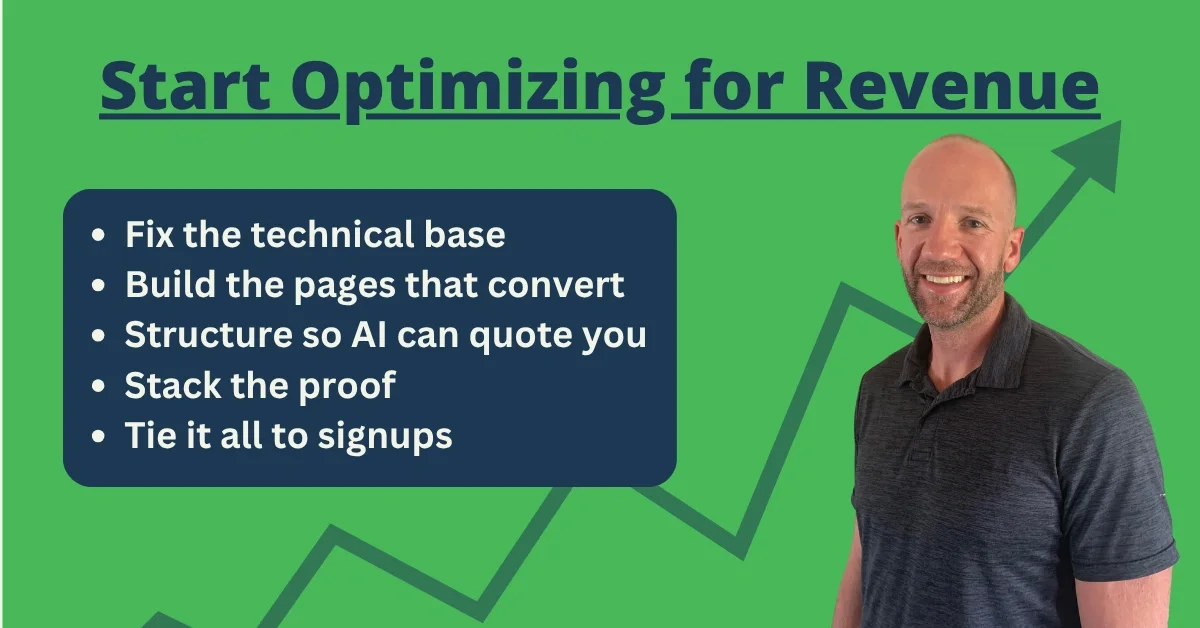
Your organic footprint is the one asset standing between that research and a booked trial. You need to:
Fix the technical base
Build the pages that convert
Structure so AI can quote you
Stack the proof
Tie it all to signups.
Do that, and you stop hoping people stumble onto you and start showing up the moment they search.
Because the goal was never to just rank.
The goal is to be the solution they choose because they see you where it counts.
FAQs
-
Google has said SEO typically needs four months to a year to show real benefit, and SaaS is no exception. Expect early ranking movement and technical wins in the first two to three months, with meaningful traffic and pipeline impact building from around month four onward, then compounding as your content ages and earns authority. Anyone promising page one overnight is selling you something.
-
The tactics overlap, but the game is different. SaaS involves long sales cycles, buying committees, high lifetime value, and global competition, so the strategy leans hard on high-intent pages (comparison, alternatives, integration, and pricing) and ties everything to signups rather than raw traffic. Generic SEO advice built for local or ecommerce sites usually misses that.
-
More than ever, because it's the same system. AI assistants build their answers from the structured, credible content that also powers search rankings. G2's 2026 research found about half of B2B software buyers now start in an AI chatbot, and most think more highly of vendors those tools recommend. A well-optimized site is what makes you eligible to be the software an AI names.
-
Bottom-of-funnel pages: "best [category]" roundups, "[you] vs [competitor]" comparisons, "[competitor] alternatives" pages, pricing pages, integration pages, and feature pages. These match buyers who are close to a decision, and they're the exact queries AI assistants use to assemble a shortlist. Build these before you invest in top-of-funnel volume.
-
If you have the time to work this checklist consistently, it'll take you a long way, and that's the whole point of this guide. Most founders and lean marketing teams don't, because they're shipping product and running the business, not tracking AI citations every week. If you'd rather have it handled, that's what our B2B SaaS SEO work is built for. We further compare the tradeoffs of going for in-house SEO vs. an agency.
Suggested External Links Used in This Post

Jesse McFarland is the founder of SpearPoint Marketing, a conversion-focused SEO and AI search agency based in Centennial, Colorado. Jesse has more than 17 years of digital marketing experience across B2B, SaaS, healthcare, legal, fitness, ecommerce, and startup organizations.
He specializes in helping companies turn organic search into qualified demand through modern SEO, AEO, GEO, AI Visibility, content strategy, technical SEO, and brand-first search marketing. Jesse helps business owners and marketing leaders understand how search is changing without losing their minds every time someone on LinkedIn announces SEO is dead again.