Gym keywords are the foundation of every successful fitness marketing strategy. Whether your goal is to rank in Google search results, appear in Google Maps, run profitable Google Ads, or grow visibility on YouTube, everything starts with the keywords your audience is actually searching for.
Many gyms struggle with keyword research because they approach it like a national brand or an ecommerce business. Fitness marketing is different. Gyms rely on local intent, service driven searches, and high trust decision making. Targeting the wrong keywords can bring traffic that never converts, while the right gym keywords can consistently generate tours, trials, and memberships.
This guide breaks down keyword research for gyms across Google search, YouTube, and Google Ads. You will learn how to identify high intent gym keywords, how to use them correctly on each platform, and how keyword strategy fits into a larger fitness SEO approach. For a broader view of how keywords connect to rankings and growth, reference the fitness.

5 Key Takeaways
Gym keywords control where and how your gym appears online
Keyword intent matters more than keyword volume
Local search behavior is critical for gyms
Google, YouTube, and Google Ads each require different keyword approaches
Proper keyword research leads to higher quality traffic and better conversions
Get a FREE Local SEO Playbook
for Gym and Local Business Owners
Learn How To Best Utilize Your Website
and Google Business Profile
TL;DR
Gym keywords determine how people find your gym online. Strong keyword research focuses on intent, location, and services rather than raw search volume. Google search, YouTube, and Google Ads all require different keyword strategies, but when aligned correctly, they work together to drive consistent leads and memberships.
Table of Contents Show
What Are Gym Keywords
Gym keywords are the search terms people use when looking for fitness related services. These can include location based searches like “gym near me,” service focused searches like “personal training gym,” or content driven searches like “how to start lifting weights.”
Not all fitness keywords are gym keywords. Broad terms such as “fitness tips” or “workout routines” may generate traffic, but they rarely convert into memberships. Gym keywords are tied to action and intent. They signal that someone is actively searching for a gym, a program, or a solution that your business provides.
Strong gym keyword research focuses on terms that reflect real buying behavior, not general interest.
Why Keyword Research for Gyms Is Different Than Other Businesses
Keyword research for gyms is different because gyms are local, service based, and trust driven. People are not ordering a product online. They are choosing a place they will visit multiple times per week.
This creates three major differences:
First, location matters. Most gym searches include a city, neighborhood, or “near me” modifier.
Second, intent matters. A search for “best gym for beginners” is very different from “how to get abs fast.”
Third, competition is local. You are not competing with national brands for attention. You are competing with other gyms within a few miles.
Because of this, gyms must prioritize relevance and intent over volume when selecting keywords.

Types of Gym Keywords You Need to Know
Local Gym Keywords
Local gym keywords include geographic modifiers such as city names, neighborhoods, and service areas. Examples include “gym in Scottsdale,” “personal training near me,” or “Cross training gym Phoenix.”
These keywords are critical for Google Maps and local SEO. They attract people who are actively looking for a gym they can visit.
Service Based Gym Keywords
Service based keywords describe what your gym actually offers. Examples include “small group training,” “youth athletic training,” “strength training gym,” or “boxing fitness classes.”
These keywords help match your gym with the right audience. A gym focused on personal training should not rely on generic “gym” keywords alone.
Informational Gym Keywords
Informational keywords answer questions and support long term SEO growth. Examples include “how to start weight training,” “benefits of strength training,” or “how often should kids exercise.”
These keywords may not convert immediately, but they build authority and trust that leads to future conversions.
Gym Keywords for Google Search
Google search is where most gym discovery begins. Keyword research for Google should focus on high intent searches that indicate readiness to take action.
Strong Google search gym keywords often include:
Location modifiers
Service descriptions
Program specific terms
“Near me” searches
Examples include “personal training gym near me” or “strength training gym in Carmel.”
Each keyword should map to a specific page on your website. Service keywords belong on service pages, not blog posts. Informational keywords belong in blog content that supports your overall SEO strategy.
Avoid targeting the same keyword on multiple pages, as this creates confusion and weakens rankings.

Gym Keywords for Google Ads
Google Ads keyword research is more aggressive than SEO keyword research. Ads target users who are ready to take action now.
High performing gym ad keywords usually include:
“Gym membership near me”
“Personal trainer near me”
“Best gym for beginners”
“Private training gym”
These keywords often have higher costs, but they also produce higher intent leads.
When building ad campaigns, group keywords by theme instead of focusing on single terms. This improves relevance and quality scores while controlling costs.
SEO keywords and ad keywords should align in intent, but they do not need to be identical.
Gym Keywords for YouTube
YouTube is the second largest search engine and an underutilized channel for gyms. YouTube keyword research focuses on education, demonstrations, and trust building.
Common YouTube gym keyword themes include:
Exercise demonstrations
Beginner fitness guidance
Program explanations
Behind the scenes gym content
Examples include “how to start strength training,” “personal training for beginners,” or “youth athletic training exercises.”
YouTube keywords should be used in video titles, descriptions, and spoken naturally within the video. These videos support SEO by building authority and increasing brand familiarity before someone ever searches for your gym name.
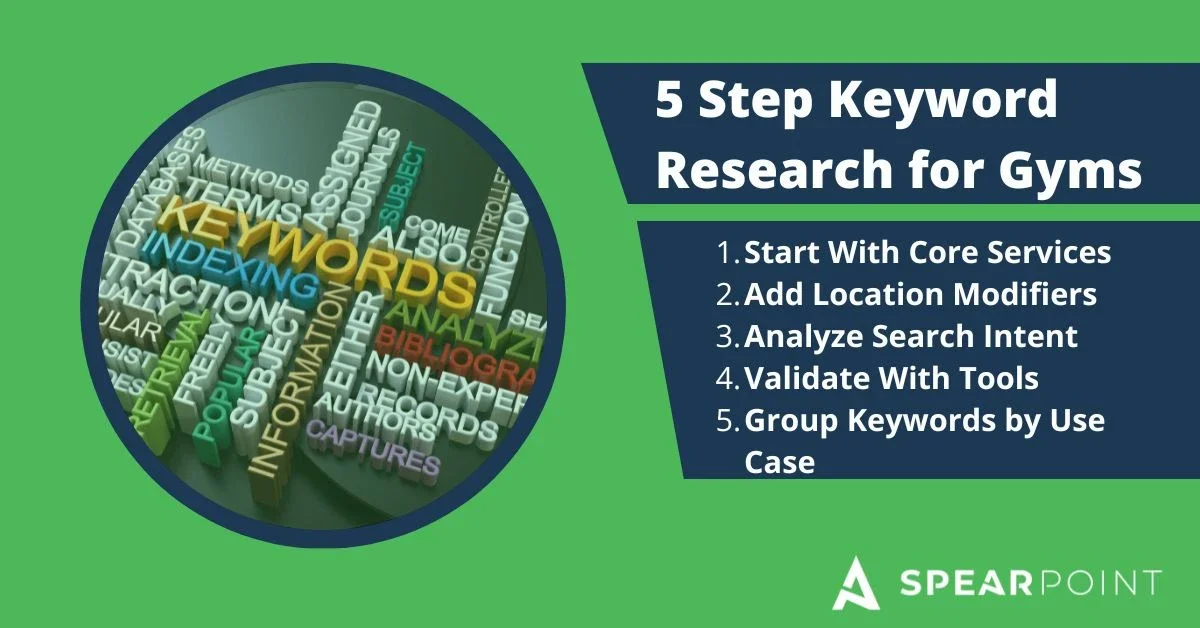
How to Do Keyword Research for Gyms Step by Step
Step 1: Start With Core Services
List everything your gym offers that generates revenue. This may include personal training, group fitness, youth programs, or specialty training.
These services form the base of your keyword strategy.
Step 2: Add Location Modifiers
Attach cities, neighborhoods, and service areas to your core services. This creates location specific gym keywords that align with how people search.
Step 3: Analyze Search Intent
Determine whether each keyword indicates readiness to buy or a need for information. Transactional keywords belong on service pages. Informational keywords belong in blog content.
Step 4: Validate With Tools
Use Google Search Console to see what you already rank for. Use Google Keyword Planner for Ads data. Use YouTube autocomplete to understand video search behavior.
Tools are guides, not decision makers. Always prioritize intent.
Step 5: Group Keywords by Use Case
Organize keywords into groups for SEO pages, blog posts, ads, and videos. This prevents overlap and improves clarity across your marketing strategy.
Common Mistakes Gyms Make With Keywords
Many gyms chase high volume keywords that never convert. Others target generic fitness terms that attract the wrong audience.
Common mistakes include ignoring location, using the same keywords everywhere, and failing to match keywords to page intent.
Keyword research should support business goals, not just traffic numbers.
24 hour fitness center
24 hour fitness center
24 hour gym
24 hour gym near me
24/7 gym
24/7 gym near me
athletic training gym
best gym
best gym membership
best gym near me
best gyms for beginners
boutique gym
cheap gym membership
cheap gym near me
community gym
family gym
fitness gym
fitness gym near me
functional training gym
group fitness classes
gym
gym benefits
gym cancellation policy
gym classes
gym day pass
gym deals
gym for athletes
gym for beginners
gym for strength training
gym for weight loss
gym free trial
gym in city
gym in state
gym membership
gym membership cost
gym membership near me
gym near me
gym open late
gym reviews
gym with basketball court
gym with childcare
gym with childcare near me
gym with daycare
gym with nutrition coaching
gym with performance testing
gym with personal coaches
gym with pickleball
gym with pool
gym with pool near me
gym with recovery services
gym with sauna
gym with sauna near me
gym with stretching area
gym with turf training
HIIT gym
local fitness center
local gym
luxury gym
men’s gym
neighborhood gym
personal trainer cost
personal training gym
private gym
private gym near me
recovery gym
semi-private training gym
small group training gym
sports performance gym
strength training gym
women’s gym
women’s gym near me
women-only gym
workout gym
workout gyms near me
workouts at the gym
youth fitness gym
youth gym membership
How Gym Keywords Support the Bigger SEO Strategy
Keywords are not isolated tactics. They support content creation, service pages, Google Maps visibility, and paid advertising.
When gym keywords are aligned across SEO, Ads, and YouTube, each channel strengthens the others. This creates consistent messaging, stronger authority, and better conversion rates.

Tired of spending hours of
marketing without results?
See how SpearPoint can help you double your leads with our fitness marketing & SEO plans.
Conclusion
Gym keywords shape how people find, evaluate, and choose your business. Strong keyword research focuses on intent, location, and services rather than raw volume. When keywords are aligned across Google search, YouTube, and Google Ads, they become a powerful growth engine for your gym.
Treat keyword research as a strategic asset, not a one time task, and it will continue to drive visibility, leads, and memberships over the long term.
FAQs About Gym Keywords
How many keywords should a gym target?
Focus on quality over quantity. A small group of high intent keywords will outperform hundreds of generic terms.
Are “near me” keywords still important?
Yes. These searches remain one of the strongest signals for local intent.
Can gyms rank for competitive keywords?
Yes, but only when combined with strong local signals, relevant content, and authority.
How often should keyword research be updated?
Review keywords at least twice per year or when services, locations, or goals change.

Jesse McFarland is a marketing strategist with more than (how many) years of experience helping businesses grow through SEO, brand development, and content strategy. Before founding SpearPoint Marketing, Jesse spent years working inside the fitness industry as both a coach and fitness professional, giving him a unique understanding of how gyms operate, what members care about, and what drives real growth. His combined expertise in marketing and fitness allows him to create SEO strategies that are practical, effective, and specifically tailored to help gyms, studios, and fitness brands succeed. Connect with Jesse on LinkedIn or visit the author page to learn more.