SEO for Podcasts: 2026 Ultimate Guide
Podcasting has evolved from a niche medium into a mainstream content powerhouse. With millions of shows competing for listener attention, discovery has become the biggest challenge facing podcasters today. The answer lies in treating your podcast like any other digital asset that needs to be found online.
Search engines now index audio content in ways they couldn't just a few years ago. Podcast platforms have developed sophisticated algorithms that determine which shows appear in recommendations and search results. Understanding how to optimize for both traditional search engines and platform-specific discovery mechanisms can mean the difference between obscurity and steady audience growth.
This guide walks you through practical strategies for making your podcast more discoverable in 2026. You'll learn how to apply proven SEO principles to audio content, optimize for platform algorithms, and build authority that translates into loyal listeners.

5 Key Takeaways
Your website is where podcast SEO actually happens
Search engines cannot meaningfully rank raw audio files. Episode pages, transcripts, schema markup, and internal linking on your own domain are what make podcasts discoverable in Google, AI search tools, and browser-based listening.Every episode should function like a search landing page
Strong podcast SEO comes from episode pages with clear titles, summaries, chapters, transcripts, and internal links, not from embedding a player and adding a short paragraph of show notes.Transcripts are the biggest SEO multiplier for podcasts
Clean, readable transcripts turn audio into crawlable content, unlock long-tail keyword visibility, improve accessibility, and increase engagement signals such as time on page.Topical clusters outperform isolated episode pages
Connecting episodes through topic hubs and internal links builds topical authority faster than publishing episodes chronologically with no contextual relationships.Podcast SEO should drive business outcomes, not just listens
Whether the podcast is the brand or supports a company, episode pages should guide visitors toward subscriptions, email signups, demos, or consultations so organic discovery leads to measurable growth.
TL;DR
Podcast SEO in 2026 is not about ranking inside Apple Podcasts or Spotify alone. It is about turning your podcast website, or the podcast section of your site, into a system of indexable episode pages that search engines and AI tools can understand, rank, and reference. When episode pages include transcripts, schema, internal links, and clear calls to action, a podcast becomes a long-term traffic and demand engine rather than just an audio archive.
Table of Contents Show
Fundamentals of Podcast SEO in 2026
How Search Engines and Podcast Platforms Discover Content
The podcast discovery landscape has fundamentally shifted. According to Cumulus/Signal Hill research, YouTube has surpassed traditional podcast apps as the primary discovery channel in the U.S. This reflects a broader trend toward search-driven platforms where users actively look for content rather than stumbling upon it.
Search engines crawl podcast metadata just as they would any webpage. When someone searches for topics related to your expertise, Google displays podcast episodes alongside articles and videos. Podcast platforms like Spotify and Apple Podcasts use similar principles, analyzing titles, descriptions, and engagement signals to surface relevant shows.
The key difference in 2026 is that discovery happens across multiple surfaces. Your episode might appear in Google search results, YouTube recommendations, Spotify's algorithmic playlists, or smart speaker responses. Each platform interprets your content differently, but they all rely on the same foundation: clear, descriptive metadata that signals what your content offers.
Buzzsprout data tracking 120,338 podcasts shows web browser listening rose to 7.3% of total listens by January 2025, up from 5.4% in June 2024. This growth indicates listeners increasingly find podcasts through direct search rather than dedicated apps. Your SEO efforts now reach audiences who might never open a traditional podcast player.
Why Traditional SEO Principles Apply to Audio Content
Audio content follows the same discovery rules as written content. Search engines need text to understand what your podcast discusses. When you publish an episode without accompanying text, you're essentially invisible to search algorithms.
The fundamentals remain unchanged. Keywords signal relevance. Quality backlinks indicate authority. User engagement metrics demonstrate value. Technical optimization ensures crawlability. These principles work for podcasts because platforms ultimately need to match content with user intent.
Think about how you'd optimize a blog post. You research target keywords, place them strategically in titles and headings, write compelling meta descriptions, and ensure fast page load times. Your podcast needs the same treatment. The episode title functions as your headline. Show notes serve as body content. Episode descriptions act as meta descriptions.
The challenge lies in making audio searchable. Transcripts convert spoken words into crawlable text. Show notes provide context and keywords. Strategic linking creates pathways for both users and search engines. Each element works together to help algorithms understand your content's value.
Smart podcasters think beyond audio files. They create ecosystems of supporting content that reinforce their core message while maximizing search visibility. This approach transforms episodes from isolated audio files into interconnected content hubs that feed multiple discovery channels.
The Role of Video Podcasts in Modern Discovery
Video has become essential for podcast growth. Data shows 31% of podcast listeners discover new podcasts on YouTube, making it the second most common platform after podcast apps. The platform holds 39% share among monthly U.S. podcast consumers, the highest of any platform ahead of Spotify and Apple Podcasts.
Video podcasts serve dual purposes. They satisfy the growing preference for visual content while creating additional SEO opportunities through YouTube's massive search engine. Research indicates 42% of U.S. weekly podcast listeners prefer watching podcasts, up from 30% in 2022.
YouTube SEO follows principles similar to Google search but with unique ranking factors. Watch time matters more than keywords alone. Thumbnails drive clicks. Viewer retention signals quality. Your video podcast optimization must account for these platform-specific elements while maintaining core SEO fundamentals.
The numbers prove video's impact. 50.6% of podcast shows now post full videos on YouTube, a 130% increase from 2022. YouTube reports 1 billion monthly podcast users consuming 400 million hours monthly on living-room devices.
Creating video versions doesn't require complex production. Many successful podcasters simply record their sessions with video cameras then upload the raw footage. The key lies in optimization rather than production value. Proper titles, descriptions, tags, and transcripts make your video discoverable regardless of visual polish. That said, video podcasts work best for interview formats and visual demonstrations, while pure audio often suits solo commentary or storytelling where visual elements add minimal value.
Keyword Research for Podcast Content
Finding Your Podcast's Core Keywords
Your podcast needs a keyword foundation just like any digital marketing strategy. Start by understanding your target audience's search behavior. What problems do they face? What questions do they ask? What terms do they use when looking for solutions?
Effective keyword research begins with brainstorming seed keywords across core categories. For podcasts, these might include your main topic, guest expertise areas, recurring segment themes, and industry-specific terms. Collaborate with team members or frequent listeners to expand your initial list beyond your own perspective.
Competitor analysis reveals gaps and opportunities. Identify successful podcasts in your niche and analyze their episode titles, descriptions, and show notes. Tools like SEMrush help you discover which keywords drive traffic to competitor content. You're not copying their strategy (you're learning what resonates with your shared audience).
Google Keyword Planner provides free insights into search volumes and competition levels. Enter your seed keywords to discover related terms, monthly search volumes, and difficulty scores. Focus on phrases with meaningful search volume but manageable competition. Long-tail keywords often offer better opportunities for newer podcasts than broad, competitive terms.
SEMrush generates comprehensive keyword lists including long-tail variations and competitive positioning data. Ahrefs identifies content gaps where demand exists but supply remains limited. Moz Keyword Explorer provides accurate volume estimates and organic CTR scores. Each tool offers unique insights, but you don't need all of them. Choose one that fits your budget and commit to using it consistently.
Google Trends helps you understand seasonal patterns and rising topics. Answer The Public surfaces actual questions people ask about your seed keywords. ChatGPT can generate creative angles and content ideas. The key lies in combining these sources into a prioritized list organized by search intent and relevance to your show's mission.
Episode-Level Keyword Strategy
Each episode deserves its own keyword strategy. Generic show-level optimization isn't enough when competing for attention in crowded markets. Listeners search for specific information, not vague podcast categories.
Understand your audience and brainstorm topics that address their needs. Start by profiling listener pain points, interests, and search behaviors. Then brainstorm broad episode topics that can serve as seed keywords. This alignment between keywords and listener intent makes your episodes discoverable where your audience actually searches.
Analyze competitor podcasts for gaps. Review their episode titles, descriptions, and show notes to identify high-volume keywords they rank for. Target underserved variations with lower competition to differentiate your content. You might discover topics your competitors mention briefly but never fully explore.
Use keyword research tools for volume and competition data. Input your episode topics into Google Keyword Planner, Keywords Everywhere, Ahrefs, or SEMrush. Filter results for high search volume combined with low competition. Mix short-tail and long-tail phrases, assigning unique primary keywords to each episode to avoid cannibalization.
Incorporate multiple keyword types into your strategy. Host and brand-related keywords build your personal authority. Guest expertise keywords leverage their existing recognition. Listener intent keywords address specific informational, entertainment, or problem-solving needs. Place these strategically in titles, descriptions, show notes, transcripts, captions, and promotional materials.
Mine social platforms and community sources for long-tail ideas. Extract questions and pain points from Reddit threads, YouTube comments, Google Autocomplete, and People Also Ask features related to your niche. Cluster these into topical maps for episode planning, prioritizing low-competition opportunities that larger shows overlook.
Analyzing Competitor Keywords and Content Gaps
Competitor analysis goes beyond copying what works. You're looking for patterns, missed opportunities, and positioning angles that differentiate your show while serving underserved audience needs.
Start by identifying your top five direct competitors. These should be podcasts targeting similar audiences with comparable expertise levels. Use podcast charts on Apple Podcasts and Spotify to find shows consistently ranking in your category.
Tools like SEMrush and Ahrefs let you enter competitor podcast websites to see which keywords drive their organic traffic. Pay attention to episode-level keywords rather than just show-level terms. Note which episodes generate the most engagement and what keywords they target.
Look for content gaps where audience interest exists but available content falls short. Perhaps competitors mention certain topics briefly without providing depth. Maybe they focus on beginner content while intermediate listeners search for advanced guidance. These gaps represent your opportunity to serve audiences that competitors ignore.
Track keyword difficulty alongside search volume. Highly competitive keywords dominated by established shows might not be worth targeting initially. Focus on medium-difficulty keywords where quality content can compete. Build authority in these areas before tackling more competitive terms.
Create a spreadsheet mapping competitor episodes to their target keywords, search volumes, and estimated traffic. Compare this against your own content plan to identify opportunities and avoid duplication. This research should inform your editorial calendar for the next quarter at minimum.
Optimizing Your Podcast's Core Elements
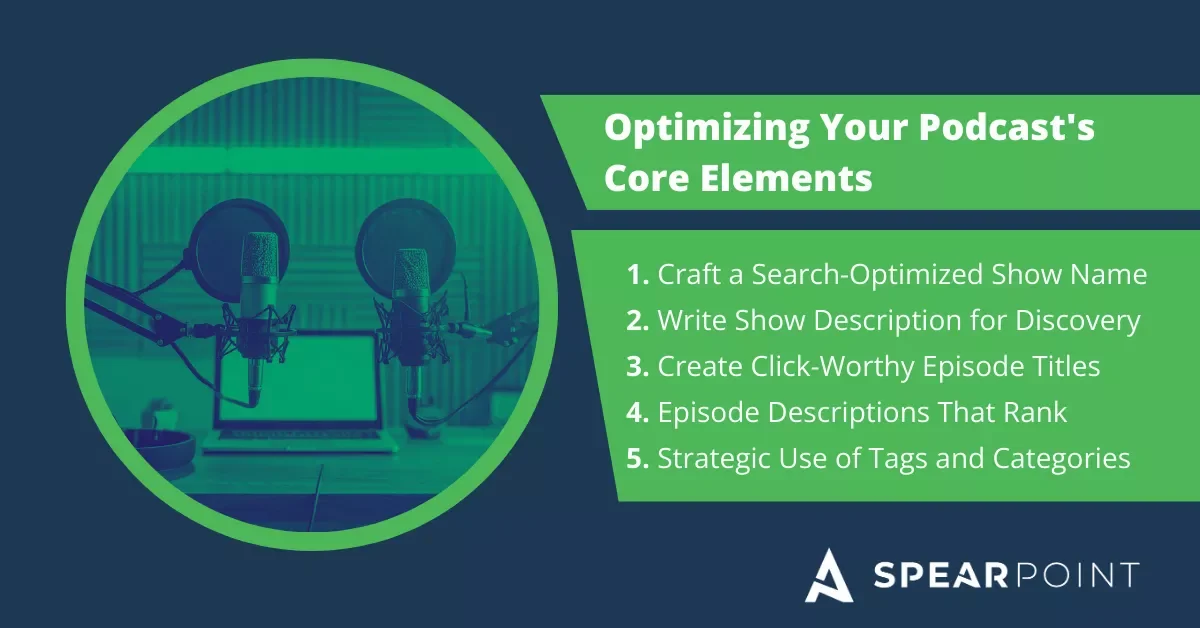
Crafting a Search-Optimized Podcast Name
Your podcast name serves as your primary brand signal and your most important SEO element. It needs to balance memorability with discoverability. A clever name that nobody searches for won't help you grow.
Think about incorporating your core keyword into your show name if it flows naturally. A podcast called "SEO Marketing Growth" immediately signals its focus to both listeners and algorithms. This approach works best for business and educational podcasts where clarity matters more than creativity.
Alternatively, pair a unique brand name with a descriptive subtitle. "The Growth Show: Marketing Strategies for B2B Leaders" combines brand identity with searchable terms. This structure gives you flexibility while maintaining SEO value through the subtitle.
Avoid overly clever names that obscure your topic. "The Echo Chamber" might sound interesting but tells potential listeners nothing about your content. When people search for your topic, your podcast won't appear because your name lacks relevant keywords.
Keep it concise and memorable. Long names get truncated in search results and are harder to remember. Aim for three to five words maximum. Test pronunciation by saying it out loud. If people consistently mispronounce or misspell your name, you'll lose word-of-mouth discoverability.
Check availability across platforms before committing. Your podcast name should be available as a domain name, social media handles, and on major podcast platforms. Consistency across channels reinforces your brand and prevents confusion.
Writing Your Show Description for Discovery
Your show description appears everywhere listeners might discover your podcast. It influences rankings on Apple Podcasts, Spotify, and Google. It determines whether browsers become subscribers. Yet many podcasters treat it as an afterthought.
Front-load your primary keywords in the first sentence. Podcast platforms give more weight to text appearing early in descriptions. Start with a clear statement of what your show offers and who it serves. "SEO for Podcasts teaches content creators how to optimize their shows for maximum discoverability" beats "Welcome to our amazing podcast where we talk about interesting things."
Explain the value proposition within 150 characters. Many platforms truncate descriptions after this point, showing the rest only when users click "more." Your first sentence should convince listeners to keep reading or immediately subscribe.
Include secondary keywords naturally throughout the description. Describe your topics, guest types, episode format, and unique perspective using terms your target audience searches for. Avoid keyword stuffing, which hurts readability and can trigger platform penalties.
Address listener pain points and promises. What problems does your show solve? What knowledge will listeners gain? What outcomes can they expect? Specific benefits resonate more than vague claims about quality or entertainment value.
End with a clear call to action. Tell people exactly what to do next, whether that's subscribing, visiting your website, or following on social media. Include your primary keyword one final time if it fits naturally.
Creating Click-Worthy Episode Titles
Episode titles determine whether listeners click your content in search results and recommendation feeds. They need to balance SEO requirements with human appeal. An optimized title that bores people won't generate the engagement signals that improve rankings.
Place your target keyword at or near the beginning. Podcast platforms and search engines give more weight to words appearing early in titles. "Keyword Research Strategies for Podcasters" outperforms "How Podcasters Can Implement Better Keyword Research Strategies" for the keyword "keyword research."
Keep titles under 60 characters when possible. This ensures they display fully in most interfaces without truncation. If you need more length to provide context, prioritize keywords within the character limit then add descriptive details.
Use numbers and specific promises. "7 Podcast SEO Mistakes Killing Your Growth" performs better than "Common Podcast SEO Mistakes." Numbers signal actionable, scannable content. Specificity demonstrates expertise and sets clear expectations.
Front-load value and intrigue. Compare "Interview with Sarah Johnson" against "How Sarah Johnson Grew Her Podcast to 100K Monthly Downloads." The second title promises specific value while incorporating searchable terms like "grow podcast" and "downloads."
Test emotional triggers and power words. Terms like "ultimate," "proven," "secret," "truth," and "revealed" can boost click-through rates when used authentically. Avoid clickbait that promises more than your content delivers. Disappointed listeners hurt your engagement metrics and reputation.
Match search intent. When people search podcast keywords, what are they really looking for? How-to guidance? Industry news? Expert opinions? Philosophical discussions? Your title should clearly indicate whether your episode satisfies their specific intent.
Episode Descriptions That Convert and Rank
Episode descriptions serve triple duty. They help platforms categorize your content, convince potential listeners to click play, and provide crawlable text for search engines. Most podcasters waste this opportunity with lazy summaries or promotional fluff.
Start with a compelling hook that incorporates your episode keyword. The first 100 characters determine whether people expand to read more. Make them count. When B2B marketing agency Mitie partnered with industry experts, their strategic optimization achieved nearly 10,000 downloads per episode through keyword-rich titles and descriptions targeting specific business audiences.
Provide a detailed summary using natural language. Describe what listeners will learn, what topics you cover, and what insights guests share. Use semantic variations of your keywords rather than repetitive exact-match phrases. "Optimization techniques for podcast discovery" and "improving your show's search visibility" both support the same core keyword without sounding robotic.
Include timestamps for longer episodes. Break down your episode into sections with time markers. This serves listeners looking for specific topics while adding keyword-rich section headers. "03:15 - Keyword research tools for podcasters" and "12:40 - Optimizing Apple Podcasts metadata" create additional ranking opportunities.
Feature guest credentials prominently. If your guest has recognizable expertise or accomplishments, mention them early. This builds credibility while incorporating relevant keywords. "Marketing strategist Jane Smith, who manages $2M in annual ad spend, shares her framework for podcast advertising ROI."
Link to relevant resources mentioned in the episode. If you discuss specific tools, studies, or websites, provide clickable links. This improves user experience while creating legitimate reasons for keyword-rich anchor text. Enfuce's Sauna Podcast Studio demonstrates how event-driven content with optimized descriptions engaged listeners from 20+ countries.
End with a clear next step. Tell listeners what action to take after the episode. This might be subscribing, visiting your website, joining your email list, or checking out related episodes. Make the call to action specific and easy to complete.
Strategic Use of Tags and Categories
Tags and categories help platforms organize and recommend your content. Many podcasters select these hastily during initial setup then never revisit them. This represents missed optimization opportunities.
Choose your primary category carefully. Apple Podcasts and Spotify allow you to select one primary category and sometimes secondary categories. Your primary choice significantly impacts where you appear in charts and browse features. Research which categories your target audience actually explores.
Select categories based on competition and fit. Being a mediocre show in "Business" might be harder than becoming a top show in "Business/Entrepreneurship." Narrower categories often have less competition while still reaching your target audience.
Use all available tags strategically. Different platforms handle tags differently, but most allow multiple tags per episode. Include variations of your target keywords, topic-specific terms, guest names for notable guests, and theme identifiers for recurring segments.
Update tags for evergreen content. When events or trends mentioned in your episode become outdated, refresh tags to focus on timeless aspects. An episode about "podcast growth strategies during COVID-19" might later become "podcast growth strategies for uncertain markets."
Avoid tag stuffing with irrelevant terms. Quality beats quantity. Using "SEO" as a tag makes sense for an SEO podcast but adds no value for a true crime show. Irrelevant tags might trigger spam filters or reduce your credibility with algorithms designed to detect manipulation.
Research trending tags in your niche. Look at successful episodes in your category to see which tags they use. Tools like podcast analytics dashboards show which tags drive discovery. Test different tag combinations across episodes to identify what works for your specific show.
Technical Podcast SEO Fundamentals
RSS Feed Optimization Best Practices
Your RSS feed is the technical backbone of podcast distribution. It tells platforms everything they need to know about your show. Poorly optimized feeds create discovery problems regardless of how good your content might be.
Make sure your feed is publicly accessible without restrictions. Google requires RSS feeds to be crawlable with no login requirements, access tokens, or blocks preventing indexing. Private feeds won't appear in search results or most podcast directories.
Include a valid homepage link in your RSS. Google now requires a crawlable HTTPS URL to your podcast's homepage in the <link> element. This helps search engines understand the relationship between your feed and website while providing listeners a place to learn more.
Specify explicit file extensions for audio enclosures. Your episode files must show clear extensions like .mp3, .m4a, .ogg, or .wav in their URLs. Avoid generic file names that don't indicate audio format. Search engines and podcast apps use these extensions to properly index and play your content.
Maintain complete podcast metadata in your feed. Include cover images, detailed descriptions, owner email addresses, and at least one published episode. Adhere to RSS 2.0 specifications to ensure compatibility across platforms. Incomplete feeds can cause rejection from major directories.
Use HTTPS consistently across all assets. Serve your RSS feed, homepage, cover images, and audio files uniformly via HTTPS. Mixed HTTP and HTTPS protocols confuse some platforms and can trigger security warnings. Google requires HTTPS for proper indexing.
Validate your feed regularly using tools like Cast Feed Validator or Podbase. These free services check for technical errors that could prevent distribution or hurt discoverability. Fix issues promptly to maintain consistent availability across platforms.
Implementing Podcast Schema Markup
Schema markup helps search engines understand your podcast content and display it properly in search results. This structured data can earn you rich snippets with play buttons, episode lists, and ratings directly in Google search.
Add podcast schema to your website's episode pages. The markup should include your show name, episode title, description, audio URL, publish date, and duration. Google's Structured Data Markup Helper walks you through the process if you're unfamiliar with coding.
Include PodcastEpisode and PodcastSeries schema types. PodcastSeries defines your overall show while PodcastEpisode marks individual episodes. Properly nested schema helps search engines understand the relationship between your show and its episodes.
Validate your schema implementation using Google's Rich Results Test. This free tool shows exactly how Google interprets your structured data and identifies any errors. Address warnings and errors to maximize your chances of earning rich results.
Update schema as you publish new episodes. Dynamic websites can automate this process, but manually managed sites require attention with each new release. Outdated schema that doesn't match your actual content can trigger penalties.
Think about adding additional schema types for related content. If your show notes include how-to instructions, add HowTo schema. If you discuss specific products, add Product schema. Multiple schema types on one page are fine as long as each accurately represents the content.
Choosing an SEO-Friendly Podcast Host
Your hosting platform impacts technical SEO in ways most podcasters don't consider. While no recent data directly compares SEO performance across major hosts, certain features clearly support better discoverability.
Look for hosts that automatically generate episode pages with clean URLs. Your hosting platform should create a unique, descriptive URL for each episode rather than using generic strings of numbers and letters. Structure matters: "yourpodcast.com/episode/keyword-topic" beats "yourpodcast.com/ep?id=12345."
Prioritize platforms offering easy transcript integration. Tools like Riverside provide 99% accurate AI transcription during recording with SRT file exports. These transcripts should automatically populate your episode pages, creating crawlable text without manual effort.
Make sure your host supports custom domains. Using "yourpodcast.podcasthost.com" as your website URL provides less SEO value than "yourpodcast.com." Custom domains let you build authority under your own brand rather than your host's domain.
Check for built-in SEO features like customizable title tags, meta descriptions, and image alt text. Platforms like Buzzsprout and RSS.com offer these controls, letting you optimize each element without technical knowledge. Basic hosts often lock you into generic templates.
Consider analytics and optimization tools. RSS.com provides IAB-certified analytics with transcription services for SEO visibility. Platforms offering geographic data, device insights, and listening behavior help you refine your SEO strategy based on actual user patterns.
Research each platform's track record with major directories. While Anchor holds 54.9% of podcasts via RSS hosting, market share alone doesn't guarantee SEO advantages. Look for hosts with strong reputations for technical reliability and quick indexing across platforms.
URL Structure and Permalink Strategy
Clean, descriptive URLs improve both user experience and search engine crawling. Your URL structure should make sense to humans while incorporating relevant keywords naturally.
Keep URLs short and descriptive. Include your target keyword in the slug but avoid unnecessarily long phrases. "yourpodcast.com/episodes/podcast-seo-tips" works better than "yourpodcast.com/category/business/posts/the-ultimate-complete-guide-to-podcast-seo-tips-and-tricks."
Use hyphens to separate words, not underscores. Search engines treat hyphens as word separators but often read underscores as connectors. "podcast-seo" registers as two keywords while "podcast_seo" might read as one term.
Skip dates in episode URLs when possible. URLs containing publication dates become quickly outdated and can discourage clicks on older but still relevant content. If you must include dates for organizational purposes, place them after the descriptive slug.
Establish a consistent URL structure across all episodes. Whether you choose "yourpodcast.com/episode-name" or "yourpodcast.com/episodes/episode-name," stick with one format. Consistency helps both users and search engines understand your site architecture.
Implement proper redirects if you change URL structures. Moving from one permalink format to another requires 301 redirects from old URLs to new ones. This preserves any SEO value you've built through backlinks and previous indexing.
Think about page speed implications of your URL structure. While URLs themselves don't impact load times, overly complex structures often accompany overly complex site architectures. Simpler URL patterns typically indicate cleaner, faster-loading sites.
Creating SEO-Rich Supporting Content
Episode Show Notes That Drive Traffic
Show notes transform your audio content into text that search engines can index and rank. They also provide value to listeners who want to review key points or find resources mentioned during episodes. Yet many podcasters treat show notes as an afterthought, missing significant SEO opportunities.
Create dedicated, SEO-optimized pages for each episode. Publish show notes on your podcast website rather than relying solely on platform-provided description fields. This gives you control over formatting, links, and technical optimization while creating indexable pages that can rank in search results.
Write compelling overviews that summarize the episode while naturally incorporating relevant keywords, long-tail queries, and related terms. Research and place these terms in show notes and descriptions without stuffing. Planning episodes around target keywords leads to automatic optimization.
Structure content for both crawlability and user experience. Use headings and subheadings to break up text, making it scannable for readers and clearer for search engines. Add bullet points for key takeaways, images to increase engagement, and timestamps for navigation. Fast-loading pages with good formatting keep users engaged, signaling quality to search algorithms.
Pull highlights and quotes from transcripts to enhance show notes. These snippets serve dual purposes: they give potential listeners a taste of your content while adding keyword-rich text that search engines can index. Attribute quotes clearly to maintain credibility.
Link to relevant internal and external resources. If you mention other episodes, link to them to reduce bounce rates and signal content relationships to search engines. When referencing external studies or tools, link with concise anchor text focused on the specific data point or source, not the full context.
Podcast Transcription Strategies and Tools
Transcripts provide the single biggest SEO boost for podcast content. They convert audio into searchable text, make your content accessible to hearing-impaired users, and create opportunities to rank for long-tail keywords you might not have explicitly targeted.
Create dedicated, SEO-optimized transcript pages for each episode. Publish full transcripts on separate web pages with descriptive titles, meta descriptions, headings, internal links, and natural keyword integration. Use tools like Google Search Console to track indexing and ensure mobile-friendly design. This approach maximizes discoverability across search surfaces.
Focus on high-accuracy transcripts with human editing. Generate initial transcripts via AI tools like Riverside, which offers 99% accurate AI transcription during recording, or Amberscript at 85%+ accuracy. Then proofread manually to correct errors, add speaker labels, insert timestamps, ensure proper punctuation, create paragraphs, and maintain consistent formatting. Accuracy enhances both readability and SEO value.
Several tools streamline the transcription process. Riverside exports SRT files for transcripts and show notes integration. Podsqueeze provides AI-powered transcription with filler word removal while generating chapters and summaries for optimized episode descriptions. These automated approaches save time but still require human review for quality.
Incorporate keywords naturally into transcripts through episode planning. Rather than forcing keywords into existing transcripts, plan episodes around target keywords from the start. This creates automatic optimization as you naturally discuss topics using relevant terminology. Supplement with strategic keyword placement in titles and descriptions.
Enhance show notes with keyword-rich summaries and repurposed content. Write compelling show notes that summarize episodes, include keywords, and pull highlights or quotes from transcripts. Repurpose transcripts into blog posts, social snippets, or downloadable PDFs to create additional SEO touchpoints across platforms.
Structure transcript content for usability and SEO. Use headings and subheadings to organize topics discussed. Add bullet points for key concepts. Include images where relevant. Insert timestamps to help users navigate to specific segments. Fast-loading, well-formatted pages keep visitors engaged while signaling content quality to search engines.
Use transcripts for accessibility and multi-channel SEO. Make content inclusive for hearing-impaired users while providing text-based content that readers can consume. Share transcript excerpts on social media and monitor performance using analytics. Industry experts suggest expecting 5-20% traffic boosts from properly implemented transcripts, though results vary significantly by niche, existing authority, and content quality.
Building a Dedicated Podcast Website
Your podcast needs a home base beyond platform profiles. A dedicated website gives you control over SEO elements, provides space for supporting content, and creates a hub where all discovery paths converge.
Choose a platform that balances ease of use with optimization capabilities. WordPress powers most successful podcast websites because it offers extensive SEO plugins, customizable themes, and complete control over technical elements. Hosting platforms like Buzzsprout and Libsyn often provide website builders, but these typically offer less flexibility than standalone sites.
Implement core technical SEO elements from launch. Optimize page speed by compressing images, minifying JavaScript and CSS files, and using caching to ensure pages load in under two to three seconds. This reduces bounce rates and aligns with Google's ranking priorities. Secure your site with HTTPS to protect user data and avoid ranking penalties.
Make sure you have mobile responsive design per Google's mobile-first indexing policy. Test with Google's mobile-friendly tool to prevent user experience issues and traffic loss. Mobile compatibility is non-negotiable for modern SEO success.
Add schema markup to help search engines understand your content. Implement structured data for podcast series and episodes, including details like titles, descriptions, audio URLs, publish dates, and durations. This can earn rich results in Google search with play buttons and episode lists.
Create strategic internal linking structures. Use relevant anchor text to link between episodes, show notes, and related blog content. This establishes site hierarchy, improves crawlability, guides users through your content, and boosts SEO signals by demonstrating content relationships.
Develop clear, consistent navigation following the three-click rule. Users should reach any content from your homepage within three clicks. Uniform menus across all pages minimize confusion and bounce rates while enhancing usability.
Include essential pages beyond episode archives. Your website needs an about page explaining your show and credentials, a contact page, episode archives organized by date or topic, show notes for each episode, blog content expanding on episode themes, and subscription links to major platforms.
Converting Episodes into Blog Content
Podcast episodes contain valuable insights that can be repurposed into standalone blog content. This strategy multiplies your SEO impact by creating multiple entry points for the same core information.
Transform episodes into comprehensive blog posts rather than simple transcripts. Take your episode's main points and expand them into detailed articles with added context, data, and examples. Include the audio player at the top so readers can choose to listen or read.
Extract specific segments into focused posts. A 60-minute episode discussing five podcast SEO tools can become five separate blog posts, each diving deeper into one tool's features, pricing, and use cases. This approach targets more specific long-tail keywords than a general episode could.
Create supporting content around episode themes. If your episode interviews a marketing expert, write a blog post providing background on the expert, context for their advice, or a deeper exploration of topics you only touched on briefly. Link prominently to the full episode.
Optimize blog content following proven principles. Place primary keywords at the start of titles, limit title length to 50-60 characters, and accurately describe content to influence rankings. Include keywords in file names and alt tags for images. Compress images for speed while maintaining quality.
Develop content clusters around your core topics. Create pillar posts covering broad themes like "podcast SEO best practices" then link to more specific cluster posts like "optimizing Apple Podcasts listings" or "YouTube SEO for podcasters." This structure demonstrates topical authority to search engines.
Include clear calls to action in blog posts directing readers to subscribe to your podcast. Converting blog readers into podcast subscribers creates a valuable feedback loop where your SEO efforts directly grow your listening audience.
YouTube SEO for Podcasters
Optimizing Video Podcast Episodes
YouTube has become the dominant podcast discovery platform. With 39% share among monthly U.S. podcast consumers and 1 billion monthly podcast users, the platform can't be ignored. Optimization requires understanding YouTube's unique ranking factors beyond traditional SEO.
Create video versions of every episode when it adds value. Your video doesn't need elaborate editing or graphics. Many successful podcasters upload static images with audio or simple camera recordings. The key lies in making your audio content available where 42% of U.S. weekly podcast listeners prefer watching rather than just listening. Think about whether visual elements genuinely enhance your content before committing resources to video production.
Include full video transcripts in your description or as YouTube's automatic captions. Transcripts improve accessibility and help search engines understand your content better. Upload SRT caption files or let YouTube generate them, then edit for accuracy.
Optimize file names and metadata before uploading. Rename your video file to include your target keyword before uploading. Once uploaded, craft a keyword-rich title placing your primary term at the beginning. Write detailed descriptions front-loading keywords in the first 150 characters.
Create engaging thumbnails that drive clicks. Design custom thumbnails featuring faces, contrasting colors, and minimal text highlighting your episode's key benefit. YouTube's algorithm heavily weights click-through rate, making thumbnails critical for visibility.
Compress files for fast loading without sacrificing quality. Large video files can cause buffering, hurting viewer retention. Use tools like HandBrake to reduce file size while maintaining acceptable visual quality. Fast, smooth playback keeps viewers watching longer.
Keep videos focused and brief when possible. While long-form content performs well on YouTube, viewer retention matters more than raw length. Hook viewers in the first 3-30 seconds with your episode's main value proposition. Cut unnecessary introductions and tangents.
Include clear next steps in your video and description. Tell viewers exactly what to do after watching, whether that's subscribing, visiting your website, or watching another episode. Add YouTube cards and end screens linking to related content.
YouTube-Specific Metadata and Thumbnails
YouTube optimization differs from traditional SEO in important ways. The platform prioritizes engagement metrics like watch time, click-through rate, and viewer retention alongside keyword relevance.
Front-load your primary keyword in video titles. YouTube's search algorithm gives more weight to words appearing early. "Podcast SEO Tips: Keyword Research Strategies" beats "How to Properly Research and Implement Podcast SEO Tips Using Keywords" for ranking "podcast SEO tips."
Write descriptions that balance keywords with viewer value. Your first 150 characters appear in search results and "above the fold" in YouTube, so make them count. Explain what viewers will learn using natural language that incorporates semantic keyword variations.
Add timestamps to your video description breaking down episode segments. These create YouTube chapters that help viewers navigate to specific topics. Each timestamp should include relevant keywords naturally: "03:45 - Keyword research tools for podcasters" adds SEO value while improving user experience.
Use all available tag slots strategically. YouTube allows up to 500 characters of tags per video. Include your target keyword in the first tag, then add variations, related terms, and broader category tags. Research tags used by successful videos in your niche.
Design thumbnails following YouTube's best practices. Use 1280x720 pixel images with 16:9 aspect ratios. Feature close-up faces when possible, as human faces increase click-through rates. Add contrasting colors that stand out in search results. Include minimal text highlighting your key benefit or hook.
Test different thumbnail styles to identify what resonates with your audience. YouTube Analytics shows click-through rates for each thumbnail. If CTR is low, try different designs. A compelling thumbnail can dramatically increase views even without ranking changes.
Add your video to relevant playlists. Organize your podcast episodes into themed playlists based on topics, guest types, or content formats. Playlists encourage binge-watching while helping YouTube understand your content relationships.
Leveraging YouTube's Discovery Algorithm
YouTube's algorithm prioritizes watch time and engagement over traditional ranking factors. Understanding these priorities helps you optimize for recommendations, not just search results.
Hook viewers immediately to maximize retention. The first 30 seconds determine whether most viewers stay or leave. Start with your episode's biggest insight, most provocative statement, or clearest value proposition. Save introductions and housekeeping for later.
Edit specifically for YouTube rather than repurposing audio directly. Add visual elements, cut long pauses, and maintain pacing appropriate for video consumption. Strategic editing keeps viewers engaged and signals quality to the algorithm. However, excessive editing can strip away the authentic conversational feel that makes podcasts engaging in the first place. Find the balance that works for your format.
Encourage engagement through comments, likes, and shares. Ask viewers questions in your video and invite them to respond in comments. Reply to comments to spark discussions. YouTube's algorithm interprets engagement as a quality signal, boosting your content in recommendations.
Create consistent posting schedules to train the algorithm. YouTube favors channels that publish regularly. Whether you post weekly, biweekly, or daily, consistency matters more than frequency. Your audience and the algorithm both benefit from predictable content delivery.
Analyze your YouTube Analytics to refine your strategy. Track which videos drive the highest watch times and generate the most subscribers. Look for patterns in topics, formats, or guests that resonate. Double down on what works while testing new approaches.
Promote your YouTube content across other platforms. Share your videos on social media, embed them on your website, and include them in email newsletters. External traffic signals to YouTube that your content has broad appeal, potentially triggering recommendation algorithm boosts.
Collaborate with other YouTube creators for cross-promotion. Guest appearances and shout-outs expose your content to new audiences while creating signals YouTube interprets as endorsements. These collaborations work best with creators in adjacent but non-competing niches.
Platform-Specific Optimization Strategies
Apple Podcasts Search and Charts
Apple Podcasts remains a major discovery platform despite YouTube's rise. Current data shows Apple Podcasts at 33.2% of listening providers, making optimization essential for reaching significant audiences.
Understand how Apple Podcasts' search algorithm works. The platform primarily weighs show and episode metadata, particularly titles and descriptions. New and noteworthy badges, reviews, and ratings provide additional ranking signals. Regular publishing schedules and engagement metrics also factor into visibility.
Optimize your show title and subtitle for Apple's specific character limits. Show titles display fully up to 30 characters, while subtitles can be longer but get truncated in many interfaces. Place your most important keywords within the first 30 characters of your title.
Write compelling show and episode descriptions using all available space. Apple Podcasts allows substantial description length. Use this space to incorporate keyword variations, explain your show's value proposition, and include relevant details that help listeners decide whether to subscribe.
Select the most accurate category and subcategory. Your category choice determines which charts you compete in and influences recommendation algorithms. Research your competition in various categories to find the best fit with manageable competition.
Encourage reviews and ratings strategically. Apple Podcasts uses these signals for ranking and social proof. Ask listeners to leave reviews at natural points in episodes, such as after particularly valuable content. Respond to reviews when possible to build community and demonstrate engagement.
Maintain a consistent publishing schedule. Apple Podcasts' algorithms favor shows that publish regularly. Whether weekly or monthly, stick to your schedule. Inconsistent publishing can hurt your visibility in recommendations and new releases sections.
Take advantage of Apple Podcasts' specific features. Submit your show for editorial consideration through Apple Podcasts Connect. Complete all optional metadata fields. Upload high-quality cover art that stands out in search results and browse interfaces.
A common challenge: podcasters often see strong Spotify performance but weak Apple Podcasts visibility. This typically indicates description optimization issues, as Apple's algorithm weighs descriptions more heavily. Expanding descriptions from 150 to 400+ words with natural keyword integration often improves Apple Podcasts chart performance within 2-3 weeks.
Spotify SEO and Algorithmic Recommendations
Spotify has grown rapidly to 37.5% of listening providers, making it the largest platform by listening share. The platform uses sophisticated algorithms that blend traditional metadata with behavioral signals.
Optimize your Spotify metadata comprehensively. Title, description, and tags all influence discoverability. Spotify allows longer descriptions than many platforms, so use the space to incorporate keyword variations while maintaining readability.
Understand Spotify's unique ranking factors. The platform heavily weighs completion rates, saves, shares, and playlist additions. These engagement metrics signal quality to Spotify's algorithm, influencing both search rankings and algorithmic recommendations.
Create shorter episodes to boost completion rates when appropriate. While long-form content has its place, shorter episodes generate higher completion percentages on average. This particularly matters for Spotify, where completion rate significantly impacts algorithmic promotion. That said, artificially shortening episodes that require depth can hurt content quality and listener satisfaction. Choose length based on what your content needs, not just metrics.
Encourage saves and playlist additions. Ask listeners to save your show or add episodes to their playlists. These actions signal strong interest to Spotify's algorithm, increasing your chances of appearing in recommendations.
Use Spotify's native publishing tools when available. Shows published directly through Spotify for Podcasters (formerly Anchor) may receive slight algorithmic advantages due to deeper integration with Spotify's ecosystem.
Submit your show for Spotify editorial consideration. The platform's editorial team curates playlists and features shows in various discovery sections. Complete your Spotify for Podcasters profile thoroughly and pitch your show when it aligns with current editorial themes.
Track your Spotify analytics closely. The platform provides detailed data on listener behavior, including completion rates, shares, and discovery sources. Use these insights to refine your content strategy and identify what resonates with Spotify's audience specifically.
Cross-promote between Spotify and other platforms. While optimizing for Spotify specifically, don't neglect other platforms. Multi-platform presence helps build overall authority that can translate to better performance across all channels including Spotify.
Google Podcasts and YouTube Music Integration
Google's podcast ecosystem is evolving rapidly. While Google Podcasts as a standalone app is being phased out, podcast content now integrates with YouTube Music and appears directly in Google search results.
Make sure your RSS feed meets Google's technical requirements. Your feed must be publicly accessible without restrictions, include valid homepage links, use explicit audio file extensions, contain complete metadata, and serve all assets via HTTPS. Google's documentation provides detailed specifications that hosting platforms should handle automatically.
Optimize for Google search result placement. Google increasingly displays podcast episodes directly in search results for relevant queries. Strong metadata optimization and transcripts help your episodes appear for informational searches related to your topics.
Understand the YouTube Music integration. As Google consolidates podcast listening into YouTube Music, optimization strategies increasingly overlap with YouTube SEO. Video versions of episodes gain visibility advantages in this integrated ecosystem.
Submit your RSS feed to Google's podcast directory. While this process is largely automated through RSS distribution, verify your show appears correctly in Google's index. Use Google Search Console to monitor how your podcast content performs in search results.
Take advantage of the growing browser-based listening trend. Buzzsprout data shows web browser listening rose to 7.3% by January 2025. This growth indicates more listeners discover podcasts through search rather than dedicated apps, making Google optimization increasingly valuable.
Create dedicated website pages optimized for Google search. Since Google can't index audio directly, your episode pages with detailed show notes and transcripts become critical for appearing in relevant searches. Follow standard SEO best practices for these pages.
Building Authority Through Link Building
Earning Backlinks to Your Podcast Website
Backlinks remain a fundamental ranking signal for search engines. High-quality links from authoritative websites signal that your content deserves trust and visibility. Building these links requires strategic effort beyond just creating great episodes.
Create shareable content that naturally attracts backlinks. Produce engaging, high-value assets like custom images, videos, infographics, carousels, data-driven studies, how-to guides, lists, industry statistics, and interactive content. Naturally shareable content boosts credibility while attracting organic backlinks.
Develop original research or data that others want to reference. Survey your audience, compile industry statistics, or analyze trends in your niche. When you publish unique insights, journalists, bloggers, and other podcasters naturally link to your findings as sources.
Build and optimize directory listings. Claim or create profiles in niche-specific directories and podcast aggregators. These serve as low-effort opportunities for credible backlinks. Focus on directories with genuine audiences rather than generic link farms.
Generate reviews on major review sites. Encourage listeners to leave reviews on platforms with ratings systems. These build reputation, create trust signals, and often include backlinks. Enhanced local SEO and rankings follow naturally from positive review profiles.
Pursue industry-related guest blogging opportunities. Contribute valuable insights to reputable niche blogs in exchange for contextual, keyword-rich backlinks. Target publications your ideal listeners read. These links drive targeted traffic while boosting your domain authority.
Reverse engineer competitor backlinks using tools like SEMrush or Ahrefs. Identify where competing podcasts earn links, then pursue similar opportunities. If competitors get featured in industry roundups or resource lists, pitch your show for inclusion using similar angles.
Use broken link building strategies. Identify broken links on relevant websites using tools like Ahrefs. Contact site owners suggesting your content as a replacement. This provides mutual value as you help them fix errors while earning backlinks.
Pursue public relations opportunities strategically. Host virtual events with SEO-optimized landing pages. Issue press releases for notable episodes or milestones. Take advantage of media coverage to earn links from news sites and industry publications.
Guest Appearance and Cross-Promotion Strategies
Being a podcast guest generates authoritative backlinks while exposing your show to new audiences. This dual benefit makes guest appearances one of the most effective podcast growth strategies.
Guest on relevant podcasts for contextual backlinks. Pitch yourself as a guest on industry-specific podcasts vetted for domain authority, activity, and show notes that include links. Follow up post-recording to ensure your website appears in show notes. These natural, contextually relevant links carry significant SEO value.
A B2B SaaS company booked 12 podcast guest spots over six months, resulting in 18 high-authority backlinks from domains with DA 70+, a 27% increase in organic traffic, a 40% increase in branded search volume, and three new enterprise clients citing podcast appearances as their first touchpoint.
Launch your own podcast to attract guest shares. Create niche-focused episodes with valuable guests. Provide them edited content including audio, transcripts, and video clips to share on their sites and networks. This earns organic backlinks to your podcast and main site pages naturally as guests promote their appearances.
Syndicate episodes with transcripts and multi-format assets. Publish detailed episode pages with transcripts, videos, and downloadable resources on your site. Use these linkable assets in pitches and promotions to encourage references. This creates a feedback loop where your SEO efforts directly generate more backlinks.
Build relationships with hosts for repeat opportunities. Engage podcast hosts on social media before pitching. Foster genuine connections that lead to recurring appearances, referrals, and collaborative networks yielding sustained, authentic backlinks over time.
Secure podcast reviews and strategic partnerships. Actively solicit listener reviews to boost visibility and authority signals. Partner with other podcasters for cross-promotions generating mutual links and expanded reach. These relationships compound value over time.
Collaborate with influencers for authority building. Partner with higher-authority influencers in your niche for trusted backlinks and relationship building. Authentic partnerships create lasting SEO value beyond one-time links.
Leveraging Podcast Directories and Aggregators
Podcast directories serve as both discovery platforms and sources of valuable backlinks. While some directories provide minimal SEO value, strategic selection creates meaningful impacts.
Submit your podcast to all major directories regardless of immediate traffic. Apple Podcasts, Spotify, Google Podcasts, Amazon Music, iHeartRadio, Stitcher, TuneIn, and Pandora all provide backlinks and potential discovery. Complete every field in directory submissions to maximize visibility within each platform.
Focus on niche-specific directories in your industry. General podcast directories reach broad audiences, but specialized directories connect you with highly targeted listeners. A business podcast might prioritize directories focused on entrepreneurs while a health podcast targets wellness platforms.
Research directory domain authority before investing significant effort. Tools like Ahrefs or Moz can show a website's authority metrics. Higher authority directories pass more SEO value through their links. Focus on directories above DA 30 when possible.
Complete all profile fields thoroughly in each directory. Detailed profiles with keywords, descriptions, and links perform better than minimal listings. Many directories allow multiple links, so include your website, social profiles, and any other relevant properties.
Update your directory listings regularly. When you rebrand, change your show focus, or launch special episodes, update your directory profiles. Stale information hurts discoverability and can confuse potential listeners.
Monitor which directories drive actual traffic and downloads. Your hosting platform's analytics should show referral sources. Double down on directories that generate meaningful results while deprioritizing those that don't. Not all directories provide equal value despite similar authority metrics.
Think about premium listings or sponsorships in key directories. Some specialized directories offer featured placements that drive significantly more visibility than standard listings. Calculate the cost against potential listener value to determine whether premium options make sense.
Promoting Your Podcast for SEO Impact
Social Media Distribution Best Practices
Social media amplifies your podcast's reach while creating engagement signals that indirectly benefit SEO. While social shares don't directly impact search rankings, they drive traffic, awareness, and backlink opportunities.
Use strategic guest selection for cross-promotion. Invite guests with established audiences to co-promote episodes across their channels. This generates backlinks, social shares, and brand mentions that boost SEO signals like authority and visibility on search engines.
Repurpose episode clips and transcripts for social media. Create short 30-90 second audiograms or video clips from episodes, optimized with hashtags, guest tags, and transcripts for platforms like Twitter, LinkedIn, Instagram, and Facebook. This drives traffic to keyword-rich show notes pages, enhancing crawlability and rankings.
Tailor content formats to each platform's strengths. LinkedIn performs well with professional insights and longer text. Twitter suits quick quotes and discussion prompts. Instagram favors visual content like audiograms with captions. TikTok and YouTube Shorts need hook-driven short videos. Platform-specific optimization increases engagement beyond generic cross-posting.
Post consistently on a schedule that matches your episode releases. Share multiple pieces of content around each episode, including pre-release teasers, launch announcements, highlights during the episode's peak period, and evergreen clips for ongoing discovery.
Engage with your audience beyond just promotional posts. Respond to comments, ask questions, share listener testimonials, and participate in relevant conversations. Social media algorithms favor accounts that generate genuine interactions rather than broadcasting one-way messages.
Use relevant hashtags strategically to increase discoverability. Research which hashtags your target audience follows. Mix popular broad hashtags with niche-specific ones. Test different combinations to identify what drives the most engagement and traffic.
Tag guests, brands, and tools mentioned in episodes. These tags often lead to reshares from tagged accounts, expanding your reach to their audiences. Many guests actively promote episodes they appear in, especially when tagged and given shareable content.
Email Marketing Integration
Email remains one of the highest-converting marketing channels. Integrating your podcast into email strategy creates direct relationships with engaged listeners while driving consistent traffic to your optimized content.
Build an email list specifically for podcast updates. Invite listeners to subscribe for episode notifications, show notes summaries, and exclusive content. This owned audience becomes increasingly valuable as platform algorithms change and organic reach becomes less predictable.
Send episode announcements with strategic CTAs. When you publish new episodes, email your list with compelling subject lines incorporating episode keywords. Include show notes highlights, guest bios, and direct links to listen. Guide subscribers to your website rather than just platform players to maximize SEO benefits.
Segment your email list based on interests and engagement. Subscribers interested in specific topics can receive targeted messages about relevant episodes. High-engagement subscribers might receive exclusive content or early access. Segmentation increases open rates and click-through rates.
Repurpose podcast content into email-exclusive formats. Turn episodes into email courses, summaries, or expanded insights available only to subscribers. This creates value beyond the podcast itself while driving traffic back to your optimized episode pages.
Include podcast subscription CTAs in all marketing emails. Even emails not specifically about your podcast can include subtle reminders to subscribe or check out recent episodes. Consistent visibility keeps your podcast top-of-mind.
Track email performance to refine your strategy. Monitor open rates, click-through rates, and conversions from email traffic. Identify which subject lines, content formats, and CTAs drive the best results. Use these insights to optimize future campaigns.
Repurposing Podcast Content Across Channels
Strategic repurposing multiplies your content's reach and SEO impact. A single episode can generate dozens of assets, each targeting different platforms, keywords, and audience preferences.
Optimize show notes with internal links to related episodes. Add a "Related episodes" section in detailed, keyword-optimized show notes on your podcast website. This reduces bounce rates and signals content value to Google for better organic traffic. Strategic internal linking helps search engines understand your content relationships.
Distribute across major platforms with consistent metadata. Submit to Apple Podcasts, Spotify, YouTube, and your SEO-optimized website with keyword-rich titles, descriptions, and transcripts to maximize discoverability and cross-channel search exposure.
Build a dedicated podcast website as a promotion hub. Host episode pages with transcripts, summaries, and embedded players on a customizable site. Use it to funnel traffic from social and guest promotions into indexable content that ranks for long-tail keywords.
Transform episodes into blog post series. Extract main points from each episode and develop them into detailed articles with added context, data, and examples. These blog posts target more specific keywords while linking back to the full episode.
Create social media content from episode highlights. Pull engaging quotes, statistics, or insights to share as graphics, short videos, or text posts. Each piece of social content can link back to your episode page, driving traffic and engagement signals.
Develop email newsletter content from episode themes. Summarize key takeaways for subscribers, providing value even to those who haven't listened. Include clear links to the full episode for those wanting deeper information.
Compile episodes into seasonal resources or guides. Gather related episodes into downloadable guides, ebooks, or resource pages. These compilation assets attract backlinks while organizing your archive for new listeners.
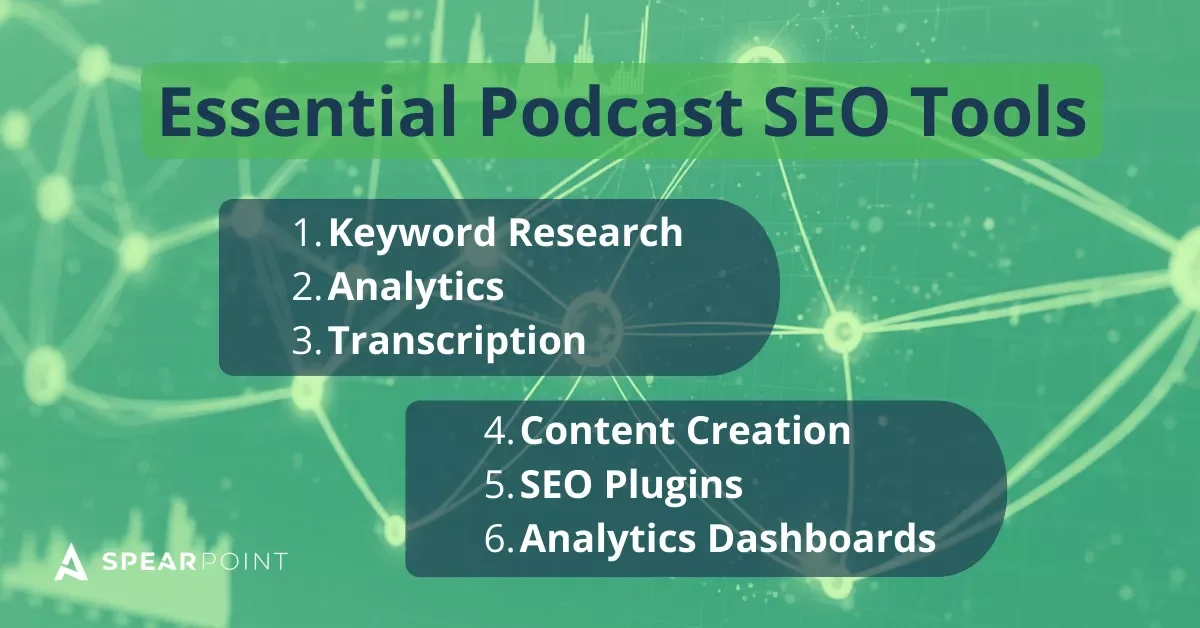
Essential Podcast SEO Tools
Keyword Research and Analytics Tools
Effective podcast SEO requires understanding what your audience searches for and how your content performs. The right tools transform guesswork into data-driven strategy.
Google Keyword Planner provides free insights for identifying podcast topic keywords, search volumes, and competition levels. This tool serves as an ideal starting point for targeting audiences on Google and YouTube. Input your seed topics to discover related terms and monthly search volumes.
SEMrush and Ahrefs offer comprehensive platforms with keyword suggestions, difficulty scores, and podcast-specific SEO insights. Both tools are highly recommended for advanced research. Free trials let you test functionality before committing to subscriptions.
Podsqueeze Topic Finder uses AI to estimate clicks and views for trending podcast topics. This tool acts as the "SEMrush of podcasting" with optimization predictions specifically designed for audio content. It helps identify topics with strong potential before you invest recording time.
Keywords Everywhere functions as a browser extension providing in-SERP metrics like volume and CPC for quick podcast keyword validation. This tool speeds up research by displaying data directly in Google search results as you browse.
Google Trends tracks seasonal search volume fluctuations and rising topics. Use this free tool to identify when certain keywords peak in popularity, helping you time content releases for maximum impact.
Answer The Public reveals user questions on seed keywords from forums, blogs, and social media. This visual tool helps you understand the actual questions your audience asks, which you can address in episodes.
Google Analytics tracks visitor behavior, conversion rates, and site performance. This remains essential for measuring how podcast SEO efforts translate into website traffic and conversions.
Transcription and Content Creation Tools
Converting audio to searchable text represents the biggest SEO opportunity for podcasters. Modern tools make transcription accessible and affordable.
Riverside offers 99% accurate AI transcription during recording with SRT file exports. This platform handles both recording and transcription in one workflow, saving time while maintaining quality. Exports integrate easily with hosting platforms for immediate SEO benefits.
Podsqueeze provides AI-powered transcription with filler word removal. The platform automatically generates chapters and summaries for optimized episode descriptions. This streamlines the process of creating multiple content assets from single episodes.
Amberscript delivers 85%+ accuracy for automated transcriptions at accessible price points. While requiring more human editing than premium options, it offers a cost-effective solution for podcasters on tight budgets.
ChatGPT generates fresh content ideas, headlines, and creative prompts for keyword expansion. AI tools like ChatGPT help with brainstorming and initial drafts, though human editing remains essential for quality and accuracy.
Texta automates full podcast SEO workflows from keyword research to scripting and metadata optimization. This comprehensive tool handles multiple optimization tasks, potentially replacing several single-purpose solutions.
Keywordinsights.ai uses AI for search trends and user intent patterns. This tool helps predict which content angles will resonate with your target audience before you record.
SEO Plugins and Technical Tools
Technical optimization ensures search engines can properly crawl, index, and rank your podcast content. These tools handle the backend elements that many podcasters overlook.
Yoast SEO serves as the leading WordPress plugin for optimizing meta tags, sitemaps, and readability. The plugin provides real-time feedback as you optimize episode pages with a user-friendly interface and comprehensive optimization checklist.
Google Search Console offers insights on search performance, click rates, indexing status, mobile usability, and technical health. This free tool from Google shows exactly how your podcast content performs in search results and identifies indexing issues.
Screaming Frog excels at onsite technical audits, identifying broken links, metadata problems, and 404 errors. This tool crawls your website like a search engine, revealing technical issues that might hurt rankings.
Schema markup tools help you implement structured data for podcasts. Google's Structured Data Markup Helper walks you through adding podcast schema to episode pages. Proper implementation can earn rich results with play buttons directly in search results.
PodSEO functions as an AI platform enhancing visibility via keyword optimization, metadata tweaks, and analytics for search discovery. This podcast-specific tool understands the unique requirements of audio content SEO.
Platform-Specific Analytics Dashboards
Understanding how listeners discover and engage with your content guides optimization decisions. Each major platform provides analytics tools with unique insights.
Spotify for Podcasters offers detailed listener data including completion rates, shares, and discovery sources. These metrics help you understand what content resonates specifically with Spotify's massive audience. The platform's analytics directly inform algorithm-friendly content strategies.
Apple Podcasts Connect provides performance data for shows on Apple's platform. Track listener trends, episode popularity, and follow rates. This dashboard helps you understand Apple's specific audience behaviors and preferences.
YouTube Analytics delivers comprehensive insights for video podcasts. Track watch time, audience retention graphs, traffic sources, and demographic information. These metrics guide video-specific optimization efforts while revealing broader content trends.
Buzzsprout Analytics tracks download performance benchmarks showing how your show compares to others. Understanding that top 1% podcasts average 4,824 downloads in the first seven days while the median sits at 30 downloads provides context for setting realistic growth goals.
Google Analytics integration on your podcast website reveals how visitors find and interact with your content. Track organic search traffic, referral sources, bounce rates, and conversion paths. This data connects podcast SEO efforts to business outcomes.
Measuring Podcast SEO Success
Key Performance Indicators to Track
Measuring podcast SEO requires tracking metrics that connect discovery efforts to audience growth and business outcomes. Vanity metrics like rankings matter less than metrics indicating actual listener engagement and value.
Organic traffic tracks total visitors from search engines to podcast pages or episodes. This metric measures SEO-driven discoverability. Declining organic traffic signals adaptation needs, especially as AI search changes how users find content.
Organic conversions monitor actions like subscriptions, downloads, or leads from organic sources. This prioritizes business impact over vanity metrics. In zero-click search environments, conversions matter more than raw traffic numbers.
Downloads and listener growth count episode plays and subscribers gained via search. This directly ties SEO efforts to audience expansion on platforms like Apple Podcasts and Spotify. Track both total downloads and downloads attributable to search discovery specifically.
Keyword rankings measure positions for podcast-specific terms in Google, AI tools, and platform searches. While not the ultimate goal, rankings indicate visibility and guide content optimization for evolving search surfaces.
Backlinks and brand mentions gauge off-site signals like links to episode pages and mentions across the web. These build authority crucial for AI and traditional search stability. Quality backlinks remain fundamental ranking signals.
Conversion rate from organic traffic evaluates the percentage of search visitors completing key actions like listening or subscribing. This reveals SEO quality and user intent match. High traffic with low conversions suggests targeting wrong keywords or failing to meet searcher expectations.
Google Search impressions measure how often your content appears in search results. This assesses keyword strategy and content optimization effectiveness at the awareness stage before clicks occur.
Click-through rate shows the percentage of searchers clicking your content after seeing it in results. CTR is influenced by brand recognition, SERP features, and meta description quality.
Time on page measures engagement duration to assess content value. Longer sessions signal quality to search algorithms. For podcast pages, this might indicate whether visitors actually listen to embedded players.
Bounce rate indicates the percentage of visitors leaving after viewing only one page. High bounce rates can signal content relevance issues or poor user experience that hurts rankings.
Understanding Podcast Analytics Platforms
Each major podcasting platform and hosting service provides analytics with unique metrics and limitations. Understanding these dashboards helps you extract actionable insights.
Hosting platform analytics form your foundation. Platforms like Buzzsprout, Libsyn, and Transistor track downloads, listener locations, listening apps, and episode performance. These metrics show how content performs across all platforms from a single dashboard.
Platform-specific analytics provide deeper insights. Spotify for Podcasters shows completion rates and algorithmic recommendation performance. Apple Podcasts Connect reveals trends and follower growth. YouTube Analytics tracks watch time and retention graphs. Each platform's metrics reflect its unique discovery mechanisms.
Industry data shows 40% of podcasters use AI tools which often include analytics features for recommendations and targeting. These tools drive 45% listenership growth via personalization. Adoption of analytics-enabled tools continues growing as podcasters recognize data-driven optimization's value.
IAB-certified analytics offer standardized measurement. Platforms like RSS.com provide IAB-certified analytics with episode transcriptions for SEO visibility, geographic and device data, and heatmaps. Certification ensures metrics follow industry standards for reliability.
Compare metrics across platforms to identify discrepancies and trends. Download numbers may vary between your host and individual platforms due to different counting methodologies. Understanding these differences prevents misinterpreting data.
Focus on trends over absolute numbers. Month-over-month growth matters more than single data points. Track whether optimization efforts correlate with improvements in key metrics over time.
Attribution and Conversion Tracking
Understanding which SEO efforts drive actual business results requires connecting discovery to conversions. Attribution tracking reveals which channels and tactics generate the most value.
Implement UTM parameters in links shared across channels. Add tracking codes to URLs shared on social media, in email campaigns, and on guest appearances. This lets you identify which promotional efforts drive website traffic and conversions.
Set up conversion tracking in Google Analytics. Define what actions constitute conversions for your podcast, whether that's email signups, product purchases, or consultation bookings. Track how many conversions come from organic search traffic specifically.
Use podcast-specific tracking through promo codes. When you mention products or services in episodes, provide unique promo codes for tracking. This attributes sales directly to podcast listening even when the purchase path isn't digital.
Create dedicated landing pages for different promotional channels. Send different traffic sources to specific URLs, making it easier to track which channels convert best. A landing page for social media traffic versus organic search helps identify optimization priorities.
Monitor assisted conversions in Google Analytics. Many listeners touch multiple points before converting. Understanding the full journey from first discovery to final conversion reveals how SEO fits into your broader marketing funnel.
Track phone calls from organic traffic using call tracking numbers. If your podcast generates phone leads, use unique numbers on your website that connect back to traffic sources. This captures conversions that don't occur through digital forms.
Survey new subscribers about discovery methods. Simple questions about how they found your podcast provide qualitative insights beyond what analytics reveal. Many listeners can't be tracked through digital attribution but will tell you directly how they discovered you.
Calculate customer lifetime value from different acquisition channels. Listeners acquired through organic search may behave differently than those from social media or paid ads. Understanding long-term value justifies continued investment in SEO.
Common Podcast SEO Mistakes to Avoid
Even experienced podcasters make optimization mistakes that limit their growth potential. Recognizing these pitfalls helps you avoid wasting time on ineffective tactics.
Keyword stuffing in podcast titles, descriptions, or episode notes damages discoverability. Platforms like Apple Podcasts and Spotify penalize unnatural keyword repetition as it violates search intent optimization guidelines. This reduces visibility by triggering algorithmic demotions. Write for humans first while naturally incorporating keywords.
Ranking for wrong or irrelevant keywords hurts your audience pipeline. Targeting broad or mismatched terms like generic top-of-funnel phrases instead of listener-specific podcast queries leads to poor conversion and lower platform rankings. Algorithms prioritize intent match over raw traffic potential.
Over-reliance on AI-generated content without human editing creates quality issues. Unedited AI episode descriptions or transcripts result in low-quality signals that tank engagement metrics and trust. This causes drops in search visibility as platforms detect thin or unhelpful content.
Neglecting internal linking and using poor URL structures confuses platform crawlers. Failing to link episodes logically or using messy URLs weakens topical authority, reducing cross-episode discovery and overall show rankings. Clean URL structures and strategic internal linking improve crawlability.
Ignoring content quality, readability, and user experience hurts retention. Dense, unformatted descriptions or episodes not optimized for mobile frustrate users. Platforms demote shows with high bounce rates, impacting algorithmic recommendations and search placements.
Lack of diversification beyond platform SEO exposes shows to visibility declines. Depending solely on organic podcast search without video, social media, or external links creates risk. Platform algorithm changes can dramatically reduce rankings overnight. Multi-channel strategies provide stability.
Poor backlink and authority building weakens crucial ranking signals. Minimal promotion for external links or brand mentions reduces E-E-A-T signals valued by Apple and Spotify. Without authority, new shows struggle in competitive categories, leading to buried discovery regardless of content quality.
Chasing short-term tactics over sustained topical authority creates volatility. Platforms detect and penalize gimmicks like artificial engagement or fleeting trends. This causes ranking fluctuations, while consistent, people-first content drives long-term listener growth.
Inconsistent publishing schedules confuse both audiences and algorithms. Platforms reward reliability. Sporadic episode releases hurt your chances of appearing in recommendations and charts.
Ignoring mobile optimization creates friction for most users. The majority of podcast listening occurs on mobile devices. Episode pages and websites that don't load properly on phones lose visitors and engagement signals.
Failing to update old content as it becomes outdated wastes existing SEO value. Evergreen episodes can continue ranking and driving traffic indefinitely if you refresh descriptions, transcripts, and supporting content periodically.
Building Your Podcast SEO Action Plan
Effective podcast SEO requires systematic implementation rather than random optimization attempts. A structured action plan ensures you address high-impact elements first while building momentum toward long-term goals.
Diagnose funnel bottlenecks first before jumping into tactics. Start with a revenue-focused audit identifying constraints like low traffic, poor conversions, or visibility gaps. Map one to three quarterly projects such as optimizing episode pages or improving descriptions tied to measurable outcomes like listener growth.
Conduct strategic podcast keyword research as your foundation. Target high-volume, low-competition keywords for titles, episode names, and descriptions using tools like SEMrush or Ahrefs. Incorporate semantic synonyms, avoid cannibalization by assigning unique keywords to each episode, and align with listener search intent for discoverability in Google and directories.
Optimize your core podcast elements systematically. Start with your show name, description, and artwork. Then move to episode-level optimization including titles, descriptions, and tags. Finally, address technical elements like RSS feed structure and schema markup. Focus on these foundational elements before pursuing advanced tactics.
Build topical authority and content depth through consistency. Create episodes with unique frameworks, industry data, real examples, and structured formats like FAQs and summaries. This signals expertise to search engines and AI platforms. Repurpose content into scannable, AI-friendly formats across platforms to maximize visibility.
Implement technical and hybrid SEO foundations for long-term stability. Add schema markup, ensure fast load times, create clear navigation, optimize for mobile, and build third-party mentions through guest appearances. These fundamentals boost visibility in traditional search, AI platforms, and podcast directories simultaneously.
Develop supporting content ecosystems around episodes. Create show notes, transcripts, blog posts, and social content for each episode. This multiplies your SEO surface area while providing multiple entry points for different audience preferences and discovery channels.
Execute link building campaigns strategically. Pursue guest appearance opportunities, develop shareable original research, submit to relevant directories, and build relationships with complementary creators. Track which tactics generate the highest quality backlinks and double down accordingly.
Measure, adapt, and iterate quarterly based on performance data. Track rankings, downloads, traffic, and conversions. Identify what works and scale those efforts. Pivot away from tactics that consume resources without results. Focus on high-impact projects with clear metrics rather than trying everything simultaneously.
Integrate promotion across channels including social media, email, and video. Each channel reinforces others while reaching audiences where they naturally spend time. Consistent cross-channel presence builds recognition and authority signals.
Monitor emerging trends and platform changes. Podcast discovery evolves rapidly with new platforms, features, and algorithms launching regularly. Stay informed about changes on major platforms while maintaining core optimization fundamentals that transcend specific platform mechanics. Podcasters like Mordy Oberstein (Head of SEO Branding at Wix), Kate Toon, Dan Shure, Aleyda Solis, and Erin Sparks regularly discuss evolving SEO trends on their shows, providing valuable industry perspectives.
Set realistic timeframes recognizing that SEO compounds over time. Initial results may take months to materialize as search engines index content and build trust in your domain. Consistency matters more than perfection. Regular publishing with basic optimization beats sporadic efforts with perfect optimization.
Your podcast deserves an audience that finds it easily when searching for exactly what you offer. Strategic SEO transforms your show from a hidden gem into a discoverable resource that steadily attracts engaged listeners who value your expertise. Start with your next episode and build from there.

Jesse McFarland is the founder of SpearPoint Marketing, a conversion-focused SEO agency that helps B2B, professional services, and SaaS brands turn search visibility into a measurable pipeline. With over 17 years of digital marketing experience spanning agency and in-house leadership roles, Jesse specializes in technical SEO, content strategy, conversion rate optimization, and Digital PR.
Jesse is also the owner and host of the Brands and Brews Marketing Podcast, where he interviews marketers, founders, and operators about real-world growth strategies, SEO, and modern brand building.
He is a frequent speaker and thought leader on emerging SEO topics, including Answer Engine Optimization (AEO), helping brands adapt their strategies for the next era of AI-powered search.