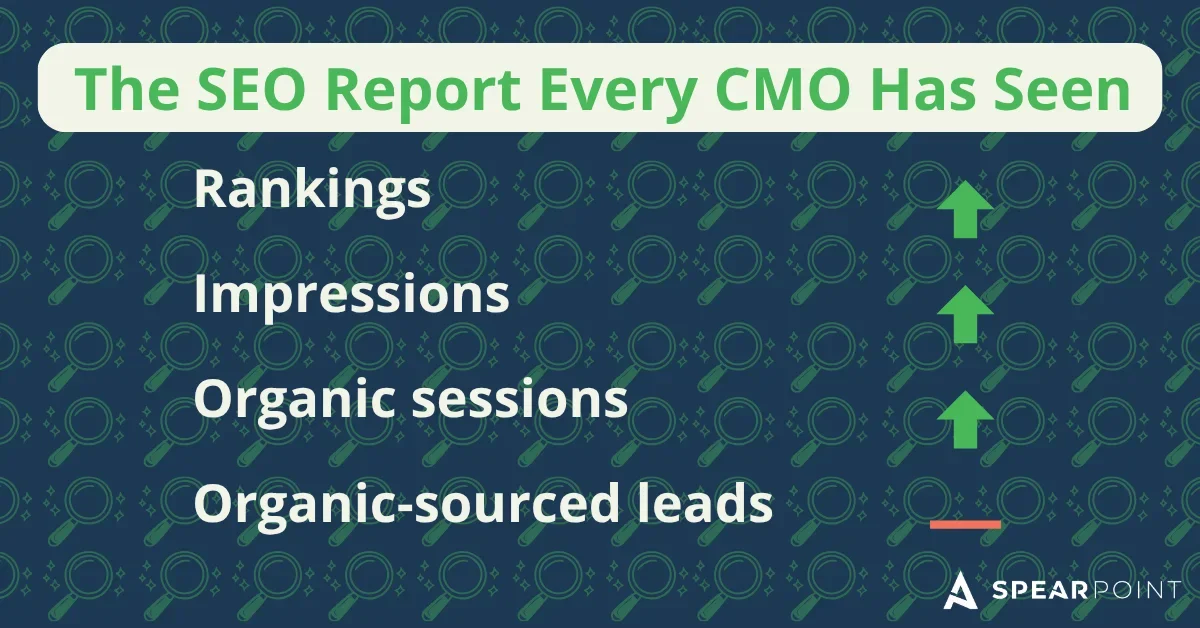
Every CMO has seen this report.
Rankings up. Impressions up. Organic sessions up. Organic-sourced leads: flat.
Organic-sourced opportunities are a vital KPI, and I'd never tell you to stop tracking them. But a source report tells you where someone converted. It doesn't tell you every interaction that helped them choose you, and in B2B those are rarely the same event.
A buyer might discover you through an AI search answer, click a Google ad three weeks later, read your comparison page and your reviews, then finally reply to an SDR email. Organic search gets little or none of the credit, even though SEO created the demand and most of the confidence to buy.
So let's answer the question properly: how does SEO actually impact a B2B sales pipeline? Not sessions. Not keyword trophies. Pipeline, and the revenue at the end of it.
TL;DR

The standard dashboard tracks one path: SEO to visibility to visits to leads. It's real, and it's the smallest part of the story.
Search visibility feeds your other channels. AI search, paid, SDR outreach, brand search, and on-site conversion all get easier when buyers already know who you are.
Last-click reporting hands that credit elsewhere. The ad, the direct visit, or the sales email takes it, and SEO looks like a minor channel.
Most B2B deals are decided on a shortlist that forms during research you never see.
Score it on three tiers: direct organic pipeline, influenced opportunities, and leading indicators like nonbrand visibility and branded search.
Table of Contents Show
The SEO Report Every CMO Has Seen
The familiar chain looks like this: rankings and impressions, then organic visits, then leads, then pipeline.
Every link in it is measurable, which is exactly why it dominates the conversation.
The trouble starts when that chain becomes the whole definition of SEO's value. A last-click report answers one narrow question, and it answers it well. It was never built to show you demand creation.
Teams usually respond by buying better tracking. More touchpoints, longer lookback windows, multi-touch models. It helps at the margins and leaves the core problem alone, because the most valuable work happens while the buyer is anonymous and happens off your property as often as on it.
Somebody reads your comparison page, doesn't convert, and mentions your name in a meeting three weeks later. No pixel catches that.
What a Real B2B Buying Journey Looks Like
Here's one journey. It's illustrative, not a claim that every deal runs this way.
A buyer asks ChatGPT or Google to help them understand a problem they can't yet name precisely.
They land on an educational page of yours, see you cited in a third-party roundup, and skim a comparison page. Then they leave.
A week later they see a paid ad, search your brand name directly, and read a case study.
An SDR email arrives. This time they reply, because the name is familiar and the homework is done.
They book a call and the CRM records one lead source: outbound.
The full journey included at least four SEO-supported moments. Your report shows none of them, and the budget conversation happens on the basis of that report.
The Direct Path: Organic Demand You Can Measure
Start with the path your dashboard already shows, because it genuinely works and it's where high-intent content earns its keep.
High-intent organic discovery leads to a relevant service or comparison page, which converts, which becomes a qualified opportunity. The lever here is qualified demand and conversion rate, not traffic volume.
The Pages That Actually Produce Opportunities
Service and solution pages built around what you sell and who you sell it to, not your internal org chart.
Comparison, "vs," and "alternatives" pages, which catch buyers who have already decided to buy something and are choosing between options.
Pricing and cost pages. Buyers filter on budget early, and refusing to discuss it just sends them to someone who will.
Case studies and proof pages, which do the validation work your reps would otherwise do on a second call.
Industry and use-case pages that let a buyer recognize themselves in a sentence.
Sourced Pipeline vs. Influenced Pipeline
Here's the difference in practice, on the same quarter of data:
| Element | Sourced only | Sourced plus influenced |
|---|---|---|
| What it counts | Last touch before the form | Every organic touch in the deal's history |
| What it misses | Anonymous research, rep-shared content, brand search | Very little |
| What leadership hears | "SEO brought in a few leads" | "Organic touched 47% of closed revenue" |
| How you build it | Default analytics report | Self-reported attribution plus CRM touch history |
| Budget outcome | First line cut in a tight quarter | Defended as a revenue channel |
The left column isn't wrong. It's answering a smaller question than the one your board is asking.
Action Steps:
Audit whether your highest-intent pages are the ones actually ranking, and fix that before writing anything new.
Add a "how did you hear about us?" open-text field to every form, then read the answers monthly.
Separate branded from nonbranded demand in your reporting, and judge each on quality rather than volume.
Ask your reps which pages they send mid-deal, then improve those pages first.
The Wider Impact Map: Seven More Ways SEO Touches Pipeline
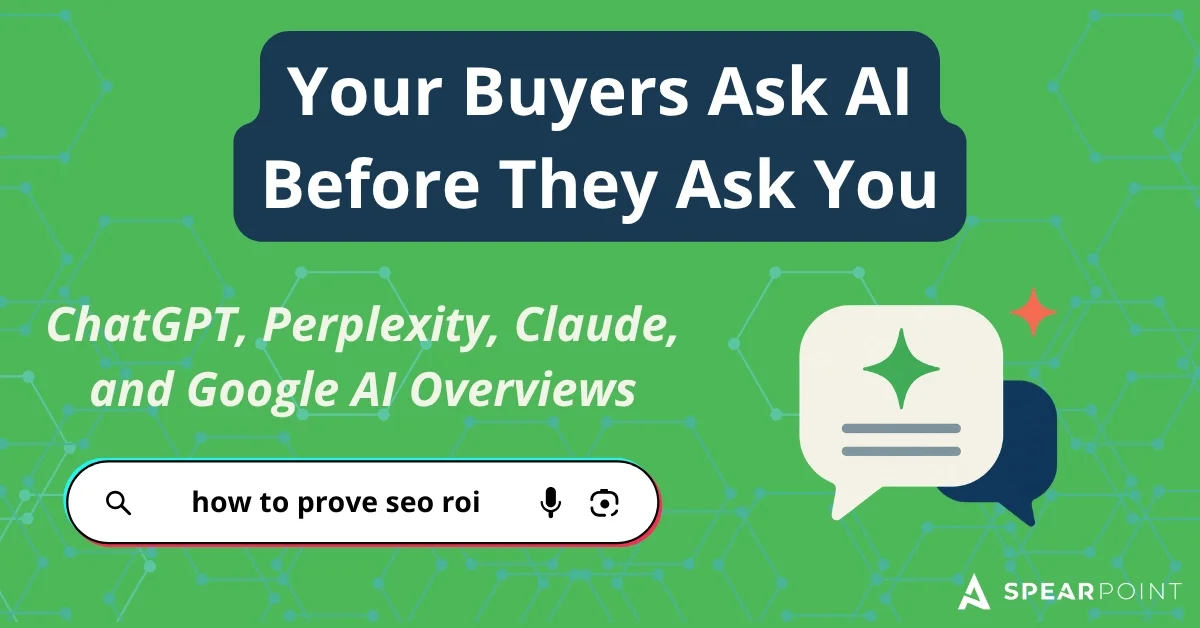
AI search. Clear, well-structured pages and credible third-party mentions give buyers more ways to discover and validate you inside ChatGPT, Perplexity, and Google AI Overviews. Semrush found the average AI search visitor is 4.4 times as valuable as a traditional organic visitor, measured on conversion rate. Fewer visits, far better qualified.
Paid search. Your organic query data and landing-page insights tell you which searches deserve budget and what should happen after the click. Conversion improvements you make for organic usually lift paid on the same pages.
SDR outreach. Content built around real buyer questions gives a rep a relevant reason to reach out and something useful to send. Search objections and buyer language feed straight back into messaging.
Four more, and these are the ones that go uncredited most often:
Brand search. Buyers who discover you through content or an AI answer often come back later by typing your name. That visit lands in your report as direct or branded, never as the content that earned it.
On-site trust. Reviews, testimonials, case studies, and transparent information reduce uncertainty for buyers arriving from any channel, paid and outbound included.
Website conversion. Better structure, clearer positioning, faster pages, and sharper calls to action raise the value of every visit you already pay for.
Existing pipeline. Comparison pages and FAQs answer objections inside open deals and help stalled opportunities move toward a decision.
None of those are SEO taking credit for other channels' work. They're search visibility making those channels cheaper and more effective, which is a different claim and an easier one to defend.
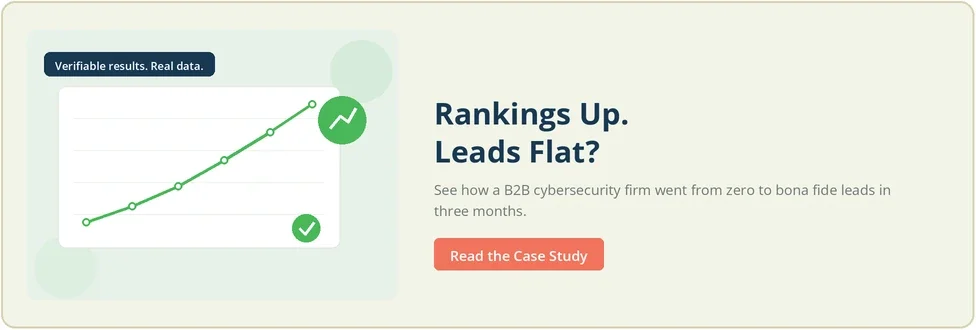
One of our B2B clients came to us invisible in both Google and AI search, with a pipeline running almost entirely on referrals. Here's what changed.
The Pipeline-First SEO Action Plan
If you want something to hand your marketing lead on Monday, here it is in order.
Fix the reporting before the content. You can't manage a channel your dashboard refuses to show you.
Split sourced and influenced pipeline in your CRM, define the attribution window, and avoid double counting.
Build or fix the high-intent pages first. Service, comparison, pricing, and proof pages before any top-of-funnel explainer.
Write the answers your sales calls already produce. Objections, pricing questions, and fit criteria, in the buyer's own words.
Add the structure AI engines need. Direct answers, clean headings, consistent facts across every profile you own.
Feed the rest of the funnel. Hand your query data to paid and your best pages to the SDR team.
Review quarterly against pipeline, not rankings.
How a CMO Should Measure It
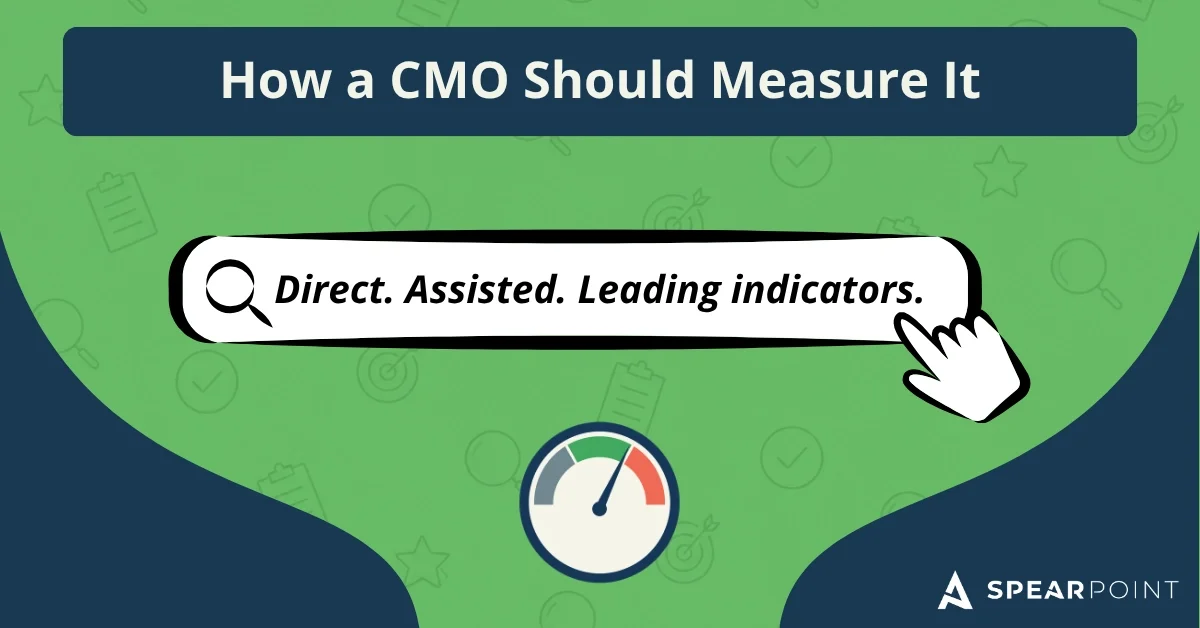
Three tiers, and you need all three. Report only the first and you'll undersell the channel. Report only the third and nobody will believe you.
Direct: organic-sourced qualified leads, opportunities, pipeline value, win rate, and revenue. This is the floor, not the ceiling.
Assisted: influenced opportunities where a buyer had meaningful interactions with organic content, shown alongside other channels rather than instead of them. Define the window up front and don't double count.
Leading indicators: the early signals that tell you the first two are coming.
Nonbrand high-intent visibility, because that's demand you didn't already have.
Engaged visits to commercial pages, not sessions across the whole site.
AI mentions, citations, and referred visits wherever your tooling can see them.
Branded search volume, which tends to climb a quarter or two after nonbrand content starts working.
Underneath all three, ask your reps which pages prospects share, which questions keep recurring, and which assets move deals. That feedback is faster than any dashboard and it's free.
FAQ
-
Through one direct path and several indirect ones. Directly, high-intent searches land on commercial pages and convert. Indirectly, search visibility feeds AI search discovery, paid efficiency, SDR relevance, branded search, on-site trust, and objection handling inside open deals.
-
Direct conversions from high-intent pages can appear within 60 to 90 days. Influence on shortlists and brand search takes two to three quarters, because it depends on buyers meeting you before they're in-market.
-
Show influenced pipeline next to sourced pipeline, with the attribution window stated plainly, and bring self-reported attribution data. A CFO will engage with "organic content touched 47% of closed revenue" far sooner than a traffic chart.
-
They do different jobs. Paid buys immediate visibility and stops the day the budget does. SEO compounds but starts slowly. Most B2B companies need both, with paid covering the gap while organic builds, and the two sharing landing-page improvements.
-
Usually a mismatch between what you rank for and what buyers search when they're ready to buy. Informational traffic converts poorly by design. Check whether your commercial pages are the ones ranking, and whether the conversion path on those pages actually works.
Conclusion
SEO should absolutely be accountable to pipeline. That's the right standard, and plenty of agencies have earned the skepticism behind it.
But holding it accountable means measuring what it actually does: capturing the demand that already exists, creating demand that didn't, and making every other channel in your mix convert better than it would alone.
Measure the direct path and the assisted one, and the retainer stops looking like a cost center.
Measure last click only, and you'll keep cutting the channel right before it compounds.
Suggested External Links

Jesse McFarland, MBA, is the founder of SpearPoint Marketing, a Denver-area agency focused on SEO, conversion optimization, and AI Search. He has worked as both an agency strategist and an in-house marketing leader. Jesse helps B2B teams focus on high-intent visibility, better websites, qualified leads, and revenue. Connect with Jesse on LinkedIn.