What the F…. Is Going On With SEO Right Now?
I got this question from a concerned client recently, and honestly, I get some version of it from customers, friends, and people in my network almost every week.
“Is SEO dead?”
“Is Google dead?”
“Should we still blog?”
“Do we need to optimize for ChatGPT now?”
“Are we all just yelling into the AI void?”
- Fair questions. Dramatic, but fair.
There is so much chatter around SEO right now that I feel like I’m constantly sticking up for it like SEO is my little brother. Which is funny because, technically, I am older than search engines. So there’s that.
Here’s the reality: SEO is doing what SEO has always done. It is changing.
Shocking, I know.
AI search tools like ChatGPT, Claude, Perplexity, and Google’s own AI features have absolutely changed the search landscape. Google AI Overviews and AI Mode are changing how people find answers. Some searches now get answered before a user ever clicks a website. That matters.
But the value of SEO is still there. In fact, the fundamentals of SEO are more important than ever. Google’s own guidance on optimizing for generative AI features in Search says foundational SEO best practices still apply to generative AI search.
So no, SEO is not dead.
It is just no longer only about ranking ten blue links on Google and calling it a day. Welcome to modern SEO. It’s messier. It’s broader. It’s more brand-driven. And yes, it’s still very much worth caring about.
TL;DR for the People Skimming Because It’s 2026 and Apparently We Don’t Read Anymore
SEO is not dead.
Google is not dead.
Blogging is not dead.
But lazy SEO is probably dead, and honestly, good riddance.
Modern SEO is about showing up wherever your customers are searching: Google, AI tools, social media, YouTube, Reddit, directories, review sites, industry websites, podcasts, and the other random corners of the internet where your audience is making decisions.
Now is a Good Time to Invest in SEO.
Table of Contents Show
Modern SEO Means Search Everywhere Optimization
One thing I have changed over the last several years is going well beyond the traditional search engine.
This is not brand new for me. I’ve been thinking this way for 5+ years. But now it matters even more because the way people search has expanded far beyond Google.
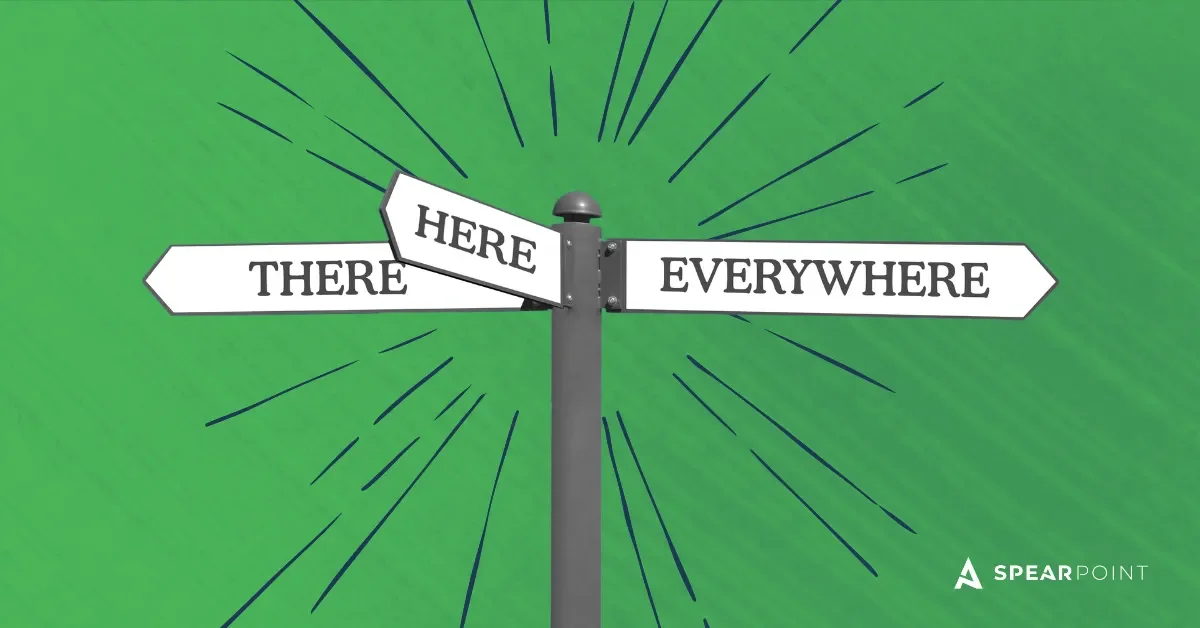
Peter Rota said SEO should now stand for Search Everywhere Optimization, and I think that is spot on.
So what does that mean?
It means optimizing everywhere your brand can be found.
Google.
Google Maps.
YouTube.
LinkedIn.
Reddit.
Industry directories.
Local directories.
Review platforms.
Podcasts.
News sites.
AI search tools.
Chat forums.
Social media.
Your own website.
Sounds like a lot?
It is.
But before you panic and start making 47 new marketing accounts your team will abandon in three weeks, start with this: research where your ideal audience actually spends time.
For most small business owners and marketing leaders, the answer is still going to include Google. Probably a lot of Google.
According to StatCounter’s search engine market share data, Google is still the dominant search engine worldwide. So yes, people are using AI tools more. Yes, search behavior is changing. But pretending Google disappeared is like pretending email marketing died because TikTok exists.
Cute theory. Not reality.
But Is Google Dead?
Yes. Google, the giant multi-billion dollar company with more than 190,000 full-time employees across the globe that has been the king of search for as long as most of us can remember, just forgot how to stay relevant.
Totally.
If you cannot tell, I am being sarcastic.
Forget what your favorite influencer said on social media. Forget the podcast clip that said “Google is over” because someone needed a punchy hook for engagement.
Google is not dead.
Google is adapting. Google is changing. Google is pushing AI harder into search. And Google is still one of the most important visibility channels for businesses.
Now, does that mean Google traffic will look exactly like it did five years ago?
No.
That is where business owners and marketing leaders need to pay attention.
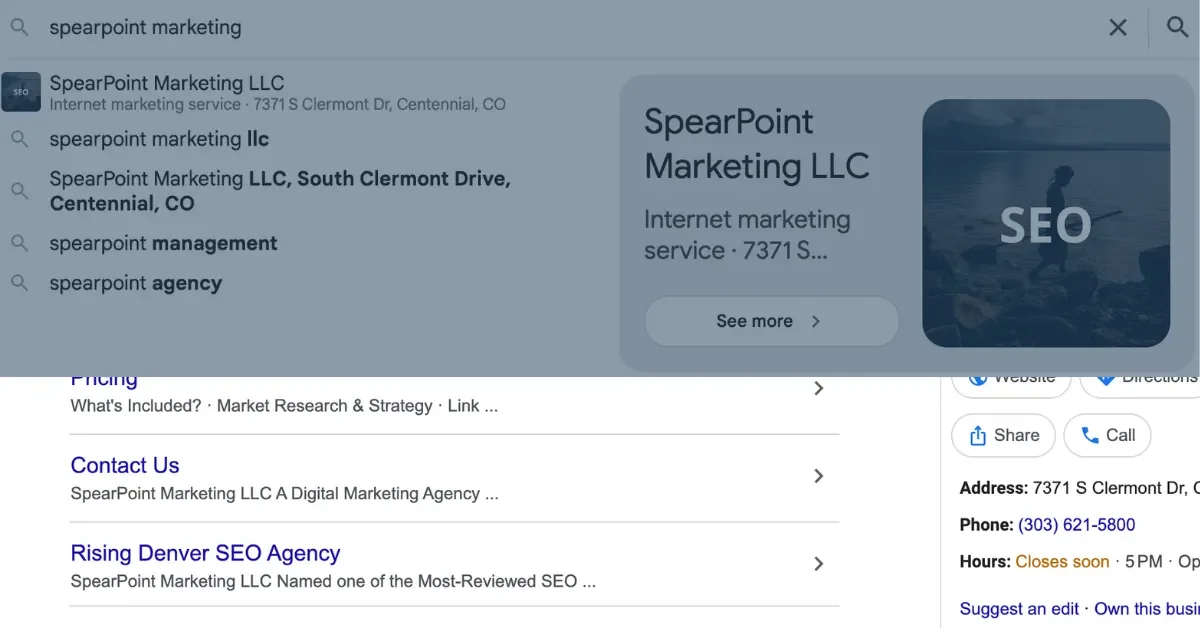
What’s Actually Changing With Google Search?
Google is becoming more AI-driven, more visual, more conversational, and more direct.
You are already seeing this with:
AI Overviews
AI Mode
longer search queries
more dynamic search results
more images and videos in search experiences
answers appearing directly on the results page
fewer clicks on some informational searches
Google’s AI search guidance talks about how its generative AI features use many of the same foundational search principles: crawlable content, helpful information, strong technical structure, clear media, and good overall site quality. In plain English: the old SEO foundation still matters, but the way it gets surfaced is changing.
This is why modern SEO cannot just be “write a blog and hope for the best.”
That was never a great strategy anyway, but now it is especially weak.
What Is Zero-Click Search?
Zero-click search is when someone searches for something, gets the answer directly on Google or inside an AI-generated result, and never clicks through to a website.
For example:
“What is zero-click search?”
Google or an AI tool may answer that right away. The user gets what they need and leaves. No click. No website visit. No warm fuzzy feeling in your Google Analytics dashboard.
The SparkToro zero-click search study found that a large share of Google searches do not result in clicks to the open web. That is a big deal.
How does this impact you?
The obvious threat is less traffic to your website, especially from informational searches like:
“How to…”
“What is…”
“Should I…”
“Best way to…”
“How does… work?”
These are still valuable searches, but they may not drive as many clicks as they used to.
That does not mean SEO is dead.
It means you need to care more about the quality and intent of your traffic, not just traffic volume.
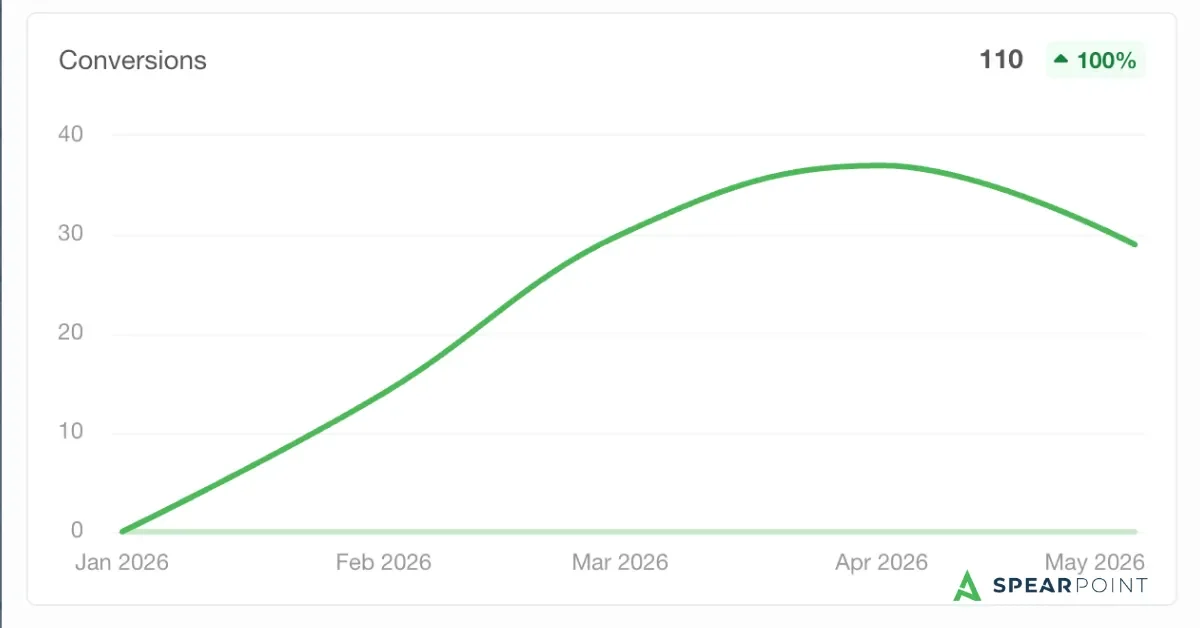
Make it stand out
Whatever it is, the way you tell your story online can make all the difference.
High-Intent SEO Still Matters. A Lot.
This is where people get confused.
Yes, some informational blog traffic may decrease because of AI answers and zero-click search.
But high-intent traffic is still extremely valuable.
Your homepage, service pages, location pages, product pages, comparison pages, case studies, pricing pages, and bottom-of-funnel content still matter.
Actually, they might matter more now.
Why?
Because if someone is searching for a specific service, a local business, a provider, a comparison, or a solution they are ready to buy, they are not just casually browsing. They are closer to making a decision.
Modern SEO should focus hard on those high-intent pages.
This is also why I’m a big believer in brand-first SEO. Your website alone is not enough anymore. You need trust signals across the web. I broke that down more in this post on how to build a brand that wins SEO and GEO.
Should You Stop Blogging?
No.
Please do not read “zero-click search exists” and immediately stop creating content.
That is not the move.
Sure, you might get less website traffic from some blog posts than you did in the past. But there are still a ton of reasons blogging and informational content matter.
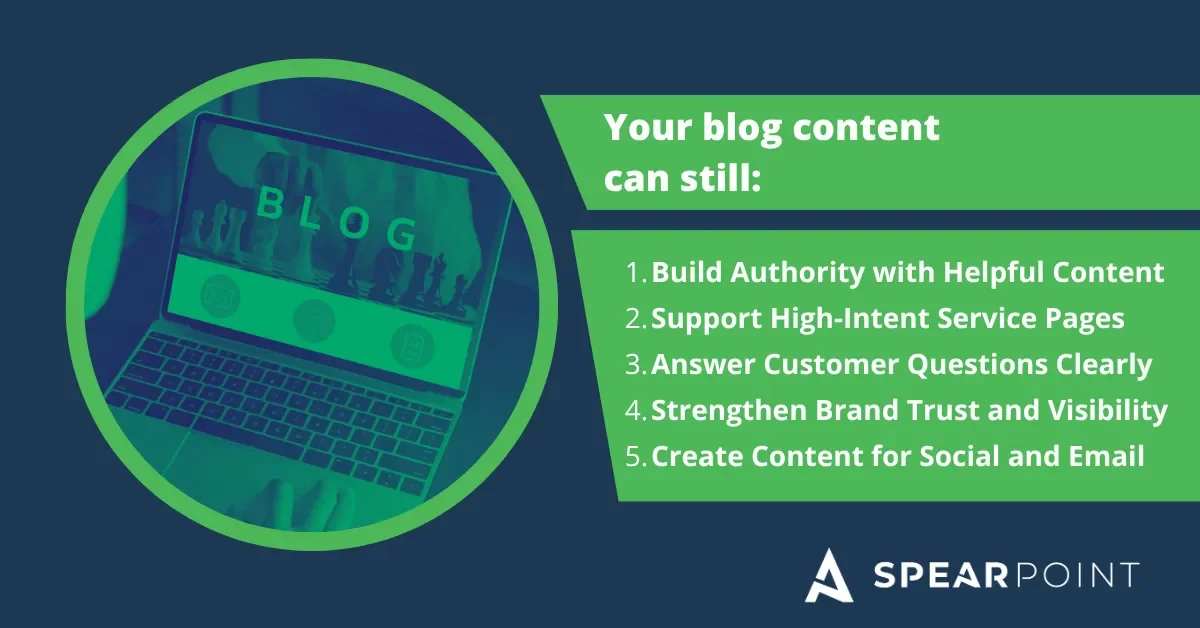
Your blog content can:
show Google and AI systems that you have expertise
support your service pages
answer customer questions
build trust before someone contacts you
earn backlinks
create content for email and social media
give sales teams helpful resources
strengthen your brand voice
make your website more than a digital brochure
Google’s documentation on helpful, reliable, people-first content still emphasizes creating content for people first, not just search engines. It also points to experience, expertise, authoritativeness, and trustworthiness — also known as E-E-A-T.
Translation: if your content proves you know what you’re talking about, it still matters.
Your blog should not be a pile of generic AI mush. Nobody needs another “10 Tips for Business Growth” article that says absolutely nothing.
Create content that answers real questions, shows your perspective, shares experience, and proves your brand is credible.
Crazy idea, I know.
Make it stand out
Whatever it is, the way you tell your story online can make all the difference.
But More People Are Using ChatGPT, Claude, Perplexity, Whatever…
Sure. They are.
I do not know the exact number of users across every AI platform because that number is probably changing while I’m typing this sentence.
But yes, people are using AI tools to search, research, compare, summarize, and make decisions.
Guess what?
They can still find your brand.
Depending on the platform and the query, AI tools can surface answers, mention brands, summarize third-party sources, cite websites, and influence what people believe before they ever land on your website.
That means you need to think beyond “how do I rank on Google?”
You need to think:
“How does my brand show up across the internet?”
Because AI tools do not evaluate your brand from one lonely blog post sitting in a corner. They look for patterns, mentions, authority, trust, clarity, and consistency across sources.
This is where SEO, brand building, digital PR, reviews, content, and reputation all start becoming one big messy family reunion.
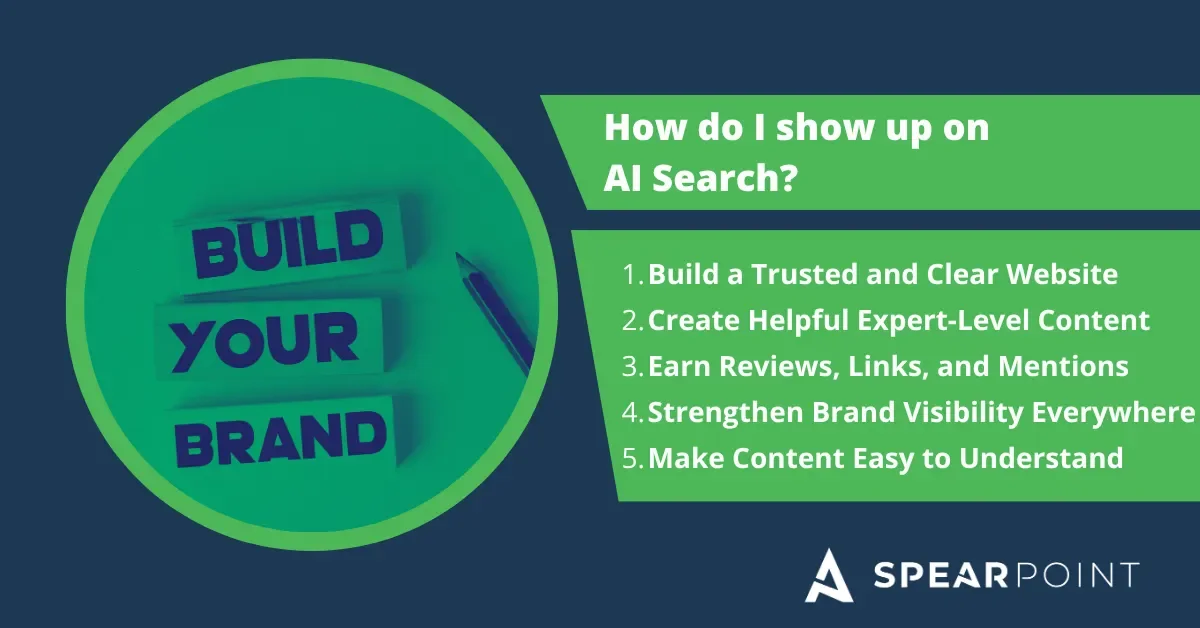
How Do You Show Up in ChatGPT, Claude, AI Overviews, Whatever?
This is groundbreaking, so brace yourself.
A lot of your SEO fundamentals still apply.
Crazy, right?
Not really.
Think about the digital credibility of your brand. If your brand has clear messaging, strong service pages, helpful content, good reviews, credible mentions, and consistent information across the web, you are already doing many of the things that help with AI visibility.
That does not mean there is some magic “rank #1 in ChatGPT” button. Sorry to ruin the webinar someone is probably selling you.
But the fundamentals are not mysterious:
Build a website people trust.
Make your services clear.
Create helpful content that shows experience.
Earn credible links and mentions.
Get reviews on the platforms your audience uses.
Keep your brand information consistent.
Show up on relevant directories and industry websites.
Publish expert opinions, not generic fluff.
Use clear structure so people and search engines understand your content.
Build a brand people actually talk about.
If you have strong reviews on Google, G2, Yelp, Clutch, industry directories, or whatever platform matters in your space, that helps.
If your brand is mentioned on credible websites, podcasts, news sites, blogs, partner pages, and industry resources, that helps.
If more people are saying you are the bomb than they are saying that about your competitors, that helps too.
And guess what?
That is also an SEO strategy.
For more on the AI side of this, you can also read SpearPoint’s post on how to appear on ChatGPT and this guide to AEO for B2B marketers.

The Real Problem: People Still Think SEO Is Just Keywords
This is where I think a lot of businesses get stuck.
They still think SEO is:
“Put keyword on page. Rank. Get traffic. Profit.”
That version of SEO is outdated.
Modern SEO is bigger than that.
Modern SEO is about visibility, trust, authority, technical health, content quality, brand demand, reviews, mentions, user experience, and showing up across search ecosystems.
Keywords still matter. Please do not throw them in the trash.
But keywords are only one part of the game.
If your competitor has better reviews, stronger service pages, more authority, clearer messaging, better content, and more mentions across the web, they are probably going to beat you even if you squeezed the keyword into your H1 like it was 2012.
Now is a GREAT TIME
To Invest in SEO & AI SEARCH
A SEO Agency Partner is MORE Affordable than you think. Discover how Our Customers Grow Their Brands, Outshine Competitors, and Attract New Business
Why Now Is Actually a Great Time to Do SEO
Here’s the weird part.
Now is actually a great time to do SEO.
Not because it’s easy.
It’s not.
Not because Google is handing out free traffic like it’s 2014.
It’s definitely not.
It’s a great time because a lot of businesses are confused, distracted, or waiting to “see what happens” with AI search.
Which is usually business-speak for doing nothing and hoping the internet becomes less annoying.
Good luck with that.
While everyone else is debating whether SEO is dead, there is an opportunity to build the things that actually matter.
Clearer service pages.
Better website structure.
Helpful content.
More reviews.
Credible mentions.
Stronger brand visibility.
A website people can actually understand.
A lot of companies are going to pull back on content because informational traffic might decline. Some will stop blogging because they think AI answers made content pointless. Others will chase every shiny AI tactic without fixing the basic problems on their own website.
That creates opportunity.
If your competitors are confused, this is the time to get clearer.
If they are publishing generic AI content, this is the time to publish real perspective.
If they are ignoring high-intent pages, this is the time to improve yours.
If they are only thinking about Google rankings, this is the time to build visibility across search, AI tools, reviews, directories, social platforms, and industry sites.
Modern SEO is harder to fake.
That is a good thing for businesses willing to do the work.
Because when the easy shortcuts stop working, the brands with better websites, better content, stronger authority, and clearer messaging have a real advantage.
So yes, search is changing.
But that does not make SEO less valuable.
It makes good SEO more valuable.
So, Is SEO Dead?
No.
SEO is not dead.
Google is not dead.
Blogging is not dead.
What is dead is the lazy version of SEO where you publish bland content, ignore your brand, skip technical work, never build authority, and expect Google to hand you leads because you “did SEO.”
Search is doing what it has always done.
It is changing.
The businesses that win will be the ones that adapt without losing their minds every time a new AI tool launches.
Focus on high-intent pages. Keep creating useful content. Build your brand. Get reviews. Earn mentions. Show up where your customers are. Make your website clear and trustworthy. Pay attention to AI search, but do not abandon the fundamentals that already worked.
Google is still likely your biggest search asset.
But do not rely only on Google long term.
Your brand visibility and reputation are more important than ever, especially when people can find, compare, and judge you in more places than ever before.
Unlike what your mom told you in high school, it absolutely does matter what people say about you.
At least when it comes to modern SEO.
FAQ Section for SEO + AI Search
Is SEO dead?
No. SEO is not dead. SEO is changing because AI search, zero-click results, and new search behaviors are changing how people find information. The fundamentals still matter, but modern SEO now includes brand visibility, content quality, technical health, reviews, authority, and visibility across multiple platforms.
Is Google dead?
No. Google is not dead. Google is still one of the biggest search channels in the world, but it is changing how results are displayed through AI Overviews, AI Mode, visual results, and more direct answers.
What is modern SEO?
Modern SEO is the practice of improving your visibility wherever your customers search. That includes Google, AI search tools, YouTube, social platforms, local directories, review sites, industry websites, and more.
What is Search Everywhere Optimization?
Search Everywhere Optimization means optimizing your brand across every relevant discovery channel, not just traditional Google search. That can include Google, Google Maps, YouTube, Reddit, LinkedIn, AI tools, directories, podcasts, reviews, and third-party websites.
Should businesses still blog?
Yes. Blogging still helps build expertise, trust, topical authority, internal links, social content, email content, and support for your service pages. The key is to create helpful, original content instead of generic fluff.
How do I show up in AI search?
Focus on strong SEO fundamentals: clear website structure, helpful content, credible mentions, reviews, consistent brand information, backlinks, authority, and content that proves expertise. AI visibility is not separate from brand credibility.

Jesse McFarland is the Founder of SpearPoint Marketing, a Denver-based SEO and search marketing agency. With more than 17 years of experience in digital marketing, Jesse has worked as both an agency strategist and in-house marketing leader across B2B, SaaS, healthcare, legal, fitness, ecommerce, and startup organizations. He specializes in helping businesses grow through modern SEO strategies focused on high-intent traffic, conversions, brand authority, and visibility across Google, AI search, and other digital channels. Jesse is also a podcast host, speaker, and educator who helps business owners and marketing leaders navigate the evolving world of search and digital marketing.