Despite What You’ve Heard, It’s Still a Great Time to Do SEO
The SEO Conversation Is Missing the Point
Zero-click searches are real. AI Overviews are real. People are finding answers in more places than Google. But somehow that has turned into “nobody uses Google anymore.”
That is the part I do not buy.
At SpearPoint, our goal is not vanity traffic. It is conversions from SEO and Search. And despite all the noise around zero-click traffic, 23 out of 25 SpearPoint customers had organic search sessions increase from January through June this year compared to the same period last year.
So yes, basic informational clicks may be harder to earn. But people are still searching for products, services, providers, pricing, reviews, comparisons, and local businesses. That is where SEO still works.
The mistake is treating every search like it has the same value. A search for “what is SEO” is not the same as “SEO company for fitness businesses” or “managed IT services Denver.” One may get answered without a click. The other may turn into a customer.
That is why it is still a great time to do SEO, as long as you are focused on the searches that actually matter.
“despite all the noise around zero-click traffic, 23 out of 25 SpearPoint customers had organic search sessions increase from January through June this year compared to the same period last year.”
TL;DR for the People Skimming Because Apparently We Don’t Read Anymore

SEO is still worth it.
Zero-click searches and AI Overviews are real, but people still use Google and organic search to find products, services, providers, pricing, reviews, and local businesses.
The opportunity is not vanity traffic.
The opportunity is still conversions from SEO and Search.
Table of Contents Show
Yes! SEO Is Still Worth It.
Let Us Show You How!
SEO Is Still Worth It, But the Strategy Matters
If someone asks, “Is SEO still worth it?” my answer is yes, but with a giant asterisk.
SEO is still worth it when the strategy is focused on high-intent searches, not just informational traffic. It is still worth it when your website is built to convert. It is still worth it when your content helps real buyers understand their options, compare providers, and take the next step.
It is not worth it if the entire plan is to publish generic blog posts and hope traffic magically turns into leads.
That distinction matters.
A lot of the panic around SEO right now comes from people looking at traffic in isolation. They see fewer clicks on certain types of informational content and assume the whole channel is broken. But losing clicks on low-intent content is not the same as losing visibility where buyers are actually making decisions.
At SpearPoint, we are not trying to win keyword trophies. We are trying to help businesses generate more qualified traffic, more leads, and more customers from organic search and search-driven discovery.
That is a very different game.
Zero-Click Search Is Real, But It Is Not the Whole Story
Let’s not pretend zero-click search is made up. Google has been answering more searches directly in the results for years through featured snippets, People Also Ask boxes, knowledge panels, maps, calculators, local packs, AI Overviews, and plenty of other SERP features.
Now add AI tools like ChatGPT, Gemini, Perplexity, Claude, and others. People have more ways to find answers than they did a few years ago. That is true.
But this is where the conversation usually gets sloppy. A decrease in some clicks does not mean SEO no longer works. It means the value of different types of searches is changing.
According to SparkToro’s 2026 zero-click search research, “68.01% of Google searches ended without a click” in the first four months of 2026. That is a major number, and marketers should pay attention to it.
But that does not mean people stopped searching. It means many searches are being answered, redirected, refined, or satisfied without a click to the open web.
There is a big difference.
The search “what is zero-click search” may not produce a website visit. Google or an AI tool can answer that directly. But the search “SEO agency for fitness businesses” is different. So is “employment lawyer near me,” “managed IT services for dental offices,” “personal training gym Denver,” or “postpartum therapist Houston.”
Those searches are not just about quick answers. They are about evaluating options and choosing who to work with.
That is why the zero-click SEO conversation needs more context. It is not that all organic search is disappearing. It is that low-intent informational clicks are under more pressure.
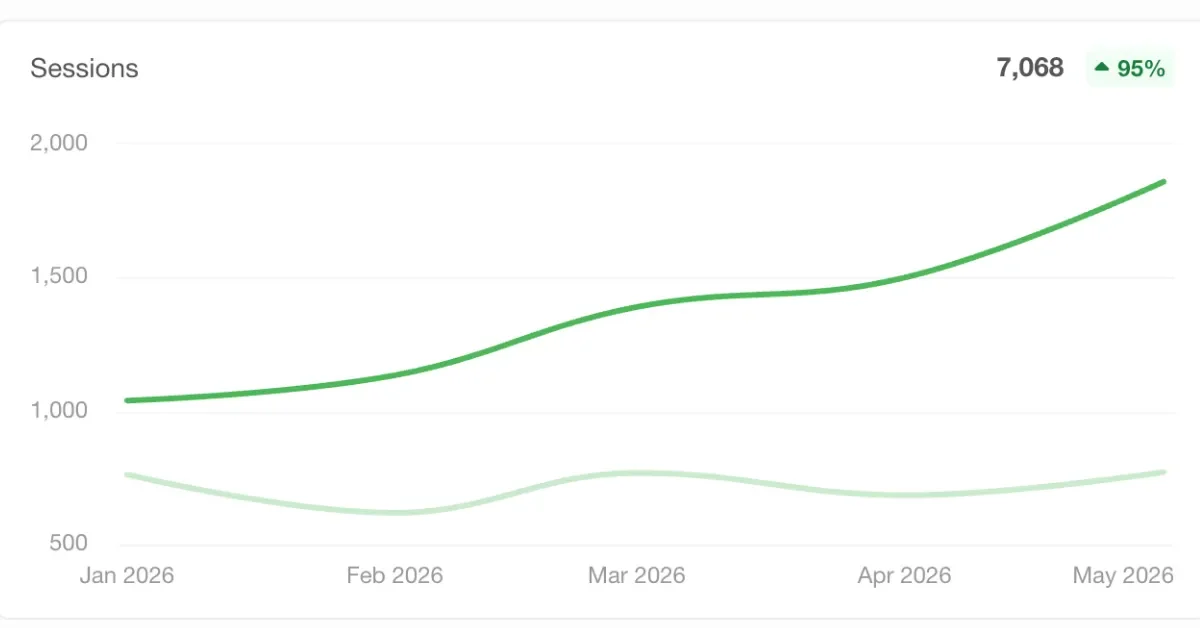
YOY Organic Search Traffic from a SpearPoint Customer.
Organic Search Is Not Falling Off a Cliff
There is a difference between “organic search is changing” and “organic search is collapsing.” One is accurate. The other is usually built for engagement.
Graphite’s analysis of organic search traffic, which used Similarweb data across more than 40,000 of the largest U.S. websites, found that SEO traffic is down “slightly (-2.5%), not dramatically.” The same report noted that Google traffic increased slightly in 2025.
That is a much different story than the one being shouted across LinkedIn.
Now, does that mean every site is fine? No. Some websites are absolutely getting hit. Publishers, affiliate sites, recipe websites, entertainment content, health information, and broad informational blogs are more exposed to zero-click behavior and AI-generated answers.
That makes sense. If someone wants a quick fact, definition, summary, recipe substitution, or basic how-to explanation, Google and AI tools can often satisfy that intent without a click.
But most service businesses, ecommerce companies, B2B companies, software companies, gyms, law firms, therapists, IT providers, and local businesses are playing a different game. They are not trying to monetize random pageviews. They need the right people finding the right pages at the right time.
That is why I do not look at a big “Google traffic is down” headline and apply it to every business. SEO performance depends on the website, the industry, the search intent, the quality of the strategy, and whether the site is built to convert.
The Bigger Issue Is Bad SEO
A lot of businesses are not struggling because SEO stopped working. They are struggling because their SEO strategy was weak to begin with.
For years, too many SEO strategies looked something like this:
Find keywords with search volume
Publish blog posts around those keywords
Watch traffic increase
Hope some of that traffic eventually becomes business
That model was always a little shaky. It just looked better when Google was sending more easy informational clicks.
Now that basic informational content is harder to win, the cracks are easier to see. If your SEO plan is mostly generic blog posts like “What Is SEO?”, “10 Benefits of Digital Marketing,” “Why You Need a Website,” or “How to Choose a Company,” then yes, it may feel a little rough right now.
Not because SEO does not work, but because that content probably does not say anything new. It does not show experience. It does not connect to the buyer journey. It does not make someone trust your business. It does not support a strong service page. It does not help someone decide.
It just exists.
That is not enough anymore. And honestly, it probably should not have been enough before.
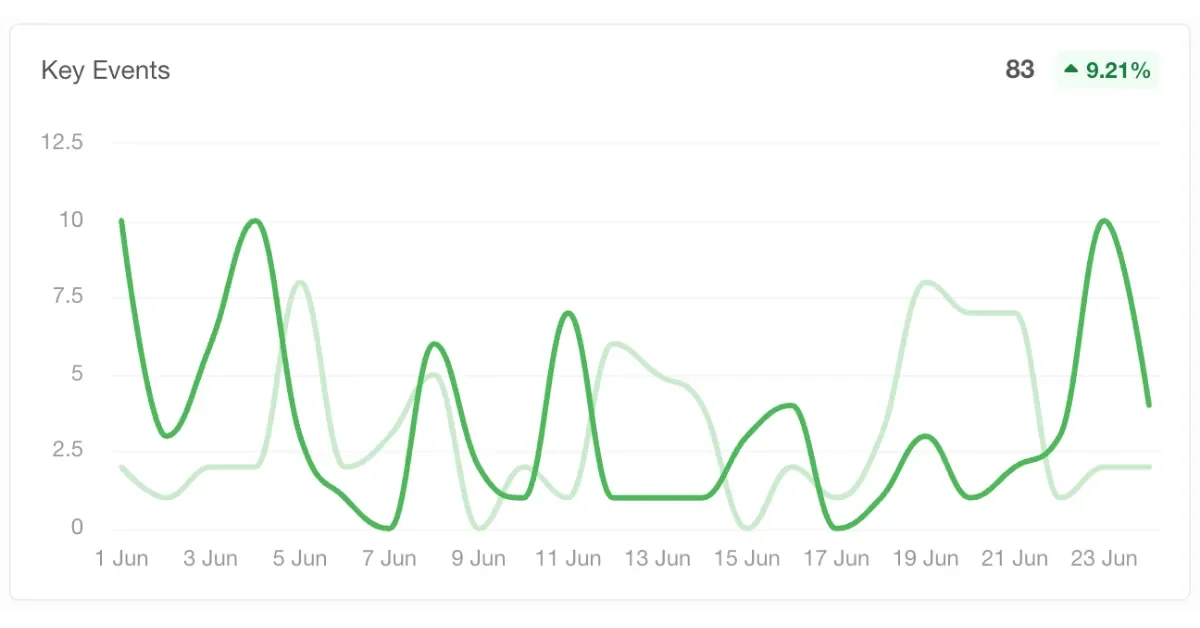
Monthly SEO Conversions from Organic Search for a SpearPoint Customer.
SEO Should Be Focused on Conversions
At SpearPoint, we are not trying to win SEO trophies. We are trying to help businesses get more conversions from SEO and Search.
Conversion-focused SEO is about turning organic visibility into qualified leads, phone calls, form submissions, booked consultations, demo requests, quote requests, purchases, and revenue. That means organic traffic matters. Rankings matter. Visibility matters. But they are not the final goal.
The goal is business growth.
That means we care about:
Qualified leads
Phone calls
Form submissions
Booked consultations
Demo requests
Quote requests
Purchases
Local actions
Branded search growth
Assisted conversions
Revenue influenced by organic search
This changes the strategy. Instead of only asking, “How do we get more traffic?” we ask better questions.
Will this page help the right person find the business? Does this content answer a real buyer question? Is this keyword connected to a service, product, location, or industry? Does the page make the business easier to understand? Does it help someone trust the company? Does it make the next step clear?
That is the difference.
Old SEO was often obsessed with traffic. Modern SEO should be focused on visibility, trust, and conversions. Traffic is still important. But traffic without intent is just noise.
Middle-of-Funnel and Bottom-of-Funnel SEO Matter More Than Ever
This is where a lot of businesses should focus. Not only top-of-funnel blog posts. Not only definitions. Not only informational content.
More middle-of-funnel and bottom-of-funnel content.
Middle-of-funnel and bottom-of-funnel SEO content helps people compare options, evaluate providers, understand pricing, and decide who to contact.
That includes:
Homepage
Service pages
Product pages
Pricing pages
About page
Location pages
Industry pages
Comparison pages
Case studies
Testimonials
Customer stories
FAQs
“Who we help” pages
“Why choose us” pages
Problem and solution pages
These are the pages that help people make decisions.
And many websites do not give these pages enough attention. They have thin service pages, vague messaging, weak calls to action, no proof, no internal links, no clear positioning, no FAQs, no examples, and no real reason to choose them over a competitor.
Then they wonder why SEO is not converting.
The issue is not always traffic. Sometimes the issue is that the pages closest to revenue are not good enough.
A strong SEO strategy should help fix that.

People Still Search for Products and Services
This is the part that gets lost in the panic.
People still search when they need something. They search for lawyers, gyms, therapists, agencies, IT companies, software, contractors, consultants, ecommerce products, local businesses, reviews, comparisons, pricing, and “near me” options.
They search because they are trying to make a decision.
Zero-click search does not erase that behavior. AI does not erase that behavior. It changes parts of the journey. It gives people more places to research. It may reduce clicks for some basic informational questions. But when someone needs to hire, buy, compare, validate, or choose, search is still a major part of that process.
That is why SEO still matters.
You are not only optimizing for a click. You are optimizing for consideration, trust, and the moments when someone is deciding whether your business belongs on their shortlist.
Blogging Is Not Dead. Lazy Blogging Is in Trouble.
I still believe in blogging. I do not believe in blogging just to check a box.
A blog should have a job.
It should support a service page. It should answer a real customer question. It should build topical authority. It should help with internal linking. It should support sales conversations. It should help someone understand a problem. It should help someone compare options. It should show your experience and perspective.
It should do something.
What does not work as well anymore is generic content with no opinion, no examples, no experience, no proof, and no connection to the buyer journey.
That kind of blogging is in trouble.
Good.
Businesses should not be rewarded for publishing bland content that says nothing.
The better opportunity is to write content that actually helps your buyers. That means writing around the questions people ask before they contact you, the objections that come up during sales calls, the comparisons they are making, the problems they are trying to solve, and the decisions they are trying to make.
I wrote more about that here: 8 Ways to Blog for SEO in 2025 and Beyond With LLMs in Mind.
The short version: blogging still works when it is strategic. It struggles when it is lazy.
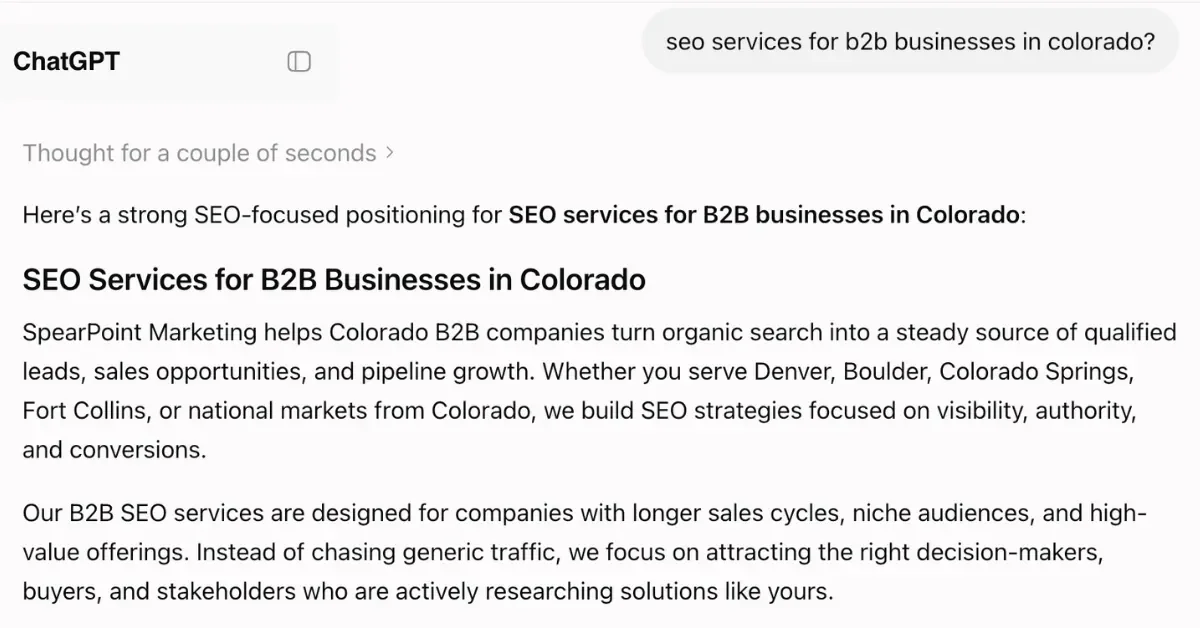
SEO Also Supports AI Search
Another reason SEO still matters? The work you do for SEO often helps with AI Search too.
AI search optimization and SEO are not completely separate strategies. Both depend on clear website content, strong brand signals, helpful pages, trusted mentions, and content that makes your business easier to understand.
No, Google and ChatGPT do not work exactly the same way. No, ranking in Google does not automatically mean you will be cited by every AI tool. No, there is no magic “GEO package” that guarantees your business gets recommended by ChatGPT.
I know. Very disappointing for the people selling that exact thing.
But there is real overlap.
Google’s own documentation says, “optimizing for generative AI search is optimizing for the search experience, and thus still SEO.” You can read that directly in Google’s guide to optimizing for generative AI features on Search.
That matters.
The same fundamentals still apply:
Can search engines crawl your site?
Can they understand what you do?
Can they understand who you help?
Can they understand where you serve customers?
Do your pages demonstrate experience and expertise?
Is your content useful?
Is your brand mentioned in trusted places?
Do you have reviews?
Do you have links?
Do other sources validate your business?
These things matter for SEO. They also matter for AI Search.
AI tools are trying to understand entities, brands, services, relationships, credibility, and context. So if your website is vague, your content is thin, your brand has no footprint, and nobody mentions you anywhere else, that is a problem.
Not just for SEO. For AI Search too.
I wrote more about this here: Brand SEO: Build a Brand That Wins SEO + GEO.
The brands that are easier to understand, verify, and trust have an advantage. That is true in Google. That is true in AI Search. That is true with actual humans.
Funny how that works.
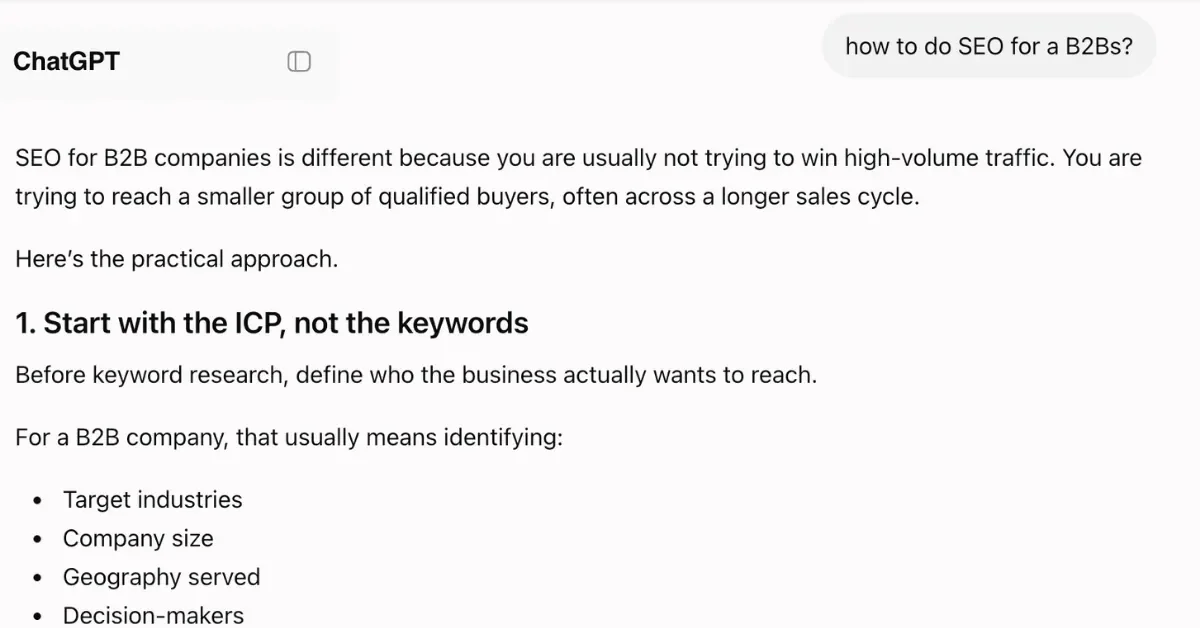
Informational Content Is Getting Hit Harder
This is where the conversation around traffic declines needs more nuance.
Not all content is being impacted equally.
Ahrefs’ research on AI Overviews and clicks looked at informational keywords and found that AI Overviews were associated with a “58% lower” click-through rate for top-ranking pages in their updated study.
That is a big deal.
But notice the key phrase: informational keywords.
This lines up with what many SEOs are seeing. Broad informational content is more vulnerable because AI and Google can summarize a lot of that information directly in the results. A quick definition, a simple explanation, a basic list, a general answer, or a commodity how-to article is easier to replace with a summary.
Academic research on Google AI Overviews and Wikipedia found something similar. In the paper Impact of AI Search Summaries on Website Traffic, researchers estimated that AI Overview exposure reduced daily traffic to English Wikipedia articles by “approximately 15%.” They also found larger relative declines for culture articles and smaller declines for STEM topics, which supports the idea that short synthesized answers can substitute for some informational content.
That does not mean all content is doomed. It means the bar is higher for content that deserves a click.
If your content is just a generic answer, users may not need to visit your site. But if your content gives a real perspective, explains a decision, compares options, includes examples, shares experience, or helps someone take the next step, that is different.
Useful content still has a role.
Commodity content is the problem.
SEO Is Becoming More Connected to Brand
SEO used to be treated like a separate marketing channel. Keywords over here. Content over there. Technical fixes somewhere else. Maybe some links if someone remembered.
That approach is too narrow now.
Modern SEO is connected to:
Brand
Content
Website strategy
Conversion rate optimization
Digital PR
Reviews
Local search
User experience
Sales enablement
Social proof
AI visibility
That does not mean SEO has to become everything. It means SEO cannot be isolated from everything else.
If people search your brand and find weak reviews, that hurts. If your service pages do not explain what you do, that hurts. If your content sounds generic, that hurts. If nobody mentions your company anywhere credible, that hurts. If your website gets traffic but does not convert, that hurts. If AI tools cannot clearly understand who you help, that hurts.
SEO is not just about ranking pages. It is about building a stronger search presence across the places people and machines look for information.
That includes Google. That includes AI tools. That includes local search. That includes branded search. That includes third-party websites. That includes all the places people go to validate whether your business is worth contacting.
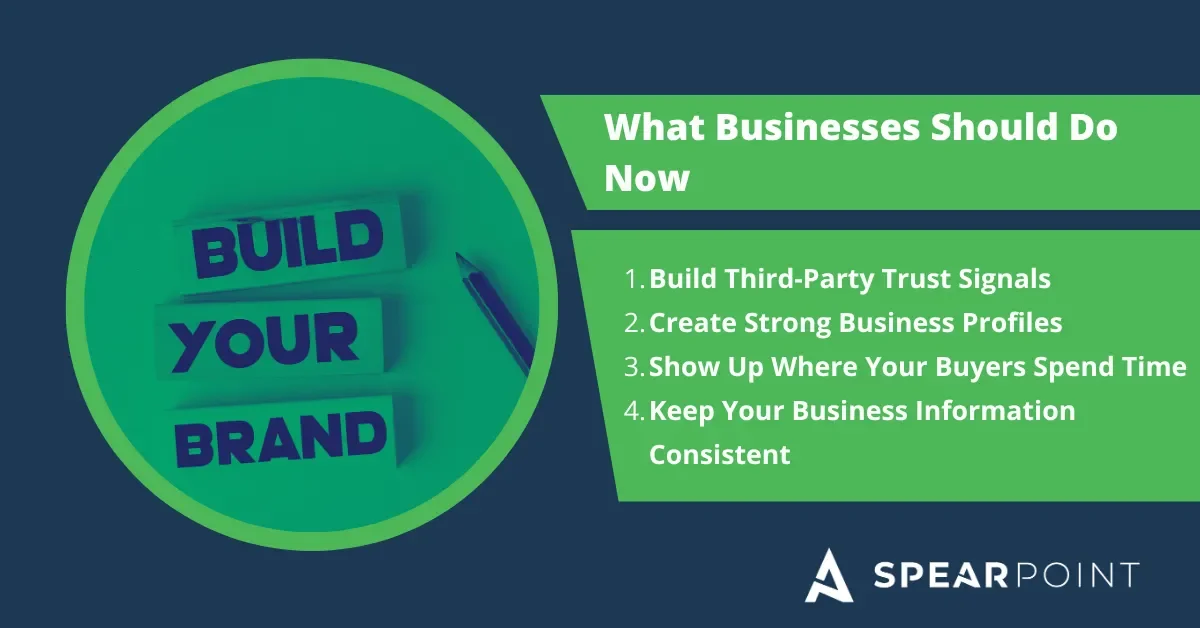
What Businesses Should Do Now
So what should businesses actually focus on?
Start with the pages closest to revenue. Improve your homepage, service pages, product pages, location pages, pricing page, about page, and industry pages. These pages should clearly explain what you do, who you help, where you work, what problems you solve, why someone should trust you, and what they should do next.
Then build content around real buyer questions. Not random keywords. Real questions.
The ones prospects ask on sales calls. The ones customers ask before buying. The ones that help someone compare options. The ones that explain cost, fit, process, timelines, expectations, risks, results, and next steps.
Then strengthen your brand across the web.
That means:
Get more reviews
Earn relevant links
Get mentioned on trusted websites
Build strong third-party profiles
Show up in directories that matter
Create content on platforms where your buyers spend time
Make your business information consistent
Build a digital footprint that helps people and search engines trust you
This is not some secret trick. It is real marketing.
And that is why it works.

Now Is A GREAT Time
To Invest In SEO.
Invest When Competitors Are Stalling.
Own AI Search Before They Do.
Why It Is Still a Great Time to Do SEO
It is still a great time to do SEO because many businesses are confused right now.
Some are panicking. Some are pulling back. Some are chasing every new AI tactic while ignoring their actual website. Some are still publishing generic blog posts like it is 2016. Some are acting like Google disappeared because a few informational clicks are harder to get.
That creates opportunity.
While everyone else argues about whether people still search, you can improve the pages that actually drive business. You can build better service pages. You can create stronger comparison content. You can improve your local visibility. You can earn reviews. You can answer real buyer questions. You can build a stronger brand footprint. You can make your business easier to understand in Google and AI Search.
That is why I still believe in SEO.
Not the lazy version. Not the “publish random blogs and pray” version. The version that helps the right people find you, trust you, and contact you.
For more context on how search is changing, I covered a related topic here: Is SEO Dead? Is Google Dead? How to Think About Modern SEO.
Final Thought
Despite what you may have heard, SEO is still a smart investment. But the strategy matters.
If your entire plan is to chase low-intent informational traffic, you may struggle. If your plan is to build visibility around products, services, locations, industries, comparisons, pricing, reviews, and buyer questions, you are in a much better position.
People are still searching. They are still comparing. They are still checking who to trust. They are still using Google. They are also using AI tools, social platforms, review sites, communities, and other places to research.
That does not make SEO less important.
It makes better SEO more important.
At SpearPoint, our focus is simple:
Conversions from SEO and Search.
Not vanity traffic. Not keyword trophies. Not dashboards that look busy but do not drive business.
Actual visibility. Actual trust. Actual leads. Actual growth.
Because the goal is not just to get found.
The goal is to get chosen.
About the Author

Jesse McFarland is the founder of SpearPoint Marketing, a Denver-area digital marketing and SEO agency focused on helping businesses get more conversions from SEO and Search. With more than 17 years of experience across agency, client-side, and executive marketing roles, Jesse has worked with businesses in B2B, fitness, and ecommerce.
At SpearPoint, Jesse focuses on SEO strategies that go beyond rankings and traffic. His work combines conversion-focused SEO, content strategy, local search, digital PR, AI Search visibility, AEO, and website optimization to help businesses become easier to find, trust, and choose.