Mastering SEO for Professional Services in 2026
Imagine your professional service firm's website sitting at the top of Google—and getting named inside the AI answer when a prospect asks ChatGPT for "the best firm near me." In 2026, that isn't wishful thinking. It's the difference between firms that grow and those quietly losing clients they never knew were looking.
As search gets smarter and buyers change how they research, SEO has split into two connected jobs: ranking on Google, and being the source AI engines cite. I've helped law firms, consultancies, and financial services companies navigate both. Whether you run a practice, an advisory shop, or an agency, understanding today's landscape is what keeps your pipeline full.
Also Read:
“Staying ahead in 2026 takes more than a basic SEO strategy. Professional service firms have to win two surfaces at once—Google’s rankings and the AI answers where shortlists now form. This post breaks down how to do both without chasing every shiny trend.”
Table of Contents Show
TL;DR
Search is now two games. You're optimizing for Google rankings and for being cited in AI Overviews, ChatGPT, Gemini, Perplexity, and Claude. The same foundation feeds both.
Buyers decide before they call. Most of the evaluation happens in an anonymous, self-directed research phase you never see—so you have to be findable and credible early.
E-E-A-T is the through-line. Real expertise, named authors, and citable content are what both Google and AI engines reward for professional services.
High-intent beats top-of-funnel. Rank for "corporate lawyer in Chicago," not "what is a lawyer." Commercial searches bring buyers with budgets.
Local still wins the map. For firms that serve a region, Google Business Profile and location pages remain the fastest path to qualified calls.
Measure clients, not vanity traffic. Track qualified leads, consultations booked, and revenue influenced—not pageviews.
SEO for Professional Service Firms in 2026: Navigating the Future of AI Search & AEO Visibility
The biggest shift since this guide was first published isn't an algorithm update—it's where your next client forms their opinion of you. More and more, that happens inside an AI answer, before they ever land on your site.
Google's AI Overviews—the AI summaries that now sit above the traditional links—reach over 2 billion people a month, according to Google, and they've since grown past 2.5 billion. At the same time, buyers are bringing generative AI into the decision itself: 6sense's 2025 Buyer Experience Report found that 94% of B2B buyers used LLMs during their buying process. For a law firm, consultancy, or advisory practice, that means a machine is often summarizing "who's good at this" before a human ever reads your About page.
This is where Answer Engine Optimization (AEO) comes in. Traditional SEO gets you ranked; AEO gets you named and cited when ChatGPT, Gemini, Perplexity, Claude, Google AI Overviews, AI Mode, or Microsoft Copilot assemble an answer. We treat them as one connected discipline, because your buyer doesn't experience them separately—and neither should your strategy.
The good news for professional service firms: AI answers reward exactly what you sell. Depth, specificity, real frameworks, and a defensible point of view are the things a content mill can't fake—and the things these systems love to cite. The firms that lose are the ones with thin, generic pages that read like everyone else's.
There's a buying-behavior shift underneath this, too. Gartner's 2025 sales survey found that 61% of B2B buyers now prefer a rep-free buying experience, and 6sense found the winning vendor is already on the buyer's Day-One shortlist about 95% of the time. Translation: if your firm isn't visible and credible during that quiet, self-directed research phase—on Google and in AI answers—you're not making the shortlist, and the shortlist is where the decision is really made.
Everything that follows still matters. It just has a second audience now.
The State of SEO in 2026
SEO is changing faster than ever, and the money behind it keeps growing—the global SEO market is projected to surpass $143 billion by 2030. For professional service firms, three forces matter most in 2026: AI-driven search, the shift to conversational and local intent, and Google's continued push toward genuine expertise.
AI-Driven Search: How ChatGPT, Gemini, Perplexity, and AI Overviews Are Reshaping Discovery
The center of gravity has moved to AI-powered search experiences. ChatGPT, Google's Gemini (formerly Bard), Perplexity, and Claude have changed how people research decisions, and Google's own AI Overviews and AI Mode now answer many queries directly on the results page. For a professional services firm, that means structuring content so both a human and a machine can extract your expertise cleanly—clear answers, defined terms, and real frameworks an engine can quote.
These systems also handle context and nuance far better than the keyword-matching search of a few years ago. The practical implication is simple: write content that demonstrably shows expertise in natural language, and you become easier for AI to understand, trust, and surface.
The Rise of Voice and Visual Search
Voice and visual search keep reshaping how prospects find local providers. As more people ask a device for "estate planning attorney near me" or search by image, firms have to think in conversational, question-shaped phrases rather than clipped keywords—and make sure images carry descriptive, contextual alt text. This shift hits local service providers hardest, and it rewards content written the way people actually speak.
Localized and Hyper-Specific Search Intent
Google continues to prize local relevance and exact intent. Professional service firms win by creating content tied to specific places and specific services, rather than broad, generic pages. A page built around "change management consultant for manufacturing" will always outperform "what is change management" for the searches that actually bring in clients, because it signals a buyer with a budget instead of a browser doing homework.
Google's Algorithm Updates: User-First Content and Intent Matching
Recent updates keep pushing in one direction: Experience, Expertise, Authoritativeness, and Trustworthiness (E-E-A-T). For professional services—fields where trust is the product—that means content that genuinely helps, written or reviewed by named experts, backed by real credentials and evidence. Surface-level optimization is quietly dying; demonstrated expertise is what ranks and what gets cited.

The Importance of SEO for Professional Service Firms in 2026
The Changing Landscape: Why SEO Still Matters
People keep asking whether SEO still matters. It does—arguably more than ever. Around 68% of online experiences begin with a search engine, per BrightEdge, and organic search remains the single largest traffic channel for most sites (roughly 53% overall, and closer to 64% for B2B). For firms whose entire growth model depends on the right person finding the right page at the right moment, that's the whole game.
What's changed is the standard. Building trust and credibility online now takes more than a keyword-optimized page—it takes a complete digital presence that establishes authority across your site, your profiles, and the third-party sources AI engines lean on.
The Benefits of SEO for Professional Service Firms
Done well, SEO compounds. A strong program makes your firm more visible in local and industry-specific searches, builds credibility through content that ranks and gets cited, and generates qualified leads from people already looking for what you do. Because that traffic is high-intent and doesn't reset the moment you stop paying, it typically returns far more over time than paid ads—while building a durable presence that keeps working while you sleep. For professional services specifically, that durability is the point: your best clients rarely convert on the first visit, and SEO keeps you in front of them across a long, research-heavy decision.

Our Top 8 SEO Strategies for Professional Services
Across the firms I've worked with, eight strategies consistently move the needle. They work together—no single one carries a program—and in 2026 each has an AI-search dimension layered on top of the fundamentals.
Strategic Keyword Research and Intent Mapping
Local SEO Optimization
User Experience Enhancement
AI-Powered SEO and AEO Implementation
Authority Content Development
Technical SEO Excellence
Strategic Link Building
Performance Monitoring and Adaptation
Let's look at each.
1. Extensive Keyword Research
It all starts with the words your clients actually use—not the jargon your industry prefers. I look at search volume, competition, and, most importantly, intent. That means mapping the main service terms (like "tax consulting services"), the location-specific ones (like "corporate lawyer in Chicago"), the problem-solving phrases (like "how to choose a financial advisor"), and the high-intent long-tail and question queries that signal someone close to hiring.
Competitor analysis is where the opportunities hide. By studying which terms competitors rank for—and, more usefully, which ones they rank for but answer poorly—you find gaps where a better, more complete page can win. The goal isn't to copy anyone; it's to find the angles they've left open and own them. And keyword research is never "done." I revisit it regularly as search patterns and client needs shift.

Also Read:
2. Enhancing Local SEO for Professional Service Firms
For any firm that serves a region, your Google Business Profile is the digital storefront—often the first thing a prospect sees. Fill out every field accurately, add real photos of your office and team, keep hours and services current, choose precise categories, and respond quickly to reviews and questions. Firms that actively manage their profile and engage with reviews simply show up more.
Location-specific content does the rest. Build genuine pages for each area you serve, write about local topics and regulations, share local case studies, and weave in natural location language—balancing your professional expertise with real local relevance. Good local SEO isn't only about ranking; it's about becoming the obvious, trusted choice in your area, which is exactly what an AI engine looks for when someone asks it to recommend a firm nearby.

Also read:
3. Focusing on User Experience (UX) for Better Engagement
A fast, stable site is table stakes. Core Web Vitals affect both rankings and how people feel using your site, so I focus on the three that matter: keeping the main content painting quickly (LCP) by right-sizing images and caching well, keeping interactions responsive (INP) by trimming and deferring heavy JavaScript, and keeping the layout from jumping around (CLS) by reserving space for images, video, and fonts.
Mobile is where most professional-services searches happen, so the mobile experience can't be an afterthought. Tap targets, readable type, phone numbers that dial with one tap, short forms, and fast loading on a cellular connection all matter—and mobile visitors often want something different from desktop visitors, usually your contact information, fast. Design for that intent and you turn more of that traffic into booked consultations.

Also Read:
4. Incorporating AI, Machine Learning, and AEO in Your SEO
AI has changed how the work gets done and where visibility is won. On the execution side, AI tools help surface content gaps, cluster related topics, draft titles and metadata, monitor competitors, and flag technical issues at a scale that used to take a team. Used well, it's leverage; used lazily, it produces the generic content these same engines ignore.
On the visibility side, the job now includes optimizing for AI answers, not just blue links. Structure content so engines can extract it: lead with a direct answer, use clear question-shaped headings, cover the related questions thoroughly, and back claims with evidence and named sources. Mark up your content so machines can parse it, and watch how you're represented in AI Overviews and chat tools. This is the heart of Answer Engine Optimization—earning the citation, not just the ranking.

Also Read:
5. Content Creation for Authority and Engagement
For professional services, content is the credibility test. Meeting E-E-A-T means going deep on the topics you're actually expert in, backing it with real case studies and results, publishing under named authors with genuine credentials, and keeping it current. Original insight, clear explanations of your methods, proper citations, and genuinely useful advice are what separate a page that ranks from a page that gets scrolled past—and what makes AI engines choose you as the source to summarize.
Visual and video content extend that authority. Educational videos, service explainers, and client testimonials make complex services understandable, while custom infographics and process diagrams give people (and engines) something clear to reference. Keep videos focused, transcribe them so search and AI can read them, and hold your branding consistent throughout.

Also Read:
6. On-Page SEO Best Practices
Your highest-intent pages—the homepage and service pages—deserve the most attention, because they're where prospects decide. Lead with a clear value statement, use your primary keywords naturally in the main headings, write compelling titles and descriptions, and surface trust signals as credentials, awards, and client results high on the page. Support it all with fast loading, mobile-friendly design, smart internal linking, clean URLs, and proper structured data.
Ranking isn't enough if the page doesn't convert, so I pair on-page SEO with conversion rate optimization on every important page. That means placing calls-to-action deliberately, making the next step obvious, adding social proof and useful tools where they help, and testing layouts against real user behavior. When search optimization and conversion design work together, each page both attracts the right visitors and turns more of them into clients.

Also Read:
7. Emphasizing the Role of Link Building
Quality links still move rankings, and they matter even more now that AI engines weigh off-site signals to decide who to trust. The most reputable links for professional services come from being genuinely present in your field: industry directories, professional associations, earned media, expert contributions, and research others want to cite. Alongside that, keep your business citations consistent everywhere they appear, since inconsistent name, address, and phone data is a common reason a legitimate firm gets buried.
Real partnerships create the most natural links of all. Co-authored research, joint webinars, event sponsorships, and expert interview series build your network and your authority at the same time. Focus on relationships and genuine value rather than link volume, and review your link profile regularly to keep it clean.

Also Read:
8. Measuring and Monitoring SEO Success
You can't improve what you don't watch, but watch the right things. The metrics that matter for a professional service firm are organic traffic growth, keyword and AI-answer visibility, conversion rate, and—above all—qualified leads and consultations booked. Vanity traffic that never becomes a client is a billboard in a field. I lean on Google Analytics 4, Google Search Console, a rank tracker like Semrush or Ahrefs, and PageSpeed Insights, then tie every number back to pipeline.
Cadence keeps a program healthy: a monthly look at technical health, content performance, backlinks, and local results; a quarterly review of competitors, content gaps, and keyword strategy; and steady adjustments in response to algorithm and AI updates. Compare periods, spot patterns, fix problems fast, and repeat what works.

Also Read:
Adapting to SEO Trends for 2026 and Beyond
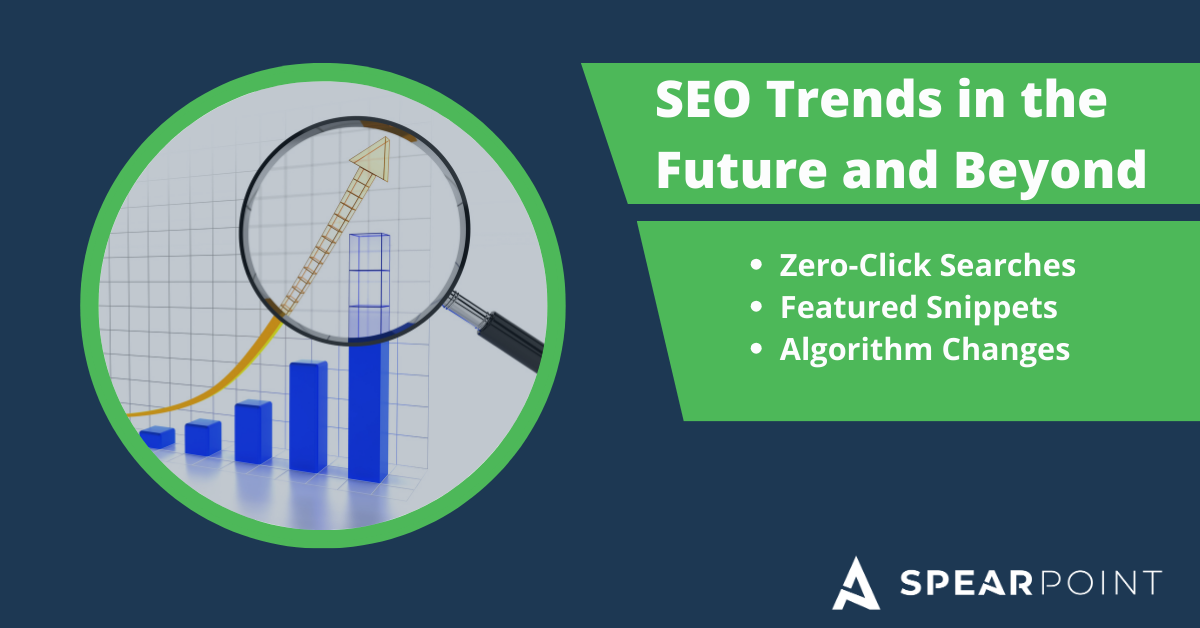
Zero-Click Searches, Featured Snippets, and AI Overviews
More searches than ever end without a click. SparkToro's 2026 analysis found roughly 68% of U.S. Google searches now resolve on the results page, and when an AI Overview appears, the click-through rate for the top organic result drops sharply—Ahrefs measured a decline of about 58%. Meanwhile, the #1 organic result still captures around 27.6% of clicks, per Backlinko, so the top of page one is more valuable, not less.
The takeaway for professional service firms is to structure content so it wins in both worlds: answer questions directly and early, use clear Q&A formatting, add proper schema, and build the kind of authoritative, citable pages that get pulled into featured snippets and AI answers. If the engine answers on your behalf, you at least want to be the firm it names.
Staying Ahead of Algorithm and AI Updates
Search keeps evolving, and freshness is part of ranking—updating strong existing content often outperforms publishing something new. In 2026, the durable priorities are genuine user experience, demonstrated expertise, AI-readable structure, mobile performance, and local relevance. Watch for updates, follow credible sources, and test new approaches—but anchor everything to the same foundation: content that actually helps your audience and proves your expertise. That's what survives every algorithm change and every new AI surface.

-
Because your buyers research online and decide early. About 60% of online experiences start with a search engine, and most professional-services buying decisions happen in an anonymous, self-directed research phase—increasingly with help from AI tools. SEO (and AEO) is how your firm gets found and trusted during that phase, generating steady organic traffic, credibility, and qualified leads at a lower long-term cost than paid ads.
-
The same way you earn trust with Google: clear, structured, genuinely expert content, consistent business information, real credentials and authorship, and citations from credible third parties. AI engines assemble answers from sources they can confidently parse and trust, so a complete, authoritative presence is what makes your firm eligible to be named. This is the core of Answer Engine Optimization, and it runs on the same foundation as your SEO.
-
No—it changes it. AI features are absorbing more informational queries, but they pull from the same structured, authoritative content that SEO produces, and high-intent commercial searches still send real buyers to real websites. The firms that win treat SEO and AEO as one system rather than betting everything on either.
-
Focus on the fundamentals Google actually rewards: helpful, original content that demonstrates E-E-A-T, a mobile-first experience, healthy Core Web Vitals, and clear signals of expertise and trust. If you're creating genuinely useful content under credible authorship and keeping the technical foundation clean, you're aligned with where Google is heading.
-
The usual culprits are thin, generic content that reads like every competitor's, neglecting mobile users, skipping technical basics, ignoring local search, and chasing broad informational keywords instead of high-intent commercial ones. In 2026, add one more: publishing unedited AI content that says nothing only an expert could say—exactly the kind of page AI engines decline to cite.
-
Look for proven results with firms like yours, transparent reporting, clear communication, and custom strategy rather than a one-size-fits-all package. Ask for client references and real case studies, and understand how they measure success. Be wary of anyone promising guaranteed rankings, using black-hat tactics, or unable to show their work. The right partner understands your industry's trust and compliance realities and can prove it.
This is a topic worth getting right, so if you'd rather have it handled, that's what our SEO and AEO work is built for.
SEO for Professional Services
Learn How We Do SEO for Professional Service Firms

At SpearPoint Marketing, we build SEO and AI-search programs that produce real results for professional service firms. As a conversion-focused B2B SEO agency, our job is qualified leads and revenue—not vanity traffic.
Our Professional Service Clients
We work across professional-services sectors, each with its own realities. For law firms, that means practice-specific and multi-location content, real authority building, and marketing that respects ethics rules while making the most of client reviews. For healthcare and wellness providers, it means compliant, patient-focused content, location-based service pages, and hard-won medical authority. For financial services, it means compliant, trust-first content that positions advisors and makes complex offerings clear to both buyers and search engines. For technology and cybersecurity firms, it means technical-content SEO, thought leadership, and B2B lead generation. And for consulting firms, it means turning frameworks, case studies, and a defensible point of view into search and AI visibility that books calls.
What makes us different is simple: B2B and professional-services expertise, industry-specific strategy, a relentless focus on results, transparent reporting, and ongoing optimization. We tailor the approach to your goals and always tie it back to measurable growth.
Conclusion: Future-Proofing Your SEO Strategy
One thing stays true no matter how search changes: the firms that adapt win. In 2026, adapting means treating SEO and AEO as one system, keeping your content genuinely expert and genuinely helpful, and building the trust signals that both Google and AI engines reward—while never losing sight of the client on the other end of the search.
Embrace the new surfaces, but anchor to the fundamentals: real expertise, a fast and mobile-friendly experience, strong local presence, clean technical health, and steady measurement against pipeline. Do that, and you stop hoping the right clients stumble onto you—and start showing up the moment they, or their AI assistant, go looking.
Ready to future-proof your firm's visibility? Let's talk. No BS, just results.
About the Author

Jesse McFarland is the founder of SpearPoint Marketing, a conversion-focused SEO and AI search agency based in Centennial, Colorado. Jesse has more than 17 years of digital marketing experience across B2B, SaaS, healthcare, legal, fitness, ecommerce, and startup organizations. He specializes in helping firms turn organic search into qualified demand through modern SEO, AEO, GEO, content strategy, and technical SEO—and in helping owners understand how search is changing without losing their minds every time someone announces SEO is dead again.
Suggested External Links Used in This Post
Google / Alphabet, AI Overviews reach (Q2 2025): https://digiday.com/media/googles-ai-overviews-reach-over-2-billion-monthly-users/
6sense, 2025 Buyer Experience Report: https://6sense.com/science-of-b2b/buyer-experience-report-2025/
Gartner, 2025 B2B buyer/sales survey: https://www.gartner.com/en/newsroom/press-releases/2025-06-25-gartner-sales-survey-finds-61-percent-of-b2b-buyers-prefer-a-rep-free-buying-experience
Backlinko, Google CTR study: https://backlinko.com/google-ctr-stats
BrightEdge, organic channel research: https://www.brightedge.com/resources
SparkToro, zero-click search research: https://sparktoro.com/blog
Ahrefs, AI Overviews CTR study: https://ahrefs.com/blog
Exploding Topics, SEO market statistics: https://explodingtopics.com/blog/seo-statistics
Google Search Central, helpful content & E-E-A-T: https://developers.google.com/search/docs/fundamentals/creating-helpful-content