The Complete Local Search System for Gyms, Studios, and Fitness Owners

In your gym's trade radius, the winner usually isn't the best gym. It's the most findable one.
That's not cynicism; it's how buying decisions get made now. Someone within three miles of you decides to join a gym this week. They search, they skim the top results, they pick from whoever actually shows up. The quality of your equipment never enters the conversation, because they never got far enough to see it.
Most gym owners treat local SEO as a single chore: set up the Google profile, tick the box, move on. That's like calling a single dumbbell a gym. Your Google Business Profile is one pillar of local SEO, and an important one, but it's a fraction of the system. Whitespark's 2026 Local Search Ranking Factors survey of 47 local SEO experts puts Google Business Profile signals at about 32% of local pack influence. Important, clearly. Also, by definition, not the other 68%.
This post is the full system. We handled the profile pillar, field by field, in the complete Google Business Profile checklist for gyms. Here's everything built around it that actually fills your roster.
TL;DR for the Owner Who Wants to Keep the Roster Full

Local SEO is a system, not a single setting. Your Google profile is roughly a third of it. The rest lives on your website and across the web.
Google ranks local on three principles. Relevance, distance, and prominence. You can't move your building, so relevance and prominence are the game.
Your website does real work. Location, class, and service pages are what win the organic results below the map pack, and they convert.
Reviews and links carry weight. Review signals keep rising in importance; local links from real community sources punch above their size.
Citations are cheap insurance. A few hours of consistent listings, done once, closes a gap most competitors skip entirely.
Measure trials and sign-ups. A gym that ranks but never books a tour is winning the wrong game.
Table of Contents Show
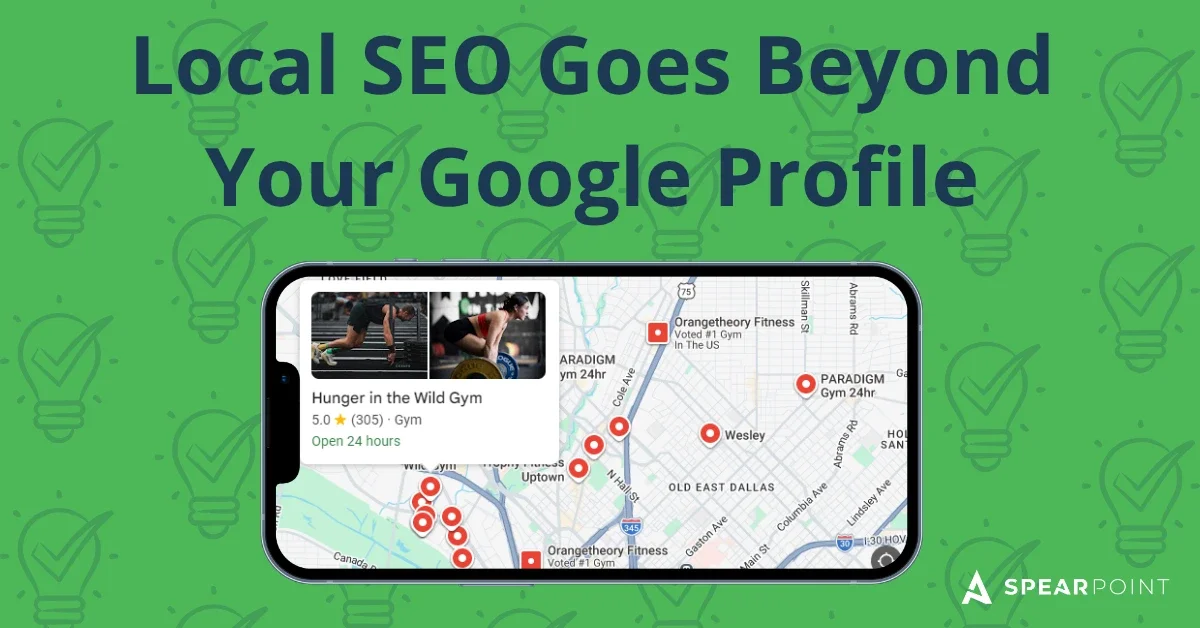
Local SEO Is a System That Goes Beyond Your Google Profile
Let's set the frame, because it determines where you spend your time.
Local search resolves in two places: the map pack, those top three results with the little map, and the organic results directly below it. They're ranked differently. The map pack leans heavily on Google Business Profile signals, while the organic results below respond far more to classic on-page content and links from your website. Win only your profile and you're competing for one of those two surfaces with one hand tied behind your back.
The full system covers both. Your profile wins the map pack. Your website wins the organic results. Your reviews, citations, and links feed both. Miss any piece, and you leave visibility and members on the table for the gym down the street that did the whole job.
So treat this as a system. Do the profile first, using the field-by-field GBP checklist, then build everything below.
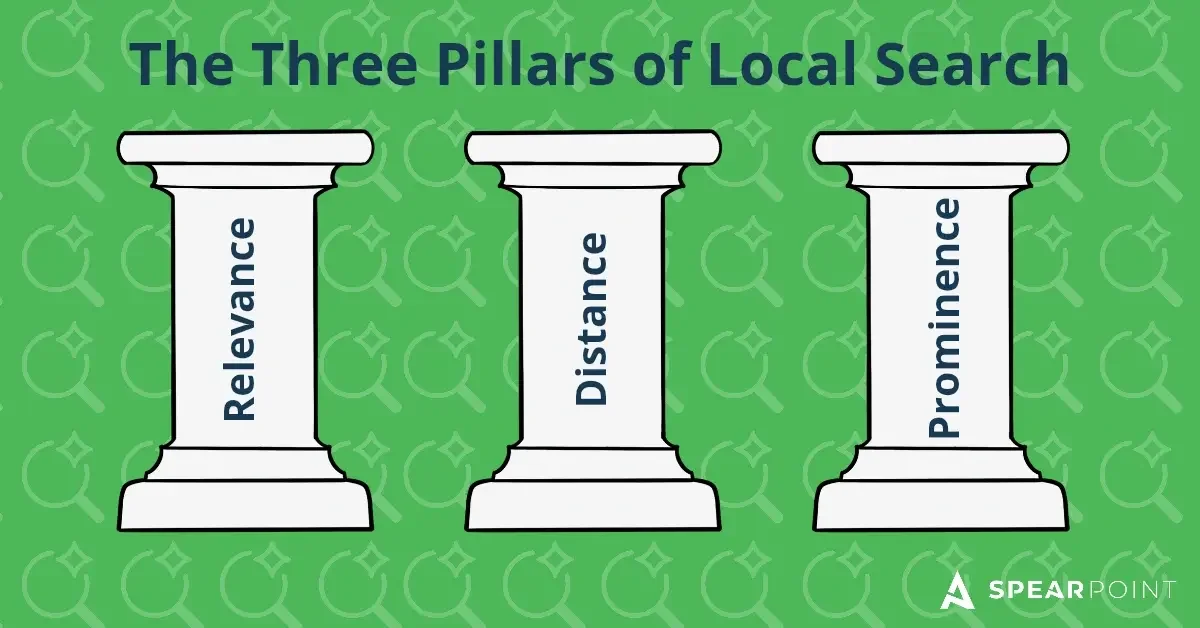
How Google Ranks the Local Pack: Relevance, Distance, and Prominence
Google has been open that local ranking comes down to three things. Understanding them tells you exactly where your effort pays off.
Relevance is how well your business matches what someone searched. This is content and categorization: your primary category, the services you list, and the words on your website all tell Google what you are and who you're for.
Distance is how close you are to the searcher. You can't change your address, so this one is largely fixed. Stop worrying about it.
Prominence is how well-known and trusted your gym is, and it's the factor you can build the most. It's the sum of your reviews, your citations, your links, and your overall footprint across the web. As one 2026 analysis put it, a gym with 200 reviews, consistent citations across dozens of directories, and links from local sites has far stronger prominence than one with 10 reviews and no citations.
Two of the three levers, relevance and prominence, are yours to pull. The rest of this post is how you pull them.
Your Website's Local Signals: Location, Class, and Service Pages
Here's the half of local SEO the profile checklist doesn't touch, and where most gyms have done nothing: your website.
The organic results below the map pack are won on content, and for a gym that means purpose-built local pages.
Location pages
If you have more than one location, each needs its own page, optimized for that neighborhood, with its own address, hours, staff, and local detail. One "Locations" page listing all of them is a missed opportunity at every single one.
Class and program pages
A dedicated page for each major offering, spin, strength, CrossFit, yoga, personal training, gives Google something specific to rank and gives a searcher for "[city] spin classes" an exact match. Our breakdown of SEO for private fitness studios goes deep on this for class-based businesses.
Service and "who it's for" pages
Pages aimed at specific members, beginners, powerlifters, new parents, and seniors capture searches your competitors ignore and speak directly to the person reading.
Every one of these pages should do two jobs at once: give Google a relevant, specific target to rank, and give the reader an obvious reason to book a tour. Local ranking that never converts is just expensive decoration.
Local Content That Ranks and Converts
Beyond your core pages, local content builds the relevance and prominence that lift everything else.
Write about your city and community in ways only a local business credibly can: neighborhood fitness guides, local event coverage, member spotlights, partnerships with nearby businesses. This does two things. It signals to Google that you're genuinely embedded in your area, and it earns the local links and mentions that build prominence.
The rule is the same one that governs all good content: it has to earn its place. A thin post stuffed with "[city] gym" twelve times helps nobody and can hurt you. A genuinely useful guide to training in your town's climate, or a real story about a member's transformation, earns attention, links, and trust. If you want the fundamentals, our guide to SEO for gyms in six steps covers the basics this builds on.
This system isn't theory. Here's what it did for a real local martial arts gym we took from buried to booked.
That kind of visibility is a system, run consistently. Here's the rest of it.
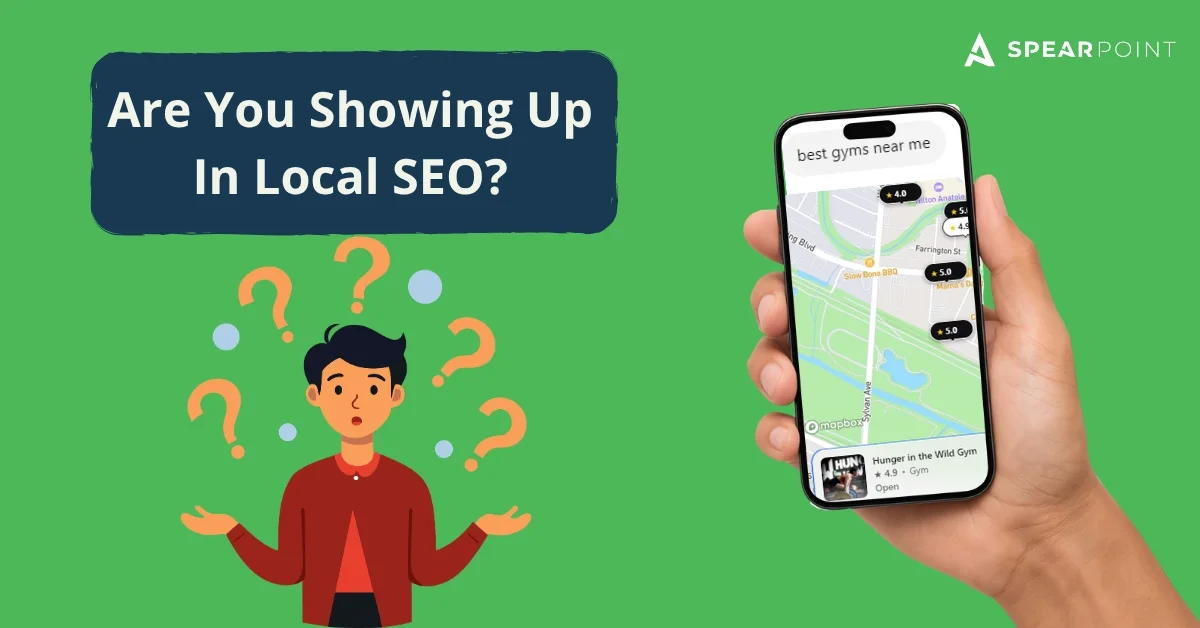
Citations, Directories, and NAP Consistency Across the Web
A citation is any place your business name, address, and phone number (your NAP) appear online: Yelp, Bing Places, Apple Maps, ClassPass, your chamber of commerce, industry directories.
Two rules make citations work. First, consistency: your NAP has to be identical everywhere, down to the suite number and the abbreviation. Contradictory listings confuse both search engines and the humans trying to find you. Second, coverage: the more accurate, relevant listings you have, the more corroboration Google has that you're a real, established business.
Now the honest framing, because it sets your effort correctly. Citations are among the smaller weighted factors, roughly 6 to 7% of local pack influence in Whitespark's 2026 survey. That's exactly why they're worth doing: they're low-effort, done once and revisited annually, and most of your competitors skip them entirely rather than doing them briefly. A few hours here closes a gap for cheap. Get the major directories right, keep the NAP identical to your profile, and move on.
Local Link Building for Gyms
Links remain a real ranking factor, carrying roughly 15% of local organic weight in the 2026 Whitespark data, and for a local business, the kind of link matters more than the count.
A link from your local chamber of commerce, a local news site, a community organization, or an event you sponsor is worth far more than a high-authority national site with no connection to your area. Whitespark's 2026 report is explicit that local relevance now outweighs raw quantity.
For a gym, the sources are sitting right in your community:
Sponsor a local race, youth team, or charity event and earn a link from their site.
Partner with nearby businesses, a physical therapist, a smoothie bar, a running store, for cross-links and referrals.
Get involved with the chamber of commerce and local business associations.
Offer to be a local-press source on fitness, or host a community event worth covering.
These are relationship-driven and slower than buying links, which is the point. They're the links Google trusts, and they're hard for a competitor to copy.
Local Schema Markup
Give Google structured data to remove the guesswork. LocalBusiness schema (or the more specific gym or health club type) tells search engines your name, address, hours, and services in a format they read cleanly, and it can help you earn rich results.
Keep this in proportion. Schema helps Google understand and present your pages, so it's worth implementing correctly, but it's a supporting move rather than what wins you the map pack. Do it once, do it right, and spend the bulk of your time on content, reviews, and prominence.
Multi-Location and Multi-Studio Considerations
If you run more than one location, the system scales but the details get sharper.
Each location needs its own Google Business Profile and its own optimized location page, with genuinely unique content rather than a template with the city name swapped out. Each needs its own reviews, its own local citations, and ideally its own local links. Google evaluates each location's prominence somewhat independently, so a strong flagship location doesn't automatically lift a weak second one. Treat every location as its own local SEO project that happens to share a brand.
Track Local Performance by Members, Not Rankings
Rankings feel like the goal. They're not. They're a means to trials, tours, and sign-ups.
Measure what actually matters: calls and direction requests from your profile, form fills and trial bookings from your location pages, and how many of those become members. A first-page ranking that never produces a tour is a vanity metric wearing a suit. When you measure by members, your strategy self-corrects toward the pages and tactics that actually fill the roster.
For the DIY version of tracking this without a big software stack, our local SEO guide walks through the basics.
The Gym Local SEO Action Checklist
Work top to bottom. Order matters.
Complete your Google Business Profile in full, using the field-by-field checklist. This is the foundation.
Build a dedicated page for each location, with unique local content.
Build a page for each major class, program, and key member type.
Publish genuinely local content that earns attention and links.
Get your NAP identical across Yelp, Bing Places, Apple Maps, and your chamber and industry directories.
Earn local links through sponsorships, partnerships, and community involvement.
Implement LocalBusiness schema correctly, once.
Build a review system so recent reviews arrive steadily, using our gym reviews guide.
Track trials and sign-ups, and let those numbers drive your next move.
Want to see exactly where your gym is losing local searches, and to whom?
We'll map the whole system for your gym and show you the fastest path to the top of the local results.
FAQ
-
The best strategy is to treat local SEO as a complete system rather than a single task. Fully optimize your Google Business Profile, build dedicated location and class pages on your website, publish genuinely local content, keep your name, address, and phone consistent across directories, earn local links through community involvement, and generate a steady flow of recent reviews. Then measure the whole thing by trials and sign-ups so your effort stays pointed at what fills the roster.
-
Your profile is one pillar, roughly a third of local pack ranking influence, and it mainly wins the map pack. Local SEO as a whole also includes your website's location and class pages, local content, citations, links, and reviews, which win the organic results below the map pack and build the prominence Google rewards. The profile is essential, but it's the foundation, not the whole building.
-
Basic wins like profile optimization, citation cleanup, and new location pages can show movement within a few weeks. Building the reviews, links, and prominence that lift you in a competitive area usually takes two to three months and compounds from there. Anyone promising the top of the map pack overnight is selling you something.
-
You don't need multiple location pages, but you still need one strong, locally optimized page for your gym, plus pages for your key classes and programs. Those pages compete in organic results and give searchers an exact match for what they typed.
-
Yes. The same accurate data, reviews, and prominence that power your local rankings are what AI engines pull from when someone asks for a gym recommendation. Local search and AI search increasingly run on the same fuel. We cover the AI side specifically in how brands get found in AI search.
Suggested External Links Used in This Post
Whitespark, 2026 Local Search Ranking Factors: https://whitespark.ca/local-search-ranking-factors/
Google Business Profile Help, add or edit your business information: https://support.google.com/business/answer/3039617
BrightLocal, local SEO research: https://www.brightlocal.com/research/
Google Search Central, local business ranking guidance: https://developers.google.com/search/docs/appearance/ranking-systems-guide
About the Author

Jesse McFarland is the founder of SpearPoint Marketing, a conversion-focused SEO and AI search agency based in Centennial, Colorado. Jesse has more than 17 years of digital marketing experience across B2B, SaaS, healthcare, legal, fitness, ecommerce, and startup organizations.
He specializes in helping companies turn organic search into qualified demand through modern SEO, AEO, GEO, AI Visibility, content strategy, technical SEO, and brand-first search marketing. Jesse helps business owners and marketing leaders understand how search is changing without losing their minds every time someone on LinkedIn announces SEO is dead again.