The Local-Search Playbook for Gyms, Studios, and Fitness Owners
Picture the person you most want as a member. They just moved across town, their New Year's resolution is two weeks old, and they pull out their phone and type "gyms near me."
They don’t scroll to page two. They don’t open your website first.
They look at the three gyms in the map pack, glance at the star ratings, skim a few photos, and decide who gets a tour. That entire audition happens in about eight seconds, and your Google Business Profile is the only thing on stage.
Here's the uncomfortable part: the demand has never been higher. A record 81 million Americans belonged to a gym or studio in 2025, pushing membership penetration to 26.1% of the population, according to the Health & Fitness Association's 2026 consumer report. More people are searching for a gym than ever. The only question is whether they find yours or the one down the street.
This post is the complete checklist for winning that eight-second audition, turning your Google Business Profile from a digital afterthought into your best membership sales rep.
Talk is cheap in this industry, so here's proof from a real local business we took from buried to booked.
That kind of visibility isn't luck. It's a checklist, and here's the one we run.
TL;DR for the Owners Who Are Reading This Between Classes

The map pack is the whole game. Most people choosing a gym never leave those top three local results. If you're not there, you're not in the conversation.
A "near me" search is a buyer with their shoes on. Someone searching for a gym nearby is ready to walk in this week, and they'll pick from whoever actually shows up.
Every field on your profile is a sales opportunity. Treat it like a landing page, because to the person deciding, that's exactly what it is.
Reviews are your ranking fuel and your closing argument. They move you up the map pack and convince the person reading them to pick you.
SEO and AEO are one system now. The same profile that ranks you on Google Maps is what ChatGPT, Gemini, and Google AI Overviews pull from when someone asks a machine to recommend a gym.
Measure trials and sign-ups, not profile views. A profile that gets seen but never booked is a billboard in a field.
Table of Contents Show
Why "Gyms Near Me" Is the Only Search That Matters

Let's be honest about how people find a gym in 2026. They don't read a 2,000-word guide to strength training and then thoughtfully evaluate your programming philosophy. They search, they skim, and they book.
And they search locally, constantly. BrightLocal's local SEO research found that 84% of consumers searched for a local business in the past three months, and nearly half say they always or often add "near me" to those searches. For a business that only makes money from people who physically show up, that's the entire ballgame.
The map pack, those top three local results with the little map, is where that search resolves. Backlinko's analysis of local search behavior found that 42% of clicks on local queries go to the map pack, and 76% of people who run a "near me" search visit a business within a day.
Read that last number again.
Three out of four "gym near me" searchers walk through someone's door within twenty-four hours. Your only job is to make sure the door is yours.
Your Next Member Has Already Decided How They'll Choose
The gym buyer has changed, and it matters for how you show up. Gen Z accounted for 47% of all new gym joins in 2025, and for that group, community and belonging are the top reasons they stay, according to membership data compiled by Glofox. This is a generation that vets a gym the way they vet a restaurant: photos first, reviews second, everything else a distant third.
So the question isn't "how do I get more foot traffic?"
It's this: when someone within three miles of your gym searches for a place to train, does your profile look like the obvious, welcoming, proven choice, or like a listing nobody's touched since it was auto-created?
If it's the second one, you're losing members you never even knew were looking.
SEO and AEO Are One System Now, Even for a Gym
For years, "local SEO" meant ranking in Google Maps. That's still the core of it. But your future member's research now runs through Google, Google AI Overviews, AI Mode, ChatGPT, Perplexity, Gemini, Microsoft Copilot, and Claude, sometimes in the same sitting.
People now ask a chatbot "what's a good gym near downtown with early morning classes?" and expect a real answer. That answer gets assembled from the same structured, consistent business data that powers your map ranking: your categories, your hours, your reviews, and your services.
This is why we treat it as one connected discipline. SEO gets you into the map pack; Answer Engine Optimization gets you named when a machine makes the recommendation. Your Google Business Profile is the single asset feeding both. Optimize it once, correctly, and you show up in both places. For the deeper mechanics of that AI layer, we broke it down in how brands get found in AI search.
The good news for gym owners: these systems reward accuracy and specificity, which are free. You don't need a bigger ad budget. You need a profile that's actually finished.
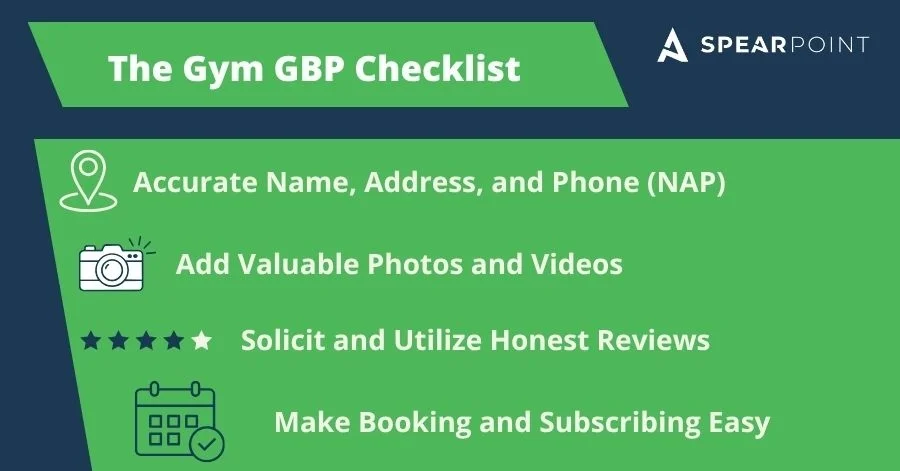
The Complete Google Business Profile Checklist for Gyms
Here's the sequence we run for local fitness businesses. In order, because order matters. Work top to bottom and don't skip the boring fields, because the boring fields are the ones your competitors skipped too.
1. Lock Down Your Name, Address, and Phone (NAP)
Your business name, address, and phone number have to be identical everywhere they appear: your profile, your website, your Instagram bio, Yelp, ClassPass, and every directory. Inconsistent NAP data is the most common reason a legitimate gym gets buried, because it makes Google unsure which information to trust.
Use your real-world business name, not a keyword-stuffed version like "Best Gym Denver Fitness Boxing."
Make sure your address matches your Google Maps pin exactly, down to the suite number.
Use a local phone number, not a call-tracking number that changes.
2. Choose the Right Primary Category (and the Secondary Ones)
Your primary category is one of the strongest local ranking signals you've got. A CrossFit box that lists itself as "Gym" instead of "Physical Fitness Program" or a more specific fitness category is competing in the wrong race.
Set the most specific primary category that describes what you actually are (e.g., "Boxing gym," "Yoga studio," "Personal trainer").
Add secondary categories for every real service: "Personal trainer," "Physical fitness program," "Sports nutrition."
Don't add categories you don't serve. Irrelevant ones dilute your relevance, not boost it.
3. Win With Photos and Video
This is where gyms leave the most on the table. Your future member is deciding whether they'll feel comfortable in your space, and a stock photo of dumbbells tells them nothing. Real photos of your actual floor, your classes, and your community do the selling.
Add high-quality photos of the interior, equipment, locker rooms, and a class in progress.
Show real people (with permission) training and smiling. Belonging is what Gen Z is shopping for.
Refresh photos monthly so the profile looks active and current.
Add a short walkthrough video. It's the closest thing to a tour before the tour.
4. Turn Reviews Into a Ranking and Closing Machine
Reviews are the rare asset that both lifts your map ranking and closes the sale on the spot. BrightLocal's Local Consumer Review Survey found that reading reviews for local businesses is now effectively universal behavior. And in fitness specifically, reviews mentioning a gym's "value" rose 34% year over year and reviews describing the "vibe" rose 36%, per Chatmeter's 2025 Gym Reputation Ranking. People are telling each other exactly what it feels like to train at your gym. Make sure they're saying it on your profile.
Ask every happy member for a review, ideally right after a milestone or a great class.
Respond to every review, positive and negative, in your gym's actual voice.
Never fake reviews. It's against Google's policy, and members can smell it.
For a repeatable system, use our guide to generating 5-star Google reviews.
5. Use Posts, Q&A, Attributes, and Booking
An active profile outranks a dormant one, and these underused features are how you signal life to Google and answer questions before a prospect has to ask.
Publish Google Posts for challenges, new classes, and limited trial offers.
Seed and answer your own Q&A with the questions you get every day ("Do you offer a free trial?" "Is there parking?").
Set attributes that matter to gym-goers: "Restroom," "Wheelchair accessible," "Free parking," and "Showers."
Turn on booking so a prospect can reserve a trial class directly from your profile, no phone tag.
6. Write a Description That Sells the Outcome
Your description won't move rankings much, but it's prime conversion real estate. Skip the corporate throat-clearing and speak to the person deciding whether they belong here.
Lead with who you serve and the result you deliver, not your founding year.
Work in the natural phrases people search, like "strength training" or "beginner-friendly classes," without stuffing.
Name your neighborhood so both Google and a human reader place you instantly.
Surface amenities that don't have their own toggle, like locker rooms, sauna, or towel service, here and in your photos.
7. Turn On Messaging and Answer Fast
Google Business Profile messaging lets a prospect text you straight from the listing. For someone deciding between three gyms at 9 p.m., the one that answers "do you have a free trial?" in five minutes usually wins the visit.
Enable messaging and set a welcome message that invites the obvious next step.
Answer fast. Google can display your typical response time, and a slow one reads like a bad review.
Route messages to whoever actually staffs the front desk, not an inbox nobody opens.
8. Track Your Insights and Monitor Where You Rank
You can't improve what you don't watch. Your profile's performance insights show how people find you, what they searched, and which actions they took.
Review monthly which search terms surface your gym and which actions people take (calls, direction requests, bookings).
Check your map-pack position for your core terms from a few points around your service area, since rank shifts with the searcher's location.
Tie the numbers back to trials booked and members signed, so the profile has to earn its keep, not just rack up views.
9. Defend Against Competitor Listing Spam
Local search has a seedy underside. Fake listings, keyword-stuffed competitor names ("Best 24 Hour Gym Denver Cheap"), and lead-gen listings parked on your turf can quietly siphon searches that should be yours.
Search your core terms and watch for competitors gaming their business name with extra keywords.
Report violations through Google's Business Profile complaint process. A stuffed name breaks the guidelines and can be corrected.
Keep your own listing spotless, so you're the legitimate, obvious choice when the spam gets cleaned up.
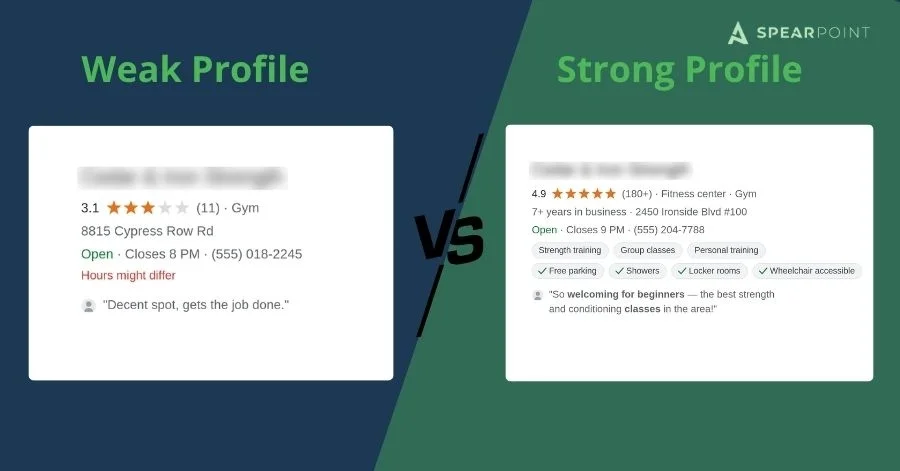
Weak Google Profile vs. Strong Google Profile
Weak Google Profile vs. Strong Google Profile
Here's what a neglected gym profile "says" to a searcher, even if nobody wrote it out loud — and what the optimized version says instead:
| Profile element | Weak profile | Strong profile |
|---|---|---|
| Description | None | "Beginner-friendly strength and conditioning gym in [Neighborhood]" |
| Category | "Gym," and nothing more | Primary and secondary categories set correctly |
| Photos | Three blurry shots, last uploaded in 2022 | Fresh photos of real classes, posted this week |
| Reviews | 11 total, none answered | 180+ five-star, every one answered |
| Booking | No clear next step | Free trial bookable in one tap |
| Hours | Possibly wrong | Current and accurate |
| Amenities (parking, showers, etc.) | Blank | Filled in and dialed in |
| What it signals | Reads as closed, even with the lights on | Trusted enough for Google to rank, a human to visit, and AIs to recommend |
Same gym, wildly different result. The only variable is whether someone finished the checklist. You want a profile Google trusts enough to rank, a human trusts enough to visit, and an AI assistant trusts enough to name when someone asks for a recommendation.
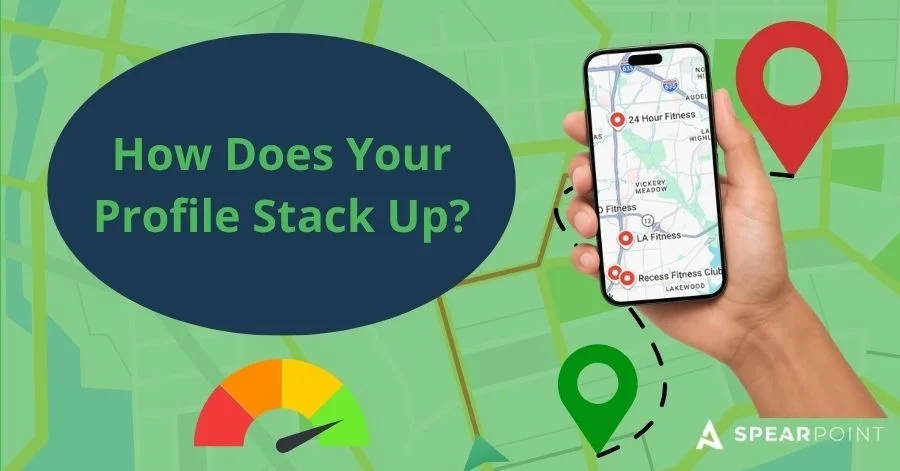
The Gym GBP Scorecard
Before you change anything, grade what you've got. Score each row honestly.
| Element | Missing (0) | Basic (1) | Dialed In (2) |
|---|---|---|---|
| Primary category | Generic "Gym" | Accurate category | Specific category + relevant secondaries |
| NAP consistency | Varies by platform | Mostly matches | Identical everywhere |
| Photos and video | A few, outdated | Some current photos | Fresh photos monthly + walkthrough video |
| Reviews | Under 20, none answered | Decent count, some replies | High volume, every review answered |
| Posts and Q&A | Never used | Occasional post | Weekly posts + seeded Q&A |
| Messaging | Off | On, slow replies | On, fast replies, staffed |
| Booking and CTAs | "Call us" only | Website link | One-tap trial booking enabled |
| AI visibility (AEO) | Never checked | Aware of it | Structured, consistent, monitored |
0 to 6: you're invisible in the map pack and leaving members on the table every week. 7 to 11: solid base with real upside. 12 to 16: you're the gym your competitors keep losing walk-ins to.

Tired of spending hours marketing without results?
See how Spearpoint can help you double your leads with our fitness marketing & SEO plans.
"But My Gym Runs on Instagram and Word of Mouth"
Yes. We know. Plenty of great local gyms have built real communities on Instagram and member referrals, and that's genuine.
Good.
Now consider what happens after a friend recommends you. The next thing that person does is search: they Google your name, or type "gyms near me" to see how you stack up. Checking reviews and vetting a business on Google before committing is standard behavior now, according to BrightLocal's Local Consumer Review Survey. Word of mouth starts the journey. Your Google Business Profile finishes it, or fumbles it.
A referral who lands on a stale, empty, unanswered profile is a lead arriving at a dead end. You did the hard part, earning the recommendation, and then handed the close to a competitor with 200 reviews and current photos.
Your community isn't the alternative to a great profile. It's the reason a great profile pays off. For the full local strategy around it, that's exactly what we do in fitness and gym SEO.
Stop Waiting to Be Found
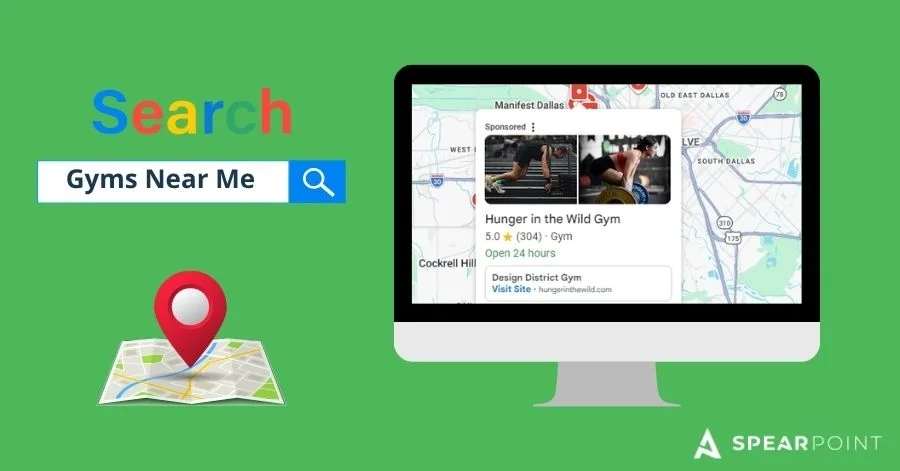
The demand is already there. Record numbers of people are looking for a gym, and most of them start with a search that resolves in the map pack in a matter of seconds.
Your Google Business Profile is the one asset standing between that search and a booked trial. Fill it out completely, keep it active, stack the reviews, and connect the trial booking, and you stop hoping people stumble onto you and start showing up the moment they look.
Because the goal isn't just to get found on the map.
The goal is to be the gym they choose.
FAQ
-
Local search tends to move faster than broad SEO. Basic fixes like categories, photos, and NAP consistency can show movement within a few weeks, while review growth and ranking gains in a competitive area usually build over two to three months. Anyone promising the top of the map pack overnight is selling you something.
-
Your primary category and NAP consistency, together. If Google isn't sure what you are or where you are, nothing else you do will rank. Get those exact and identical everywhere, then move to photos and reviews.
-
There's no magic number, but volume and recency both matter, and you're really competing against the other gyms in your map pack. If the gym ranking above you has 150 reviews and you have 20, closing that gap is one of the highest-leverage things you can do. Consistency beats a one-time push, so build a system to ask every satisfied member.
-
Yes. AI tools like ChatGPT, Gemini, Perplexity, Claude, and Google AI Overviews pull from the same structured, consistent business data that powers your map ranking. A complete, accurate, well-reviewed profile is what makes you eligible to be the gym a machine recommends. That's the AEO side of the same system.
-
If you've got the time to do it consistently, the checklist above will take you most of the way. Most owners don't, because they're running classes and the front desk, not managing local search every week. If you'd rather have it handled, that's what our fitness and gym SEO work is built for.
Suggested External Links Used in This Post
BrightLocal, local SEO statistics: https://www.brightlocal.com/resources/local-seo-statistics/
Backlinko, local SEO statistics: https://backlinko.com/local-seo-stats
Health & Fitness Association, 2026 US Health & Fitness Consumer Report: https://www.healthandfitness.org/2026-us-health-fitness-consumer-report-headline-trends/
Google Business Profile Help, add or edit your business information: https://support.google.com/business/answer/3039617
About the Author

Jesse McFarland is the founder of SpearPoint Marketing, a conversion-focused SEO and AI search agency based in Centennial, Colorado. Jesse has more than 17 years of digital marketing experience across B2B, SaaS, healthcare, legal, fitness, ecommerce, and startup organizations.
He specializes in helping companies turn organic search into qualified demand through modern SEO, AEO, GEO, AI Visibility, content strategy, technical SEO, and brand-first search marketing. Jesse helps business owners and marketing leaders understand how search is changing without losing their minds every time someone on LinkedIn announces SEO is dead again.